
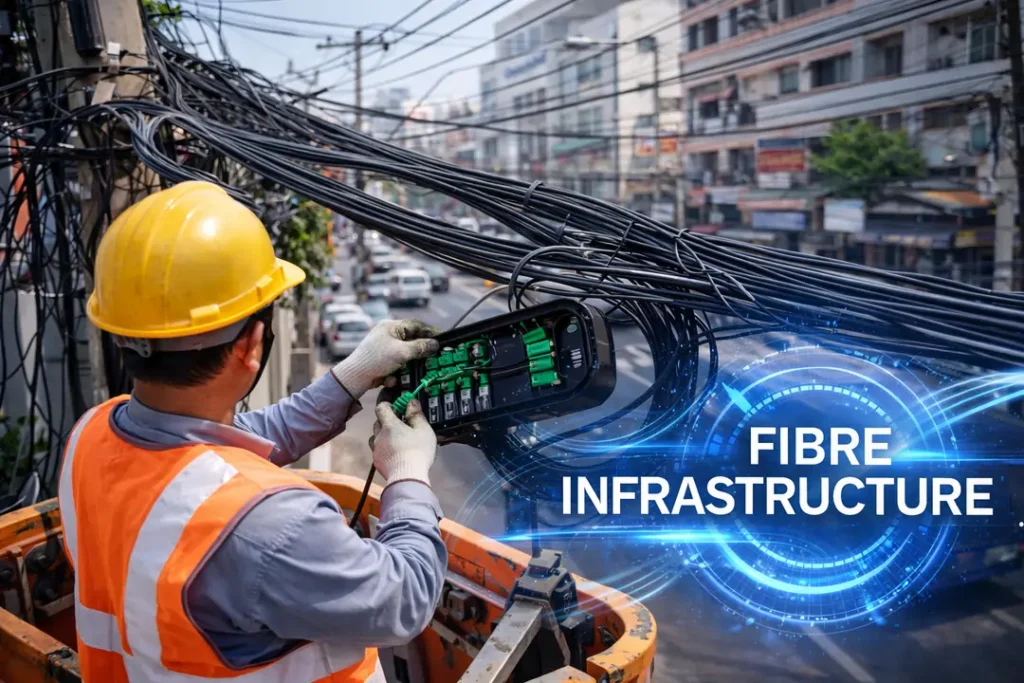
Average Internet Speeds in Thailand (2026)
Thailand consistently ranks among the top-performing countries in Southeast Asia for fixed broadband speed. Fibre deployment in urban areas has driven high download capacity and competitive ISP offerings.
Mobile performance is also strong, particularly in Bangkok and other major cities where 5G rollout is well established.
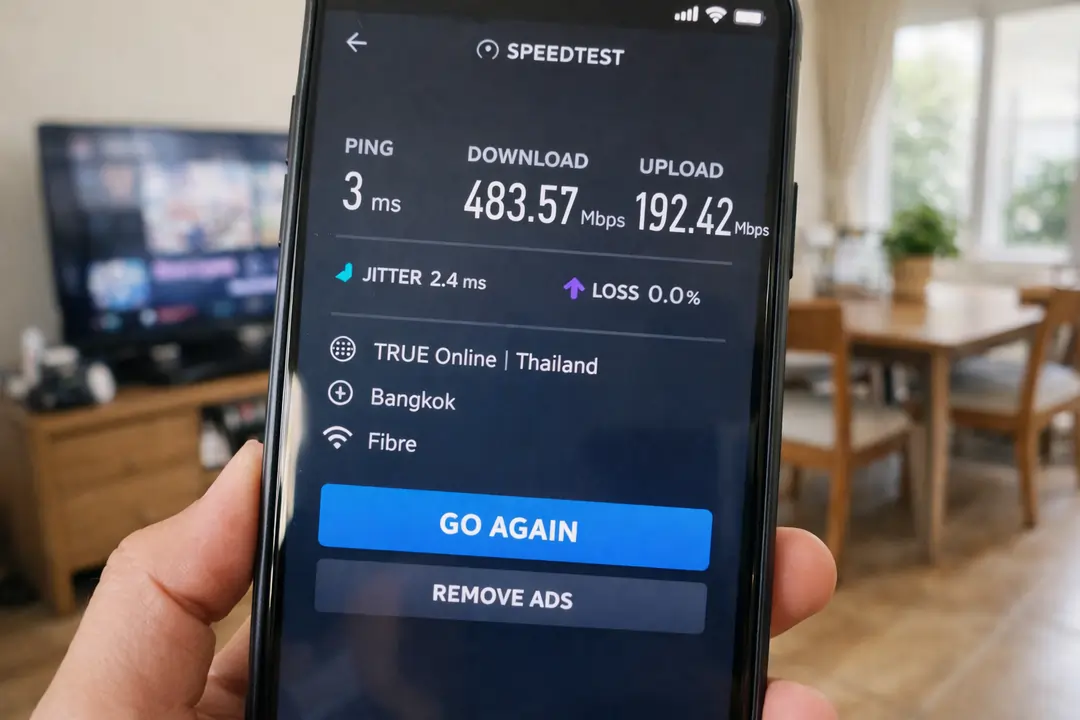
Typical Speed Ranges in 2026
| Connection Type | Typical Download Speed | Typical Upload Speed | Latency (Ping) |
|---|---|---|---|
| Urban Fibre Broadband | 300–1000 Mbps | 30–100 Mbps | 3–10 ms |
| Suburban Fibre | 200–500 Mbps | 20–50 Mbps | 5–15 ms |
| 4G Mobile Data | 30–120 Mbps | 10–40 Mbps | 20–40 ms |
| 5G Mobile Data | 100–500 Mbps | 20–80 Mbps | 10–25 ms |
Urban fibre connections in Thailand frequently maintain speeds above 500 Mbps, particularly on premium ISP plans. Latency is generally low within domestic networks and remains competitive for regional routing to Singapore and Japan.
Performance can vary during peak evening hours, especially in high-density condominium buildings and shared residential infrastructure.
Fibre Broadband Infrastructure in Thailand
Thailand has invested heavily in fibre-to-the-home (FTTH) deployment over the past decade. Urban centres such as Bangkok, Chiang Mai, and Phuket benefit from widespread fibre coverage, competitive ISP pricing, and high-speed residential packages.
In many metropolitan areas, fibre broadband plans exceeding 500 Mbps are common, with premium tiers offering 1 Gbps and above.
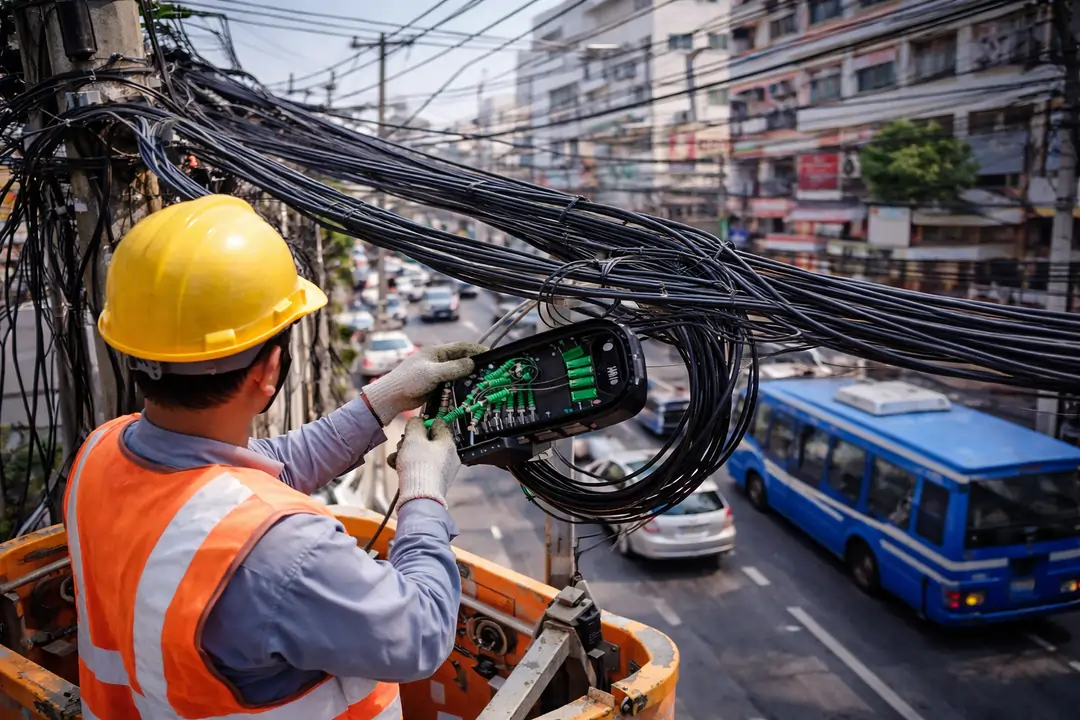
Key Characteristics of Thailand’s Fibre Network
| Feature | Impact on Performance |
|---|---|
| FTTH Deployment | High download capacity and low latency |
| Competitive ISP Market | Lower pricing and higher speed tiers |
| Urban Density | Efficient fibre rollout in cities |
| Shared Condominium Networks | Potential peak-hour congestion |
While infrastructure is strong, performance may vary in high-density condominium buildings where multiple units share distribution points. Peak evening congestion can reduce throughput slightly, though latency typically remains stable.
For VPN performance tested on Thai fibre connections, see our
Best VPN for Thailand (2026) guide.
Mobile Network Performance in Thailand (4G & 5G)
Thailand has one of the most developed mobile network environments in Southeast Asia. Nationwide 4G coverage is well established, and 5G deployment continues to expand across major cities and commercial zones.
In urban areas such as Bangkok, Chiang Mai, and Phuket, mobile speeds can rival fixed broadband under strong signal conditions.

Typical Mobile Performance in 2026
| Network Type | Download Speed | Upload Speed | Latency |
|---|---|---|---|
| 4G (Urban) | 50–120 Mbps | 15–40 Mbps | 20–35 ms |
| 4G (Rural) | 20–60 Mbps | 10–25 Mbps | 30–50 ms |
| 5G (Urban) | 150–500 Mbps | 20–80 Mbps | 10–25 ms |
| 5G (High Density Areas) | 100–300 Mbps | 15–60 Mbps | 15–30 ms |
Mobile performance depends heavily on signal strength, network congestion, and device capability. While 5G offers high peak speeds, stability can vary during peak hours or in dense urban environments.
For users relying on mobile data as a primary connection, latency consistency often matters more than maximum download speed.
Regional & International Routing Performance
Thailand benefits from strong regional connectivity to major internet exchange hubs in Southeast and East Asia. Traffic routing to Singapore and Japan is typically fast and stable, which supports gaming, video conferencing, cloud platforms, and VPN usage.
Latency performance depends less on raw bandwidth and more on routing efficiency and proximity to regional data centres.
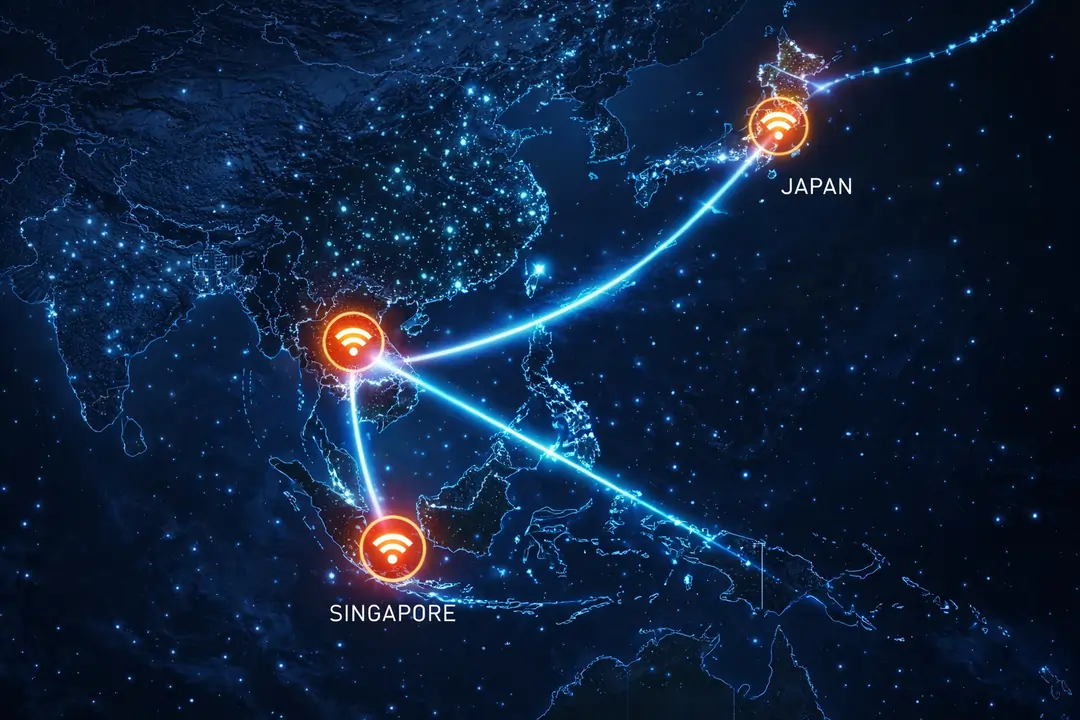
Typical Latency from Thailand (Urban Fibre)
| Destination | Typical Latency (Ping) | Use Case Impact |
|---|---|---|
| Domestic (Thailand) | 3–10 ms | Excellent for local services |
| Singapore | 10–20 ms | Strong for gaming & VPN servers |
| Japan | 20–40 ms | Stable for streaming & cloud access |
| Europe | 140–180 ms | Higher latency for real-time use |
| United States (West Coast) | 150–200 ms | Suitable for browsing, less ideal for gaming |
Because Singapore is geographically close and hosts major regional data centres, it is often the optimal routing destination for Thailand-based users. This is particularly relevant when selecting VPN server locations.
For performance comparisons across VPN providers tested on Thai fibre and 5G networks, see our
Best VPN for Thailand guide.
Peak Congestion & Real-World Performance
While Thailand’s infrastructure is strong, real-world performance can vary depending on time of day, building density, and shared network conditions.
Even on high-speed fibre plans, throughput may decline slightly during evening peak hours, particularly in multi-unit condominium buildings where many residents share upstream distribution points.
Common Causes of Performance Variation
| Factor | Impact on Speed | Impact on Latency |
|---|---|---|
| Evening Peak Usage | Moderate reduction | Minimal to moderate increase |
| Shared Building Infrastructure | Throughput fluctuation | Generally stable |
| Public WiFi Networks | High variability | Latency spikes possible |
| Mobile Network Congestion | Variable | Noticeable increase in busy areas |
In most urban fibre environments, latency remains relatively stable even during congestion. This is important for activities such as video conferencing and gaming, where consistency matters more than maximum download speed.
Users relying on public WiFi or shared condominium networks may experience more noticeable performance variation compared to private home fibre connections.
What This Means for VPN Performance in Thailand
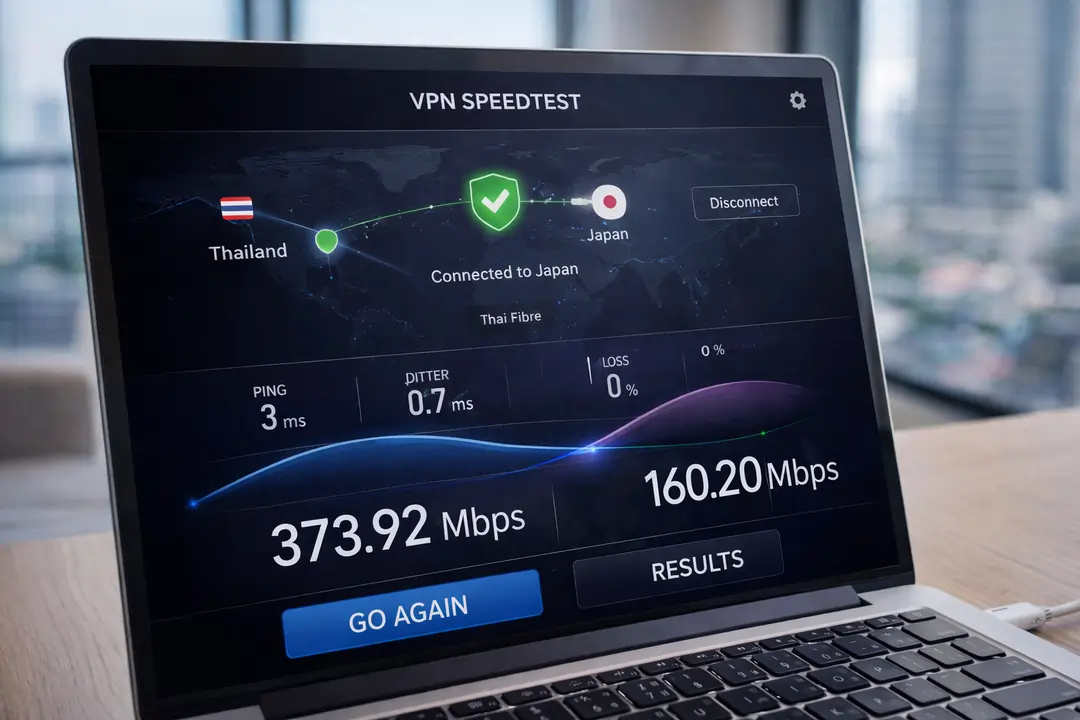
Thailand’s strong fibre infrastructure and efficient regional routing create favourable conditions for VPN performance. On urban fibre connections, premium VPN providers typically retain 80–90% of base download speed when connected to nearby regional servers.
Latency increases are generally minimal when selecting Singapore or Japan server locations. This makes VPN use viable for everyday browsing, streaming, remote work, and even latency-sensitive applications such as gaming.
VPN Performance Considerations
| Connection Type | Expected VPN Impact | Notes |
|---|---|---|
| Urban Fibre (500+ Mbps) | Minimal reduction | Best performance environment |
| Shared Condominium Fibre | Moderate variability | Congestion matters more than encryption |
| 4G Mobile | Low to moderate impact | Signal strength is key factor |
| 5G Mobile | Minimal impact under strong signal | Routing proximity improves results |
Performance differences between VPN providers in Thailand are influenced more by routing optimisation and server proximity than by raw encryption overhead.
For detailed provider comparisons tested on Thai fibre and 4G/5G networks, see our
Best VPN for Thailand (2026) guide.