


Are VPNs Allowed in Thailand?
Yes. VPN applications are legally available in Thailand and can be downloaded from official app stores or provider websites without restriction. There is no licensing requirement, registration process, or special approval needed for individuals to use VPN software.
In practice, VPN technology is widely used in corporate, academic, and professional environments across Thailand. Encrypted connections are common in modern internet infrastructure and are not treated as suspicious when used for lawful purposes.

The table below summarises how VPN usage is treated under Thai regulations:
| Question | Status in Thailand |
|---|---|
| Are VPN apps legal? | Yes |
| Is registration required? | No |
| Are VPN downloads restricted? | No |
| Is encryption itself illegal? | No |
VPNs are commonly used for:
- Securing public Wi-Fi in cafés and airports
- Remote access to overseas company systems
- Protecting financial and login credentials
- Reducing routine ISP-level visibility
For performance-tested provider recommendations under real Thai fibre and mobile conditions, see our
Best VPN for Thailand (2026) guide.
Thailand’s Computer Crime Act (CCA)
Thailand’s primary digital legislation is the Computer Crime Act (CCA). The Act regulates online conduct, cybercrime, and misuse of computer systems. It does not prohibit the use of VPN software.
The law focuses on behaviour rather than encryption tools. In other words, it addresses what a person does online — not whether their connection is encrypted.

The table below outlines what the Computer Crime Act targets and how VPN usage fits into that framework:
| Area Regulated Under CCA | Does It Ban VPNs? |
|---|---|
| Unauthorised system access | No |
| Data interference or disruption | No |
| Online fraud | No |
| Distribution of illegal content | No |
| Use of encryption tools | Not prohibited |
Using a VPN to encrypt your internet traffic is not an offence under Thai law. However, if an activity is illegal without a VPN, it remains illegal when using one.
This distinction is important. A VPN enhances privacy and security in transit, but it does not override legal accountability.
ISP Monitoring in Thailand & Does VPN Use Attract Attention?
VPN use in Thailand is not considered unusual. Encrypted traffic is widely used by businesses, financial institutions, universities, and remote workers. For lawful purposes, using a VPN does not attract special scrutiny simply because encryption is involved.
However, it is useful to understand what your Internet Service Provider (ISP) can typically see with and without a VPN.

What Your ISP Can See Without a VPN
When using a standard internet connection without a VPN, your ISP may be able to view:
- The websites and domains you visit
- Connection timestamps and duration
- Data usage volumes
- Your public IP address
ISPs in Thailand operate within regulatory frameworks that may include metadata retention requirements. This does not mean active monitoring of every user, but it does mean connection records may exist.
What Changes When You Use a VPN
When a VPN is active, your traffic is encrypted between your device and the VPN server. This changes what your ISP can see.
| Connection Element | Without VPN | With VPN |
|---|---|---|
| Websites visited | Visible to ISP | Encrypted / Not visible |
| Connection timestamps | Visible | Visible |
| Data volume | Visible | Visible |
| Destination server | Visible | VPN server only |
With a VPN, your ISP typically sees encrypted traffic going to a VPN server rather than the individual websites you access. The encryption layer reduces visibility into browsing activity, particularly on shared or public networks.
Does Encrypted Traffic Raise Red Flags?
No. Encrypted traffic is common across modern internet usage. Businesses use encrypted tunnels daily. Financial transactions, cloud services, and secure messaging platforms all rely on encryption.
Using a reputable VPN for privacy on public Wi-Fi or shared broadband is considered routine behaviour. It is not treated as inherently suspicious.
For practical guidance on when VPN protection matters most in Thailand’s shared network environment, see our Best VPN for Thailand guide.
When Is a VPN Actually Useful in Thailand?
Thailand does not impose broad internet restrictions on mainstream services. Many residents browse normally without a VPN. However, the need for a VPN in Thailand is situational rather than universal.
The primary risk factor in Thailand is not censorship — it is shared network infrastructure. Public Wi-Fi, condominium broadband, and mobile network switching introduce routine security exposure.

Common Scenarios Where a VPN Adds Value
| Scenario | Why a VPN Helps | Recommended? |
|---|---|---|
| Café or coffee shop Wi-Fi | Encrypts traffic on shared access points | Yes |
| Hotel or airport Wi-Fi | Reduces interception risk | Strongly Recommended |
| Shared condominium broadband | Adds privacy layer on multi-user infrastructure | Often |
| Private home fibre | Enhances privacy, not strictly required | Situational |
| Remote work access | Secures credentials and corporate logins | Yes |
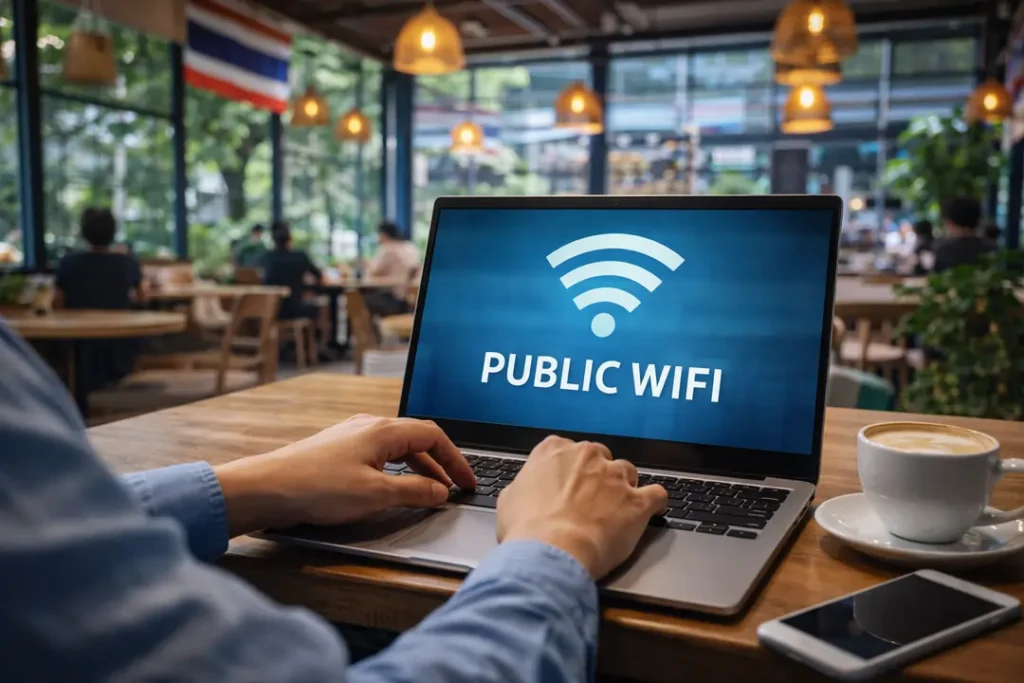
Public Wi-Fi Is the Primary Risk Factor
Public Wi-Fi usage is deeply embedded in daily life across Thailand. Cafés, shopping centres, airports, and transport hubs routinely provide open or semi-secured networks. These networks prioritise convenience over security.
In shared environments, data may pass through infrastructure not controlled by the end user. A VPN encrypts traffic before it leaves the device, helping reduce exposure to session hijacking, credential interception, or network spoofing.
Mobile Data & Network Switching
Thailand has strong 4G and 5G coverage. However, switching between mobile data and Wi-Fi can briefly expose traffic if encryption is not active. Many users rely on auto-connect VPN settings to maintain continuous protection when moving between networks.
For provider comparisons tested under Thai fibre and mobile conditions, see our Best VPN for Thailand (2026) guide.

VPN Use for Tourists & Expats in Thailand
Thailand hosts millions of short-term visitors, long-stay travellers, and expatriates each year. VPN usage within these groups is typically driven by security and account consistency rather than legal concerns.
There are no additional restrictions placed on tourists or foreign residents regarding VPN usage. Individuals may legally use VPN software for privacy, remote work, and secure communication.

Common Reasons Visitors Use VPNs
| Use Case | Why a VPN Is Used |
|---|---|
| Hotel Wi-Fi | Encrypts traffic on shared networks |
| Airport & transit hubs | Protects login credentials on open Wi-Fi |
| Online banking abroad | Reduces unexpected security flags |
| Remote work access | Secures connections to overseas company systems |
| Account stability while travelling | Maintains consistent login location |
Long-Term Residents & Digital Nomads
Expats and digital nomads often rely on a mix of condominium broadband, mobile data, co-working spaces, and cafés. These environments frequently involve shared infrastructure. In such cases, VPN usage is a routine security practice rather than a response to legal restrictions.
For provider comparisons tested specifically on Thai fibre and mobile networks, see our Best VPN for Thailand guide.