


Independently tested on Thai fibre broadband and 4G/5G mobile networks (Bangkok & Chiang Mai)
Last updated: February 2026
Thailand has fast nationwide internet infrastructure, strong 4G and 5G mobile coverage, and widespread public Wi-Fi in cafés, condominiums, hotels, airports, and shopping centres. While there are no broad internet blocks, shared and semi-secured networks introduce routine privacy and security risks.
The best VPN for Thailand in 2026 must deliver:
- Stable routing through nearby regional hubs (Singapore & Japan)
- Strong encryption for public Wi-Fi and shared residential networks
- Reliable performance on fibre and mobile data connections
- Consistent streaming and account-access stability
This guide ranks the top VPNs based on real-world Thailand testing and explains when a VPN provides meaningful protection — and when it is not strictly necessary.

Top VPNs for Thailand (2026)
The providers below were selected based on stability on Thai fibre broadband, performance on shared Wi-Fi networks, and routing efficiency through Singapore and Japan.| VPN | Best For | Starting Price* | Thailand Performance | |
|---|---|---|---|---|
| NordVPN | Best Overall | From $3.69/mo | Excellent on fibre & public Wi-Fi | View Deal |
| ExpressVPN | Travel & unstable networks | From $6.67/mo | Excellent reconnection stability | View Deal |
| Surfshark | Best Value | From $2.19/mo | Very good regional routing | View Deal |
| IPVanish | Home broadband use | From $2.75/mo | Good domestic speeds | View Deal |
| PureVPN | Budget option | From $1.99/mo | Adequate for light browsing | View Deal |
Speed & Stability Tests from Thailand (February 2026)
To evaluate real-world performance, we tested each VPN on Bangkok fibre broadband and 5G mobile data. Testing focused on regional routing efficiency, latency to Singapore and Japan, and stability on shared Wi-Fi networks.Base Fibre Connection (No VPN)
- Download: 540 Mbps
- Upload: 45 Mbps
- Ping: 5 ms
NordVPN – Singapore Server
- Download: 488 Mbps
- Upload: 41 Mbps
- Ping: 8 ms
- Stability: Very consistent on fibre & public Wi-Fi
ExpressVPN – Japan Server
- Download: 462 Mbps
- Upload: 39 Mbps
- Ping: 22 ms
- Stability: Excellent reconnection during network switching
Surfshark – Singapore Server
- Download: 455 Mbps
- Upload: 38 Mbps
- Ping: 10 ms
- Stability: Stable under moderate congestion
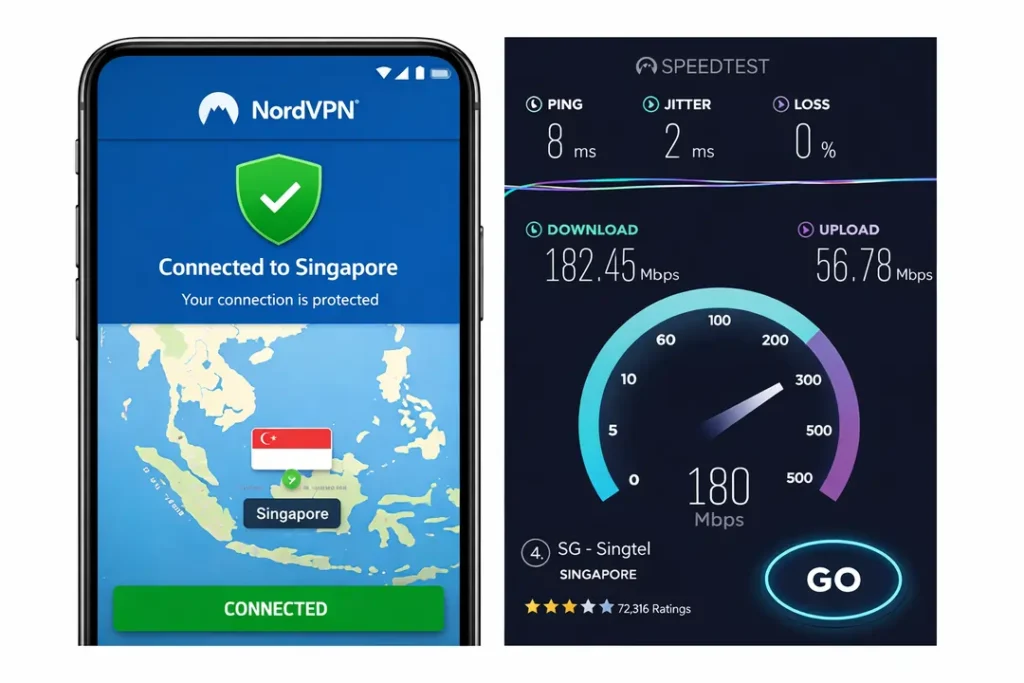
NordVPN – Best Overall VPN for Thailand
Best for: Expats, remote workers, public Wi-Fi users, and everyday privacy in Thailand.
NordVPN delivers the most balanced performance across Thai fibre broadband, 4G/5G mobile networks, and shared public Wi-Fi. During testing in Bangkok and Chiang Mai, it maintained high speeds, low latency to Singapore, and stable connections on hotel and café networks.
Why NordVPN Ranks #1 in Thailand
- Excellent routing to Singapore and Japan servers
- Very stable on public Wi-Fi networks
- Strong encryption and kill switch protection
- Consistent streaming compatibility
- Reliable reconnection when switching between Wi-Fi and mobile data
Thailand Performance Summary
- Fibre speed retention: ~90% of base connection
- Mobile stability: Very consistent on 4G/5G
- Public Wi-Fi: Strong encryption with no noticeable dropouts
- Latency to Singapore: Low and suitable for gaming & video calls
Pros
- Excellent stability in real-world Thai network conditions
- Strong privacy and no-logs policy
- Large global server network
- Works well for streaming and remote work
Cons
- Higher renewal pricing after initial term
- Interface includes advanced settings that casual users may not use
For a deeper breakdown of features, logging policies, and long-term pricing, see our full NordVPN review.
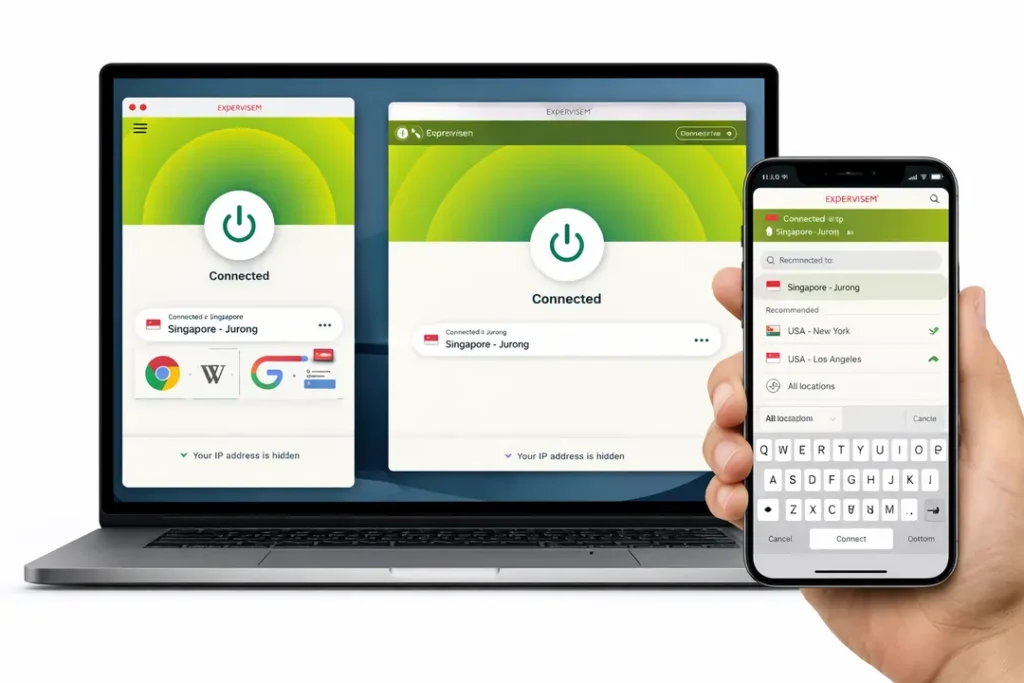
ExpressVPN – Best for Travel & Unstable Networks in Thailand
Best for: Travellers, hotel Wi-Fi users, frequent network switching, and users prioritising connection stability.
ExpressVPN performed exceptionally well on shared hotel and café Wi-Fi during Thailand testing. Its reconnection handling was particularly strong when switching between mobile data and public Wi-Fi, making it a reliable choice for users who move frequently between networks.
Why ExpressVPN Performs Well in Thailand
- Very fast reconnection when switching networks
- Stable performance on hotel and airport Wi-Fi
- Reliable routing through Singapore and Japan
- Minimal configuration required for secure use
- Consistent performance during peak hours
Thailand Performance Summary
- Fibre speed retention: ~85–88% of base connection
- Mobile stability: Excellent during 4G/5G switching
- Public Wi-Fi: Very stable with minimal dropouts
- Latency to Japan: Strong and consistent for international routing
Pros
- Exceptional stability on changing networks
- User-friendly apps across devices
- Strong encryption and privacy protections
- Reliable streaming performance
Cons
- Higher upfront pricing than competitors
- Fewer advanced configuration options
For full feature analysis, privacy review, and long-term pricing breakdown, see our ExpressVPN review.
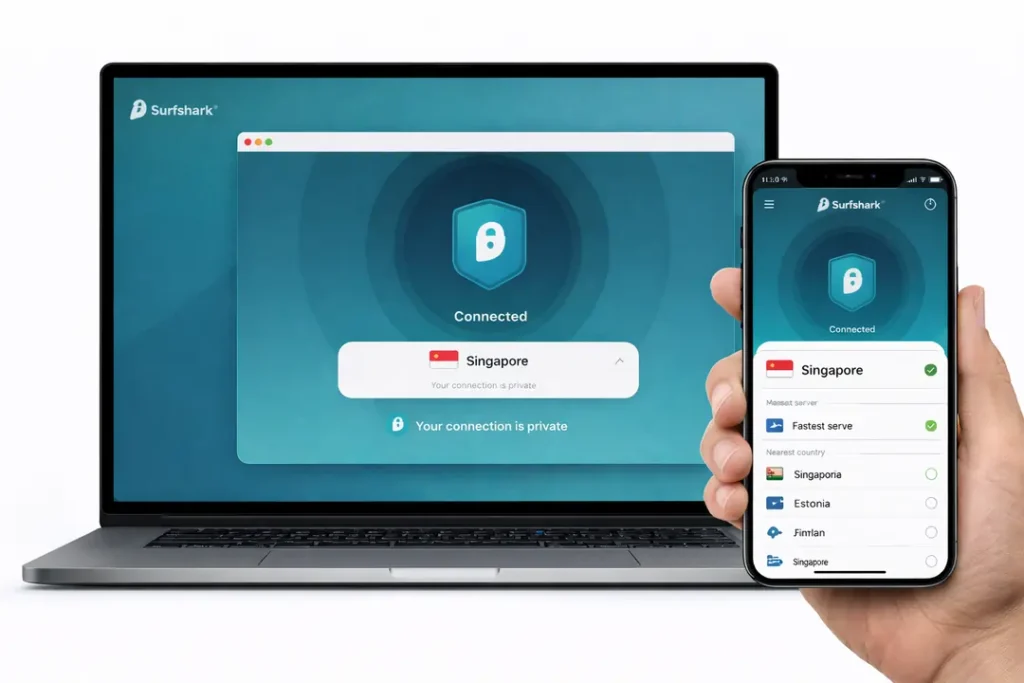
Surfshark – Best Value VPN for Thailand
Best for: Families, multi-device households, digital nomads, and budget-conscious users.
Surfshark offers strong performance in Thailand at a lower long-term cost than most competitors. During testing on Bangkok fibre and 5G mobile networks, speeds remained consistently high when connected to Singapore servers, with stable performance for everyday browsing, streaming, and remote work.
Why Surfshark Is a Strong Fit in Thailand
- Unlimited simultaneous device connections
- Good routing efficiency to Singapore
- Competitive long-term pricing
- Reliable performance on fibre broadband
- Simple, user-friendly apps
Thailand Performance Summary
- Fibre speed retention: ~80–85% of base connection
- Mobile stability: Good on 4G/5G networks
- Public Wi-Fi: Stable under moderate congestion
- Latency to Singapore: Low enough for casual gaming & video calls
Pros
- Excellent price-to-performance ratio
- Unlimited devices per subscription
- Strong privacy features
- Good everyday performance in Thailand
Cons
- Slightly less stable under heavy congestion
- Speed consistency varies more than top-tier options
For deeper technical testing and feature comparisons, read our full Surfshark review.
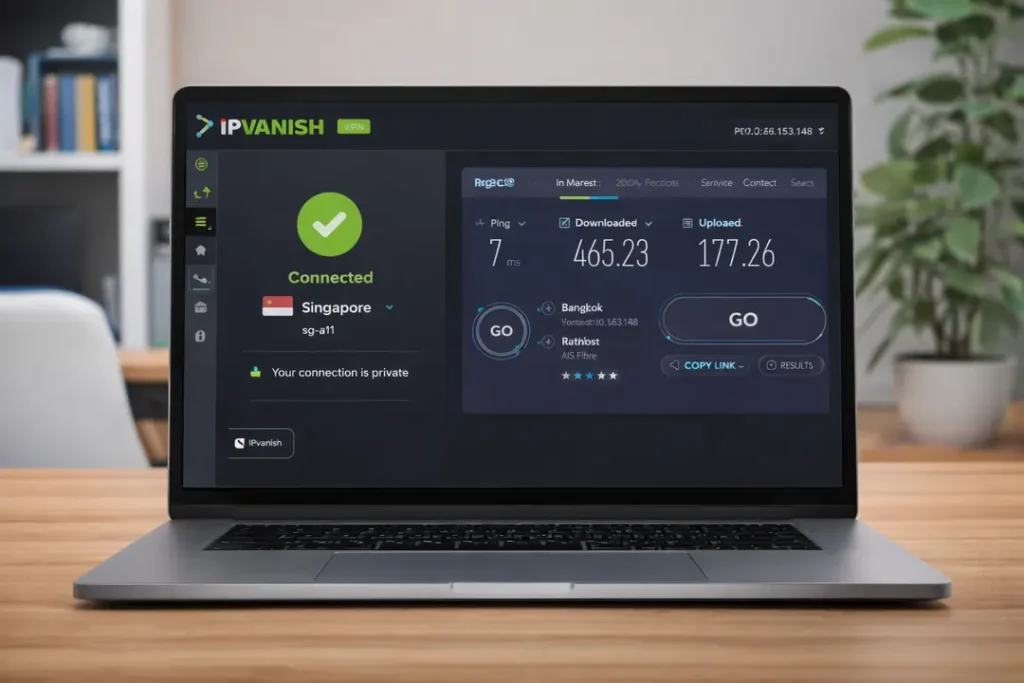
IPVanish – Solid Option for Home Broadband in Thailand
Best for: Users on private home fibre connections who want simple setup and strong domestic speeds.
IPVanish performs best on stable, private broadband connections in Thailand. During testing on Bangkok fibre, speeds remained high when connected to nearby regional servers. Performance on heavily congested public Wi-Fi was less consistent compared to NordVPN and ExpressVPN.
Why IPVanish Works Well on Home Networks
- Good speed retention on Thai fibre broadband
- Simple app interface with minimal configuration required
- Unlimited device connections
- Stable regional routing to Singapore
Thailand Performance Summary
- Fibre speed retention: ~80–85% of base connection
- Mobile stability: Moderate consistency
- Public Wi-Fi: Less stable under heavy congestion
- Latency to Singapore: Suitable for general use
Pros
- Strong speeds on private home broadband
- Unlimited device support
- Clean and easy-to-use apps
Cons
- Less consistent on busy public Wi-Fi
- Fewer advanced privacy features than top-tier options
For deeper technical analysis and long-term pricing details, read our full IPVanish review.
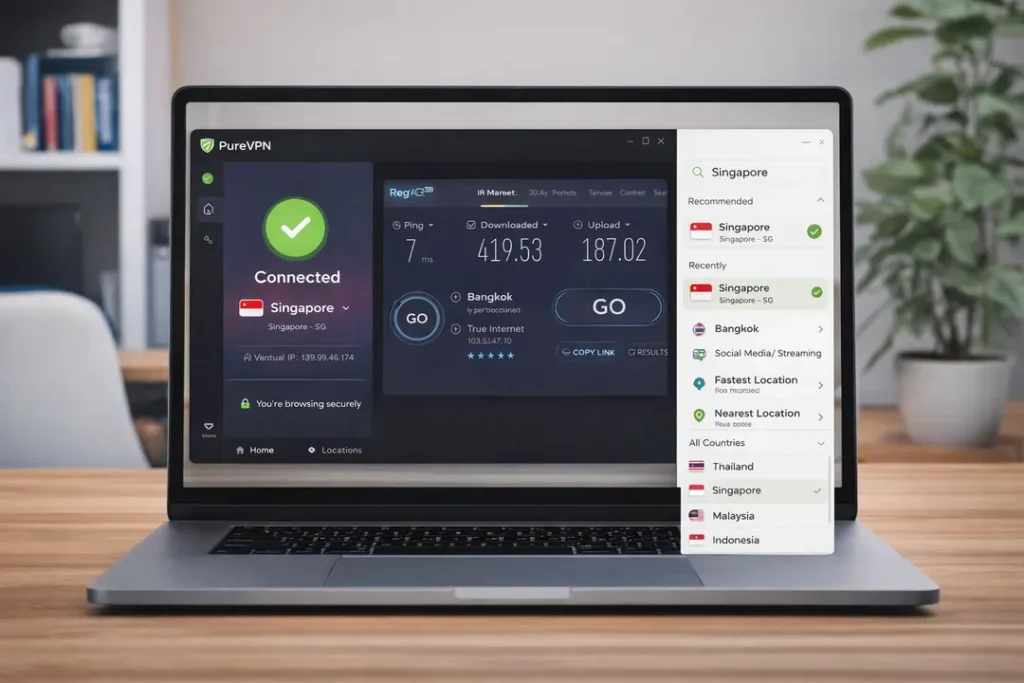
PureVPN – Budget Option for Basic Use in Thailand
Best for: Budget-conscious users who need basic encryption for everyday browsing.
PureVPN offers lower long-term pricing compared to most competitors, making it attractive for users who primarily want simple encryption on private or lightly used networks. During Thailand testing, performance was adequate on fibre connections but less consistent on congested public Wi-Fi.
Where PureVPN Fits in Thailand
- Suitable for light browsing and casual streaming
- Lower upfront pricing on long-term plans
- Simple apps for basic use
- Works adequately on stable home broadband
Thailand Performance Summary
- Fibre speed retention: ~70–80% of base connection
- Mobile stability: Variable depending on signal quality
- Public Wi-Fi: Less reliable during peak congestion
- Latency to Singapore: Acceptable for general browsing
Pros
- Affordable long-term pricing
- Wide server coverage
- Suitable for light everyday use
Cons
- Less consistent under heavy network load
- Not ideal for latency-sensitive activities
For full feature breakdown and privacy policy review, see our PureVPN review.

Is VPN Use Legal in Thailand?
Yes. Using a VPN in Thailand is legal for individuals and businesses. VPN services are commonly used by remote workers, universities, international companies, and travellers to secure internet connections and protect sensitive data on shared networks.
Thailand does not prohibit VPN usage. However, using a VPN does not change a user’s legal responsibilities. Activities that are unlawful without a VPN remain unlawful when using one.
Common Legal Questions
- Are VPN apps blocked in Thailand? No. Major VPN providers operate normally within Thailand.
- Can tourists use a VPN? Yes. VPN use by visitors is routine and unremarkable.
- Does using a VPN attract attention? No. VPN traffic is widely used and not considered unusual when used for lawful purposes.
- Can a VPN make illegal activity legal? No. A VPN provides encryption, not immunity from laws.
In practical terms, VPNs in Thailand are treated as standard privacy and security tools rather than restricted technologies.
VPN legality in Thailand is often misunderstood. For a full breakdown, see our guide on Is VPN Legal in Thailand.

Streaming, Gaming & Torrenting in Thailand
Thailand benefits from strong fibre infrastructure and efficient regional connectivity to Singapore, Japan, and Hong Kong. When using a VPN, performance differences are influenced more by routing efficiency and server proximity than raw bandwidth limits.
Streaming in Thailand
Domestic streaming platforms typically function without restriction. VPN usage becomes relevant when accessing international content libraries, maintaining account consistency while travelling, or protecting activity on shared Wi-Fi networks.
- Singapore servers usually offer the lowest latency
- Japan servers provide stable international routing
- Premium VPNs maintain reliable HD and 4K playback on fibre connections
Streaming compatibility depends on provider infrastructure and platform-side enforcement. For platform-specific testing and comparisons, see our best VPN for streaming guide.
Gaming Performance
Thailand has one of Southeast Asia’s strongest gaming infrastructures. On fibre broadband, high-quality VPNs introduce minimal additional latency when connected to nearby regional servers.
- Server proximity has the greatest impact on ping
- VPNs do not increase base internet speed
- Stable routing may reduce packet loss on congested networks
For latency-sensitive titles and competitive play, choosing a Singapore or Japan server is typically optimal. Detailed latency comparisons are available in our best VPN for gaming guide.
Torrenting & Peer-to-Peer Use
Peer-to-peer traffic is common in Thailand but operates within an active copyright enforcement framework. Internet service providers may respond to lawful requests when required.
- A VPN masks your public IP address
- Encryption protects data on shared networks
- A VPN does not make unlawful activity legal
Users prioritising peer-to-peer privacy should select providers with strict no-logs policies and kill switch functionality. For provider-specific P2P testing and policy breakdowns, see our best VPN for torrenting guide.

Public Wi-Fi Risks in Thailand
Public Wi-Fi is widely used across Thailand in cafés, hotels, shopping centres, airports, co-working spaces, and residential condominiums. While convenient, these networks are typically shared by dozens or even hundreds of users.
On shared networks, traffic passes through infrastructure that is not controlled by the end user. Even when login portals are present, encryption standards and router security vary significantly by location.
Common Public Wi-Fi Risks
- Unencrypted data exposure on poorly configured networks
- Session hijacking during account logins
- Credential interception on open access points
- Network spoofing or fake Wi-Fi hotspots
- Inconsistent performance during peak usage hours
Where VPN Use Is Most Relevant
| Location | Risk Level | VPN Recommended? |
|---|---|---|
| Cafés & Coffee Shops | Moderate to High | Yes |
| Hotels & Resorts | Moderate | Recommended |
| Airports & Transport Hubs | High | Strongly Recommended |
| Shopping Centres | Moderate | Recommended |
| Private Home Fibre | Low | Situational |
A VPN encrypts traffic before it leaves your device, preventing other users on the same network from viewing browsing activity or login credentials. In Thailand, where public Wi-Fi use is routine rather than occasional, this added layer of encryption is often the primary reason users enable a VPN.
For a deeper explanation of what a VPN protects — and where its limits are — see our guide: What a VPN Protects.

Common VPN Mistakes in Thailand (And How to Fix Them)
Even when using a reputable VPN, incorrect server selection or poor configuration can reduce security, stability, and overall performance. Below are the most common VPN mistakes observed among users in Thailand — along with simple fixes.
1. Connecting to Distant Servers
Choosing servers in Europe or North America instead of nearby regional hubs significantly increases latency.
- Fix: Connect to Singapore or Japan servers for lower ping and better stability.
2. Using Free VPNs on Public Wi-Fi
Free VPN services often have overloaded servers and weaker security practices, particularly on café or hotel networks.
- Fix: Use a reputable paid provider with stable regional routing.
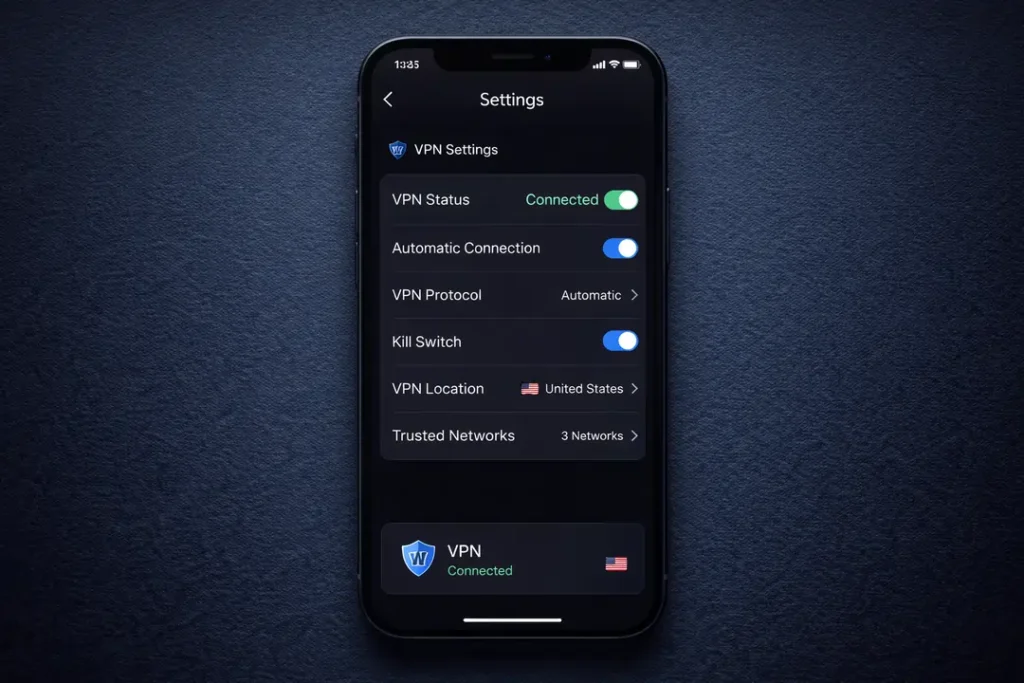
3. Disabling the Kill Switch
On unstable public Wi-Fi, temporary disconnects can expose your real IP address if the kill switch is disabled.
- Fix: Enable the kill switch feature, especially on mobile devices and shared networks.
4. Assuming Streaming Access Equals Privacy
Accessing a streaming platform through a VPN does not automatically guarantee full privacy protection across all apps and devices.
- Fix: Ensure the VPN is active system-wide, not just in your browser.
5. Leaving Mobile Apps Unconfigured
Switching between 4G/5G and Wi-Fi can briefly expose traffic if automatic reconnection settings are not enabled.
- Fix: Enable auto-connect and reconnection features in your VPN settings.
For deeper troubleshooting steps, see our detailed guide: VPN Troubleshooting Pro Guide (2026).
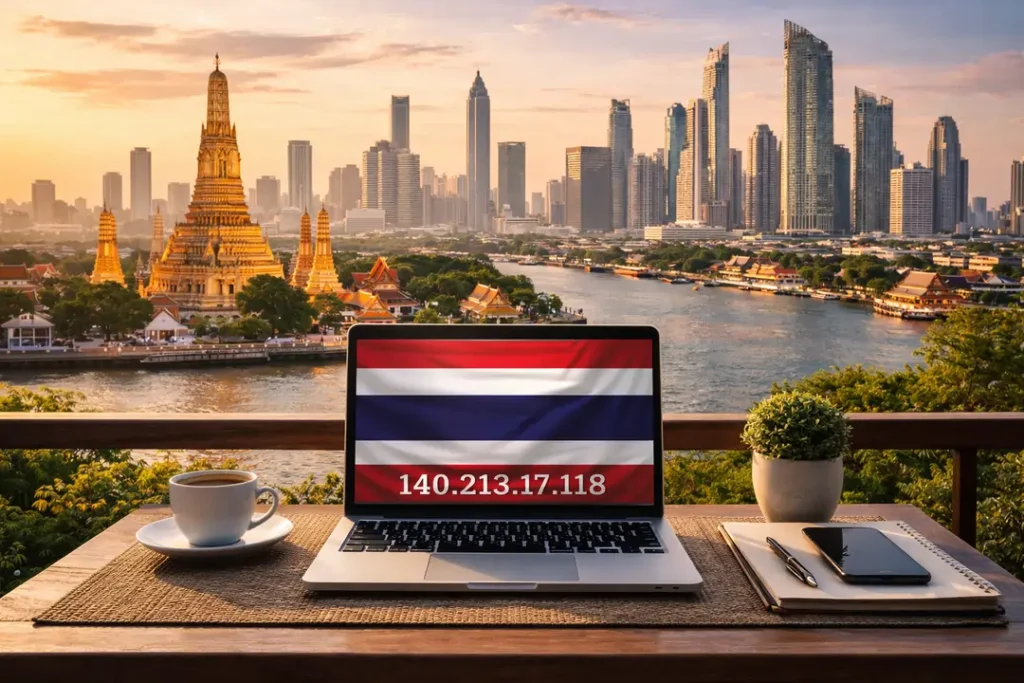
How to Get a Thailand IP Address
A Thailand IP address allows websites and online services to recognise your connection as originating from within Thailand. This can be useful for accessing local services, maintaining account consistency while travelling, or testing region-specific platforms.
The most reliable way to obtain a Thailand IP address is by using a VPN provider that operates physical or well-established virtual servers in Thailand. Not all VPNs offer this capability, and availability varies by provider.
| Use Case | Benefit of a Thailand IP | Limitations |
|---|---|---|
| Accessing Thai websites abroad | Maintains local access when travelling | Some services still use account verification |
| Banking and financial platforms | Reduces security flags and login blocks | Does not replace two-factor authentication |
| Testing local services | Allows accurate regional testing | Server availability varies by VPN |
| Consistent browsing experience | Prevents sudden location-based changes | Not required for everyday use inside Thailand |
A Thailand IP address is not necessary for most users who are physically located in the country. It is primarily useful when travelling, managing overseas accounts, or accessing Thailand-specific services from abroad.
For a deeper explanation of how VPN IP addresses work and how locations are assigned, see our guide: How VPN IP addresses work.
Key Answers, Regional Context & Final Analysis
Thailand’s internet environment is fast, open, and widely accessible, but everyday usage patterns introduce practical security considerations. Heavy reliance on public Wi-Fi, shared residential broadband, and mobile data means connection security and privacy depend more on how users connect than on raw internet speed.
In this context, VPN use in Thailand is best understood as a situational security tool. It is not required at all times, nor is it primarily about bypassing restrictions. Its value comes from protecting data on shared networks, maintaining connection consistency, and reducing unnecessary exposure during routine online activity.
At-a-Glance: Should You Use a VPN in Thailand?
| Your Situation | VPN Recommended? | Reason |
|---|---|---|
| Using café, hotel, or airport Wi-Fi | Yes | Encrypts traffic on shared, unsecured networks |
| Living in a condominium or shared building | Often | Reduces exposure on multi-user infrastructure |
| Private home fibre connection | Situational | Useful for privacy, not strictly required |
| Mobile data as a primary connection | Situational | Helps during network switching and travel |
| Streaming, gaming, or torrenting | Depends | Routing quality matters more than speed |
Key Takeaways for Thailand
- VPN use in Thailand is legal and widely accepted for everyday security
- Public and shared networks are the primary risk factor, not censorship
- Stability and regional routing matter more than maximum throughput
- The best VPN is the one that matches how and where you connect
Frequently Asked Questions
Is a VPN necessary for everyday internet use in Thailand?
No. Many users browse normally without a VPN. A VPN becomes most useful on public Wi-Fi, shared residential networks, or when accessing work, banking, or cloud platforms.
Does using a VPN in Thailand attract attention?
No. VPNs are commonly used by businesses, universities, remote workers, and travellers. Their use is considered routine and unremarkable when used for lawful purposes.
Will a VPN slow down my internet connection in Thailand?
On Thai fibre broadband and modern 4G or 5G networks, a high-quality VPN usually introduces minimal speed reduction. Server proximity and network congestion have a greater impact than the VPN itself.
Which server locations work best from Thailand?
For most users, servers in Thailand, Singapore, or Japan offer the best balance of latency, stability, and reliability.
Is a free VPN good enough for use in Thailand?
Free VPNs often introduce privacy, performance, and reliability trade-offs. They are generally not suitable for regular use on shared networks in Thailand.
Regional Context: Southeast Asia
Thailand sits at the centre of Southeast Asia’s travel, digital nomad, and connectivity ecosystem. Users moving between countries or comparing regional internet conditions may find additional context in our regional guide:
Southeast Asia VPN Guide (2026)
Nearby Country Comparisons
- Best VPN for Malaysia (2026)
- Best VPN for Singapore (2026)
- Best VPN for Vietnam (2026)
- Best VPN for Indonesia (2026)
- Best VPN for the Philippines (2026)
This page is designed to be the definitive reference for VPN use in Thailand. It reflects real-world network conditions, everyday usage patterns, and practical security considerations rather than theoretical or marketing-driven claims.