

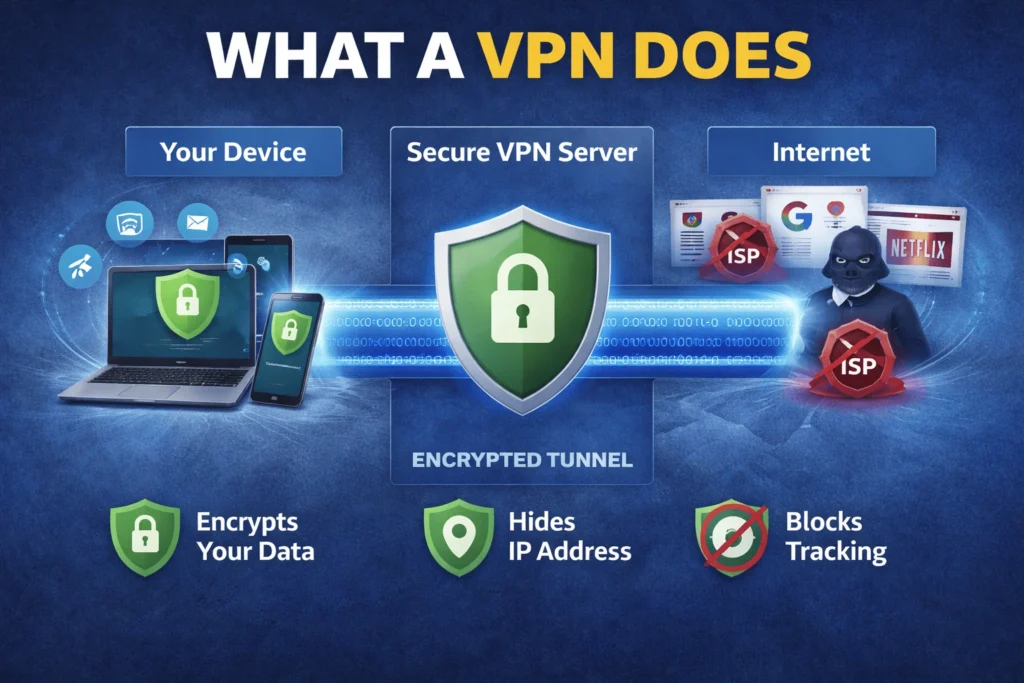
The United States has one of the most advanced and high-capacity internet infrastructures in the world, but it is also one of the most heavily monitored digital environments among developed nations. VPN use in the US is driven less by access limitations and more by privacy, data collection, streaming restrictions, and performance control.
Internet service providers, advertising platforms, and streaming services all play a significant role in how online activity is tracked, shaped, and restricted. As a result, VPNs are commonly used by US residents and travelers to reduce exposure to tracking, secure connections on shared networks, and maintain consistent access to online services.
VPN requirements in the United States also differ from neighboring countries. Privacy laws, platform enforcement, and network behaviour vary across the region, which is why understanding VPN use across North America can be useful when traveling or accessing cross-border services.
This guide focuses on VPN performance, legality, and real-world use in the United States, based on independent testing and practical usage rather than marketing claims.

Who This VPN Guide Is For
This guide is designed for people using the internet in the United States who want clarity, not hype. VPN use in the US is mainstream, but the reasons for using one — and the type of VPN that works best — vary significantly depending on how and where you connect.
This guide is particularly useful if you:
- Live in the United States and want to reduce online tracking or data profiling
- Use streaming platforms and encounter regional restrictions or blackouts
- Rely on public or shared Wi-Fi at airports, hotels, cafés, or apartments
- Work remotely and switch between home, mobile, and managed networks
- Travel frequently between the US, Canada, and Mexico
It is also relevant for visitors to the United States who need a secure, reliable VPN setup while using local networks.
If you are comparing VPN use across borders or need a broader regional perspective, our North America VPN overview explains how VPN requirements in the US differ from those in Canada and Mexico.
This guide focuses on real-world VPN performance, legality, and everyday use in the United States, rather than theoretical features or marketing claims.
Internet Conditions in the United States
The United States operates one of the largest and highest-capacity internet infrastructures in the world. Broadband, fiber, and nationwide mobile networks support everything from 4K streaming and cloud computing to large-scale remote work and online gaming.
However, scale introduces its own challenges. Internet performance in the US is shaped less by availability and more by provider policies, congestion patterns, and traffic management practices that vary between ISPs and regions.
Most users experience:
- High baseline speeds on home broadband and mobile data
- Congestion during peak evening hours on shared networks
- Traffic shaping or throttling for specific services
This environment changes how VPNs behave. On fast US connections, a VPN’s routing efficiency and protocol choice often matter more than raw server count. Poorly optimised VPNs can introduce noticeable latency or speed drops, even on high-bandwidth connections.
Well-optimised VPNs, by contrast, are able to maintain stable performance across home broadband, public Wi-Fi, and mobile networks by efficiently routing traffic through nearby servers.
Related performance analysis: Why VPNs Can Feel Slower on Fast Internet Connections


Why You May Need a VPN in the USA
VPN use in the United States is not driven by internet censorship, but by how online services, networks, and data systems operate at scale. For many users, a VPN becomes useful not because access is restricted, but because access is controlled.
Common reasons people use VPNs in the US include:
Reducing Tracking and Data Profiling
Online activity in the US is heavily monetised. ISPs, advertising networks, and platforms collect data on browsing behaviour, usage patterns, and device activity. A VPN helps reduce the amount of data that can be directly linked to your connection.
Securing Connections on Shared Networks
Public and semi-public Wi-Fi is widely used in the US — from airports and hotels to apartment buildings and shared workspaces. VPNs encrypt traffic on these networks, reducing exposure to interception or misuse.
Maintaining Consistent Access to Online Services
Streaming platforms, sports broadcasters, and some online services apply regional rules and enforcement that can change depending on location or network. VPNs help maintain more consistent access, particularly when traveling or switching networks.
Managing Multiple Devices and Networks
US households often use several devices simultaneously across broadband, mobile data, and smart home connections. A VPN can provide a consistent security layer across these environments without reconfiguring each connection manually.
For users comparing needs across borders or planning frequent travel, our North America VPN guide explains how these factors differ between the US, Canada, and Mexico.


VPN Legality & Real-World Use in the United States
VPNs are fully legal to use in the United States. There are no federal laws that prohibit VPN software, and VPN services are widely available, openly advertised, and commonly used across personal, professional, and business environments.
In practice, VPN use in the US is normalised. Individuals use VPNs on home broadband, mobile networks, and public Wi-Fi, while businesses rely on VPN technology as a standard part of remote access and internal security.
What Is Allowed
Using a VPN to protect your connection, reduce tracking, access services securely, or maintain privacy on shared networks is legal. VPNs are also commonly used for travel, remote work, and general account security.
What a VPN Does Not Change
While VPNs are legal, they do not exempt users from existing laws or platform terms of service. Activities that are illegal without a VPN remain illegal when using one, and some platforms may enforce their own access policies.
This distinction is important in the US, where VPNs are considered a legitimate privacy and security tool rather than a method of bypassing government-level internet controls.
Everyday VPN Use in the US
Most VPN usage in the United States falls into one of the following categories:
- Encrypting traffic on public or shared Wi-Fi
- Reducing exposure to tracking and profiling
- Maintaining secure access while traveling or working remotely
- Managing multiple devices across different networks
For users who move between countries or rely on services across borders, understanding how VPN expectations differ regionally can be helpful. Our North America VPN overview explains how VPN use in the US compares with Canada and Mexico.
Best VPNs for the USA (2026)
The United States places unique demands on VPN services. Unlike regions where access is limited by infrastructure or censorship, VPN performance in the US is shaped by scale, platform enforcement, and ISP behaviour.
US users typically operate on fast broadband or 5G networks, use multiple devices simultaneously, and rely heavily on streaming platforms, cloud services, and account-based ecosystems. As a result, the best VPNs for the USA must deliver consistent performance under load, maintain access to heavily protected platforms, and provide meaningful privacy controls without degrading speed.
The providers below are selected based on sustained real-world performance in the United States, not short-term benchmarks or marketing claims.
| VPN | Primary Strength in the USA | Ideal User Profile | Link |
|---|---|---|---|
| ExpressVPN | Streaming reliability & network consistency | Households, travelers, streaming-first users | Visit ExpressVPN |
| NordVPN | Privacy controls & performance tuning | Remote workers, privacy-focused users | Visit NordVPN |
| Surfshark | Multi-device coverage at low cost | Families, shared households | Visit Surfshark |
| IPVanish | Domestic US server density | US-based users, Kodi setups | Visit IPVanish |
| PureVPN | Budget flexibility & global reach | Price-sensitive users with mixed needs | Visit PureVPN |
ExpressVPN — Best Overall VPN for the USA
ExpressVPN consistently performs well across US broadband, mobile, and public Wi-Fi networks. Its primary advantage in the United States is reliability under platform enforcement. Streaming services, sports broadcasters, and subscription platforms in the US actively detect VPN traffic, and ExpressVPN remains one of the most consistent providers at maintaining access.
It is particularly well suited to US households where multiple devices are connected simultaneously and where stability matters more than advanced configuration.
Pros:
- Very reliable access to US streaming platforms
- Strong speeds on high-bandwidth connections
- Minimal performance drop during peak hours
Cons:
- Higher long-term cost than budget-focused VPNs
NordVPN — Best for Privacy-Focused US Users
NordVPN is a strong choice for users in the United States who want more control over how their VPN behaves. It offers advanced security options, protocol flexibility, and strong performance on large US server networks.
This makes it particularly suitable for remote workers, users concerned about ISP tracking, and those who regularly switch between home, mobile, and managed networks.
Pros:
- Excellent balance of speed and privacy features
- Large US server footprint
- Good compatibility with corporate and shared networks
Cons:
- Interface may feel complex for first-time users
Surfshark — Best Value for US Households
Surfshark is well suited to US households with many connected devices. Unlimited simultaneous connections allow users to protect phones, laptops, tablets, smart TVs, and routers under a single subscription.
While it may not be as consistently reliable as premium providers for heavily restricted platforms, it offers strong everyday performance for a significantly lower cost.
Pros:
- Unlimited devices on one account
- Good performance on US broadband
- Affordable long-term pricing
Cons:
- Occasional inconsistencies on aggressively blocked services
IPVanish & PureVPN — Niche Options
IPVanish and PureVPN serve more specific use cases in the US. IPVanish benefits from strong domestic server coverage and appeals to users who prioritise US-based routing, while PureVPN provides a lower-cost entry point with broad global coverage.
Neither is a universal recommendation, but both can be appropriate depending on budget, device count, and usage patterns.
How these rankings are determined:
In-Depth Pros & Cons Comparison (USA – 2026)
| VPN | Key Strengths (USA-Specific) | Key Limitations | Best Suited For |
|---|---|---|---|
| NordVPN | Excellent performance on US broadband and 5G networks, independently audited no-logs policy, strong resistance to streaming VPN detection, and advanced security controls for ISP-heavy environments. | Interface and feature set may feel complex for users who prefer minimal configuration. | US users who want a balance of privacy, speed, and platform access. |
| ExpressVPN | Exceptionally stable on large US networks, highly reliable access to US streaming platforms, fast reconnections when switching networks, and simple apps across all devices. | Higher long-term pricing compared to most competitors. | Users who prioritise reliability, streaming, and ease of use over cost. |
| Surfshark | Unlimited simultaneous connections, strong everyday performance on US networks, and good streaming access at a significantly lower price point. | Smaller US server footprint than premium providers, occasional inconsistency on aggressively blocked platforms. | Families, shared households, and budget-conscious US users. |
| Mullvad VPN | Privacy-first design, anonymous account system, flat-rate pricing, and minimal data collection aligned with strict privacy principles. | Limited US server coverage and poor compatibility with major US streaming platforms. | Privacy-focused users who do not rely on streaming or platform access. |
| IPVanish | Strong US-based server presence, unlimited devices, and straightforward apps suitable for general home use. | Inconsistent access to US streaming services and fewer advanced privacy controls than top-tier providers. | Large households and users focused on basic protection rather than advanced privacy. |
VPN Pricing & Trial Options (USA – 2026)
| VPN | Typical Monthly Cost* | Free Trial | Money-Back Guarantee | Device Limit |
|---|---|---|---|---|
| NordVPN | ~$3.49 (long-term plan) | ❌ No | 30 days (risk-free) | 10 devices |
| ExpressVPN | ~$6.67 (long-term plan) | ❌ No | 30 days (risk-free) | 8 devices |
| Surfshark | ~$2.29 (long-term plan) | ❌ No | 30 days (risk-free) | Unlimited devices |
| Mullvad VPN | €5 flat (~$5.40) | ❌ No | ❌ No | 5 devices |
| IPVanish | ~$3.33 (long-term plan) | ❌ No | 30 days (risk-free) | Unlimited devices |
*Prices shown are based on long-term subscription plans and are approximate. Short-term plans typically cost more.
Streaming & Sports Access in the United States
Streaming is one of the most common reasons people use VPNs in the United States. Unlike many regions where content is blocked at the network level, US streaming restrictions are enforced directly by platforms through licensing rules, regional blackouts, and aggressive VPN detection.
This makes the US one of the most challenging environments for VPN-based streaming. Performance depends less on raw speed and more on how well a VPN can maintain access without being flagged or blocked.
Major Streaming Platforms in the USA
Most US-based streaming services apply regional controls that vary by state, city, or account location. These controls can affect both domestic and international access.
- Netflix, Hulu, and Disney+ apply region-based catalog rules
- Sports platforms enforce blackout zones and local licensing
- Streaming apps actively detect and block known VPN IP ranges
As a result, a VPN that works well for general browsing may still struggle with streaming access in the US.
Sports Blackouts & Regional Restrictions
Sports streaming in the United States is heavily restricted by broadcast agreements. Viewers may be blocked from watching games based on their geographic location, even with a paid subscription.
VPNs are often used to:
- Avoid local blackout restrictions
- Maintain access while traveling between states
- Access league coverage when networks change
However, not all VPNs handle sports platforms reliably. Frequent IP rotation and server quality play a major role in whether access remains stable.
Related guides:
Why Some VPNs Fail with US Streaming
Streaming platforms in the US invest heavily in VPN detection. Common reasons a VPN may stop working include:
- Overused or blacklisted IP addresses
- Shared servers with high VPN traffic
- Delayed updates to blocked IP ranges
This is why reliability matters more than advertised speed. VPNs that actively maintain US streaming access tend to cost more, but they also fail less often.
Setting Expectations
No VPN can guarantee uninterrupted access to every streaming service at all times. Platform enforcement changes frequently, and access can vary by server, location, and even time of day.
For best results in the US, choose a VPN with a strong track record on streaming platforms and be prepared to switch servers if access is temporarily restricted.
For platform-specific recommendations and testing results, see our full streaming VPN guide.
VPN Streaming Compatibility in the USA (2026)
| VPN | Netflix US | Hulu | Disney+ | Amazon Prime | Sports Platforms |
|---|---|---|---|---|---|
| NordVPN | ✅ Yes | ✅ Yes | ✅ Yes | ✅ Yes | ✅ Yes |
| ExpressVPN | ✅ Yes | ✅ Yes | ✅ Yes | ✅ Yes | ✅ Yes |
| Surfshark | ✅ Yes | ✅ Yes | ✅ Yes | ⚠️ Inconsistent | ⚠️ Limited |
| Mullvad VPN | ❌ No | ❌ No | ❌ No | ❌ No | ❌ No |
| IPVanish | ⚠️ Limited | ⚠️ Limited | ⚠️ Limited | ⚠️ Limited | ⚠️ Limited |

Gaming with a VPN in the United States
The United States has some of the world’s strongest gaming infrastructure, but VPN use for gaming is highly situational. The determining factors are not raw speed, but latency, ISP routing, and server distance.
A VPN will not automatically improve gaming performance in the USA. In many cases, it can increase ping. However, when used deliberately, a VPN can solve specific problems such as poor ISP routing, shared network instability, or IP-based attacks.
When a VPN Helps — and When It Doesn’t
| Scenario | VPN Impact | Why |
|---|---|---|
| Competitive / ranked gaming | Usually negative | Extra routing distance increases latency |
| Casual multiplayer gaming | Neutral | Minor latency increase often unnoticeable |
| ISP throttling or inefficient routing | Potentially positive | VPN may provide a cleaner route |
| DDoS protection | Positive | Masks your real IP address |
| Gaming on shared networks | Positive | Reduces interference and packet inspection |
Latency, Routing, and ISP Behaviour in the USA
The size of the United States matters. Connecting to a VPN server even a few states away can add measurable latency. For this reason, server selection is critical.
Some ISPs use inefficient routing paths to certain game servers, which can increase ping even on fast connections. In these cases, a nearby VPN server can occasionally provide a more direct route.
This behaviour is often misunderstood as a “speed boost.” A technical explanation is covered in the why VPNs are slow guide.
Competitive vs Casual Gaming
| Player Type | VPN Recommendation | Reason |
|---|---|---|
| Competitive / ranked players | Avoid during matches | Lowest possible latency is essential |
| Casual / unranked players | Optional | Small latency increase is usually acceptable |
| Streamers / public matches | Recommended | Protects IP and reduces DDoS risk |
Console Gaming and Shared Networks
Console gamers in the USA often play on shared home networks, dorms, apartments, or hotel Wi-Fi. In these environments, VPNs can improve stability and reduce interference from other users.
On private home networks, a VPN is rarely beneficial for performance and should be used primarily for protection.
Platform-specific considerations are covered in the console gaming VPN guide .
Best Practices for Gaming with a VPN in the USA
- Choose a VPN server geographically close to your location
- Avoid VPN use during competitive or ranked matches
- Use a VPN mainly for protection, not speed gains
- Test routing changes outside of active matches
VPNs can be useful for gaming in the USA, but only when used intentionally. The next section explains how VPNs interact with streaming platforms in the United States, where licensing and enforcement behave very differently.
For readers focused specifically on low-latency performance, the low-ping gaming VPN guide provides deeper testing and configuration advice.

Torrenting and P2P Traffic in the United States
Torrenting in the United States operates in a far stricter environment than in many other countries. The issue is not availability or speed, but copyright enforcement, ISP monitoring, and automated DMCA notice systems.
For this reason, VPN use for torrenting in the USA is primarily about privacy and risk reduction, not performance or access.
The Reality of Torrenting in the USA
| Factor | Without a VPN | With a VPN |
|---|---|---|
| ISP visibility | High | Significantly reduced |
| DMCA notice risk | High | Lower (not eliminated) |
| Traffic identification | Easy | Obscured by encryption |
| Speed consistency | Variable (throttling possible) | Stable with a quality VPN |
DMCA Notices and ISP Behaviour
Most US internet service providers participate in automated copyright enforcement systems. When identifiable torrent traffic is detected, ISPs may issue warnings, throttle connections, or escalate actions after repeated notices.
A VPN encrypts traffic between your device and the VPN server, preventing ISPs from directly inspecting torrent activity. This is why VPNs are commonly used by US users who engage in P2P traffic.
However, a VPN does not grant immunity. Poor provider choice, misconfiguration, or IP leaks can still expose activity.
What Matters Most in a VPN for Torrenting
| Feature | Why It Matters in the USA |
|---|---|
| No-logs policy | Limits data retention tied to user activity |
| Kill switch | Prevents exposure if the VPN disconnects |
| P2P-friendly servers | Avoids traffic blocking or throttling |
| Leak protection | Prevents DNS or IP exposure |
These criteria are explained in detail in the torrenting VPN guide , which focuses specifically on US enforcement realities.
Free VPNs and Torrenting in the USA
Free VPNs are particularly unsuitable for torrenting in the United States. Many log activity, limit bandwidth, or explicitly prohibit P2P traffic.
In some cases, free VPNs cooperate with copyright complaints, undermining the very reason users choose them. The risks are explained in the free vs paid VPN breakdown .
Legal and Practical Expectations
Using a VPN for torrenting in the USA is about reducing exposure, not avoiding responsibility. Laws, platform rules, and ISP policies still apply.
Users who rely on torrenting should treat VPNs as a privacy tool, combined with proper configuration and realistic expectations.
With torrenting considerations covered, the next section examines privacy, surveillance, and data collection in the United States — where VPN use extends far beyond file sharing.
Privacy, ISPs, and Data Collection in the United States
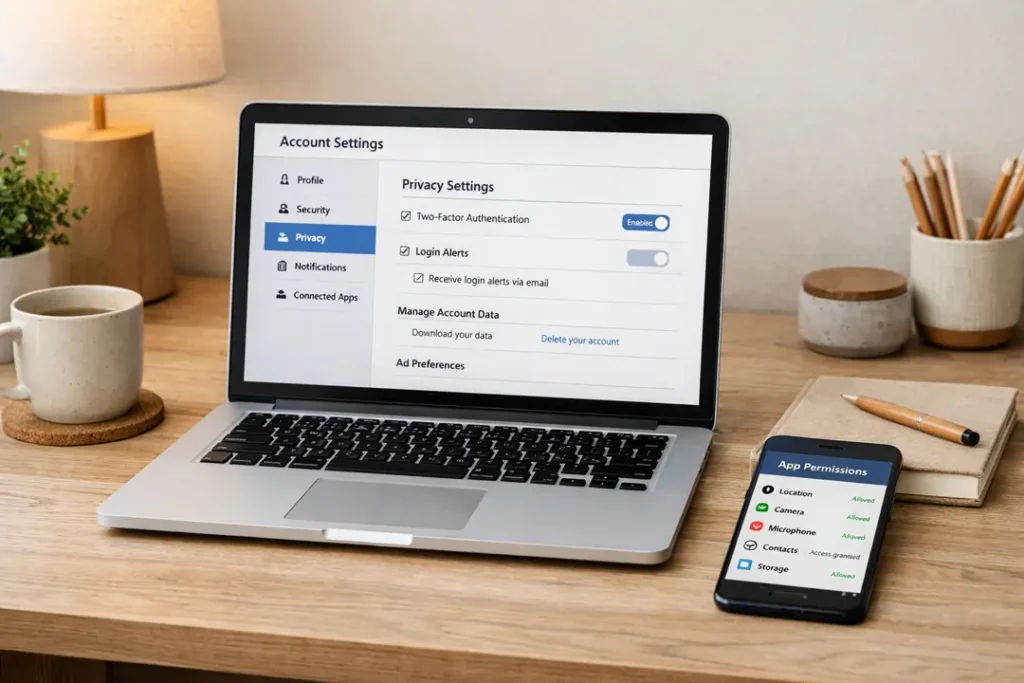
The United States has fast, open internet access, but it is not a privacy-forward environment by default. VPN use in the USA is driven less by access and more by data collection, ISP behaviour, and third-party surveillance.
Unlike many countries, internet service providers in the USA operate under frameworks that allow extensive data collection, retention, and monetisation. This reality shapes why VPNs are widely used, even on private home connections.
ISP Monitoring and Data Retention
US ISPs can observe and log user traffic metadata, including connection times, IP addresses, and destination domains. While encryption protects content, metadata remains highly valuable.
| Without a VPN | With a VPN |
|---|---|
| ISP can see destination domains | ISP sees encrypted traffic only |
| Traffic patterns tied directly to your IP | Traffic routed through VPN server |
| Data usable for profiling and resale | Reduced visibility at the ISP level |
This distinction is explained in more depth in the VPN fundamentals guide, which breaks down what VPNs do — and do not — protect.
Data Brokers and Third-Party Tracking
A significant portion of online tracking in the USA does not come from the government, but from commercial data brokers and advertising networks. These entities aggregate browsing behaviour, location signals, and device identifiers.
While a VPN does not eliminate tracking entirely, it reduces one of the most consistent identifiers: your real IP address.
This is particularly relevant for users who:
- Rely on a single home internet connection
- Use multiple devices under one ISP account
- Access sensitive accounts regularly
Government Access and Legal Requests
VPN use in the USA is legal. However, legal access to data depends on what information exists in the first place.
A VPN does not make users anonymous, but it can reduce the amount of ISP-held data available for routine requests. This distinction between privacy and anonymity is often misunderstood and is covered in the VPN explained guide.
Why Privacy Matters Even on Private Home Networks
Many US users assume that VPNs are only necessary on public Wi-Fi. In reality, private home connections are where the majority of long-term data collection occurs.
| Scenario | Privacy Exposure Without VPN | VPN Impact |
|---|---|---|
| Home broadband browsing | High (persistent ISP visibility) | Reduces ISP-level insight |
| Account logins | Directly tied to ISP IP | IP association obscured |
| Long-term behaviour profiling | Easy to correlate | Correlation more difficult |
What a VPN Does Not Protect Against
For clarity, VPNs in the USA do not:
- Make you anonymous online
- Override platform terms of service
- Prevent tracking by logged-in accounts
- Replace good account security practices
Understanding these limits is as important as understanding the benefits.
With privacy realities established, the next section looks at public Wi-Fi and shared networks in the USA — where VPNs shift from optional to strongly recommended.
Public Wi-Fi and Account Security in the United States
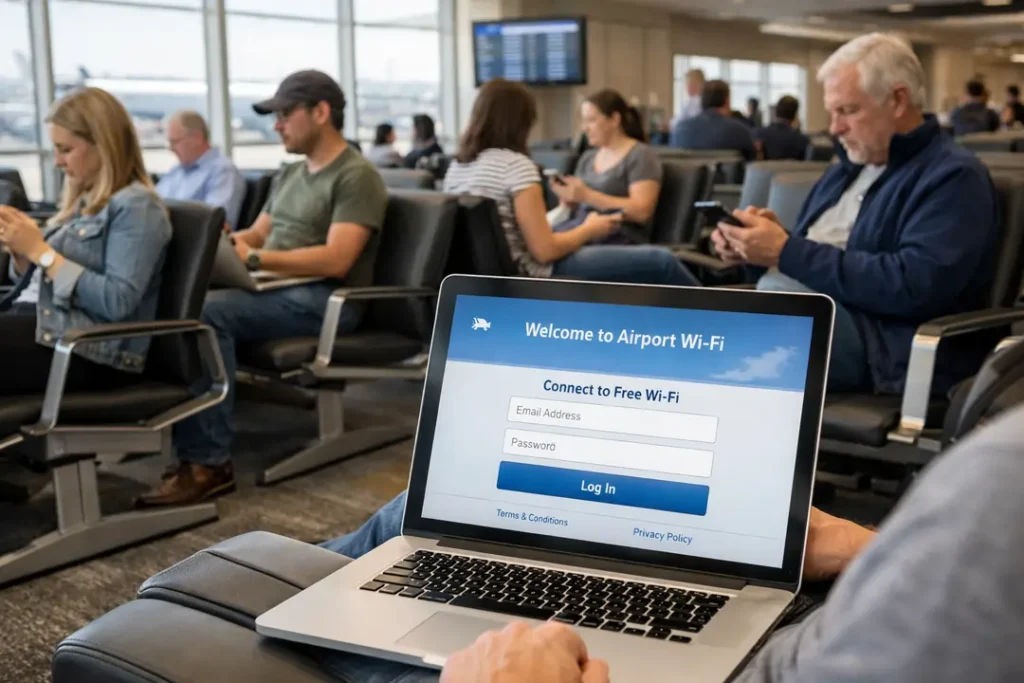
Public Wi-Fi is widely available across the United States, from airports and hotels to cafés and apartment buildings. While convenient, these networks prioritise accessibility, not user isolation or long-term security.
In the USA, public Wi-Fi risk is less about national surveillance and more about shared network exposure, account takeover, and session hijacking. This is where VPN use shifts from optional to strongly recommended.
Common Public Wi-Fi Scenarios in the USA
| Location | Typical Risk Level | VPN Recommended? |
|---|---|---|
| Airports | High | Yes |
| Hotels & resorts | Medium to high | Yes |
| Cafés & restaurants | Medium | Yes |
| Co-working spaces | Medium | Yes |
| Apartment shared Wi-Fi | Medium | Yes |
Why Public Wi-Fi Is Risky Even When It “Looks Secure”
Many US public networks use captive portals or display security notices, which can give a false sense of protection. These measures control access, but they do not isolate users from one another.
On shared Wi-Fi, other connected devices may be able to:
- Observe unencrypted traffic patterns
- Exploit misconfigured devices
- Intercept sessions on poorly secured services
A VPN encrypts traffic between your device and the VPN server, preventing local network observers from seeing what services you are accessing. This is explained more fully in the VPN explained guide.
Account Security and Login Behaviour
US-based online services actively monitor login behaviour and network changes. Logging in from public Wi-Fi can trigger additional verification steps or temporary account restrictions.
| Activity | Risk on Public Wi-Fi | VPN Impact |
|---|---|---|
| Email and cloud accounts | Session exposure | Encrypts session traffic |
| Banking and financial apps | High sensitivity | Strongly recommended |
| Work dashboards | Credential interception risk | Secures connection |
| Password resets | High risk | Avoid without VPN |
Public Wi-Fi vs Mobile Data
Mobile data networks in the USA are generally more isolated than public Wi-Fi. When available, mobile data is often safer for sensitive activity.
However, when public Wi-Fi is unavoidable, a VPN provides a meaningful layer of protection without materially affecting performance. This is especially relevant for travellers, remote workers, and frequent flyers.
Practical travel scenarios are covered in the VPNs for travelling guide.
Best Practices on Public Wi-Fi in the USA
- Use a VPN before logging into sensitive accounts
- Avoid password resets on public networks
- Prefer mobile data when possible
- Disable auto-connect to open Wi-Fi networks
With public Wi-Fi risks addressed, the next section explains how to obtain a US IP address, when it matters, and when it does not.
How to Get a US IP Address
A US IP address is one of the most commonly requested VPN features, but it is also one of the most misunderstood. In the United States, a US IP is rarely about access and more about account continuity, location consistency, and service expectations.
Understanding when a US IP helps — and when it does not — prevents unnecessary configuration and false assumptions.
What a US IP Address Does
When you connect to a VPN server located in the United States, your internet traffic appears to originate from within the country. This can be useful for services that apply region-based checks or flag frequent location changes.
| Use Case | Benefit of a US IP | Limitations |
|---|---|---|
| Accessing US-based accounts while abroad | Reduces security flags and verification loops | Does not bypass account restrictions |
| Streaming US libraries while travelling | Maintains regional availability | Platform enforcement still applies |
| Remote work and SaaS platforms | Consistent login location | Employer policies still apply |
| General browsing | Location consistency | No speed advantage |
When You Do Not Need a US IP
If you are physically located in the United States, using a US VPN server provides little benefit unless you are solving a specific account or travel-related issue.
Many users choose nearby or well-routed international servers instead, prioritising stability or privacy jurisdiction over location. This behaviour is common among privacy-focused users.
Dedicated IP vs Shared IP (USA)
Some VPN providers offer dedicated US IP addresses, while others use shared IP pools. Each approach has trade-offs.
| IP Type | Advantages | Trade-offs |
|---|---|---|
| Shared IP | Better anonymity through shared usage | Higher chance of platform blocking |
| Dedicated IP | Fewer account verification issues | Reduced anonymity, added cost |
Choosing between shared and dedicated IPs depends on whether account stability or anonymity is the priority. This distinction is explained further in the VPN fundamentals guide.
Availability of US VPN Servers
Most major VPN providers operate extensive server networks across multiple US states. However, server quality and routing efficiency vary significantly by provider.
Choosing a nearby server region often has a greater impact on performance than simply selecting “United States.” Provider differences are outlined in the VPN comparison table.
With US IP address use clarified, the next section examines the risks of free VPNs in the United States, where trade-offs are far more consequential.
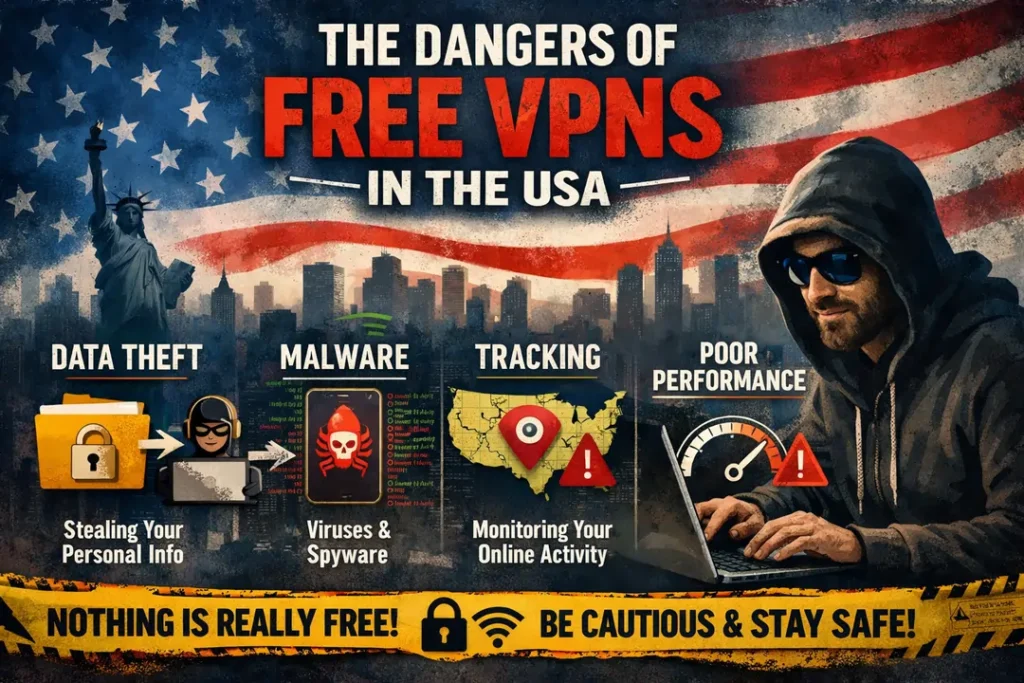
The Risks of Free VPNs in the United States
Free VPN services are widely used in the United States, particularly on mobile devices. The assumption is often that because US internet access is open, a free VPN is “good enough” for privacy or security.
In reality, free VPNs introduce risks that are especially significant in the US environment, where ISPs, copyright enforcement systems, and data brokers actively monetise user data.
Why Free VPNs Are Riskier in the USA
Operating a VPN network is expensive. When users are not paying, revenue is commonly generated through logging, data resale, advertising injection, or cooperation with third parties.
| Risk Area | Free VPNs | Reputable Paid VPNs |
|---|---|---|
| Activity logging | Common and opaque | Explicit no-logs policies |
| Data resale | Frequent (ads, analytics, partners) | Not monetised |
| DMCA cooperation | Often compliant | Minimised through policy and jurisdiction |
| Server congestion | High | Managed capacity |
| Leak protection | Inconsistent | Standardised and audited |
Logging, Data Brokers, and Monetisation
In the United States, browsing data is a commercial asset. Free VPNs frequently monetise user traffic by sharing aggregated or identifiable data with advertising networks or analytics firms.
This directly undermines the privacy benefits users expect from a VPN. A VPN that logs and sells activity data can be worse than using no VPN at all.
How logging works — and why it matters — is explained in the no-logs VPN guide.
Free VPNs and Torrenting in the USA
Many free VPNs explicitly prohibit torrenting or quietly cooperate with copyright complaints. In the US, this can result in DMCA notices being forwarded to users despite VPN usage.
This is one of the most common points of failure for free VPNs. Torrent-specific risks are covered in the torrenting VPN guide.
Performance Problems Misattributed to “VPNs”
Slow speeds, buffering, and dropped connections are often blamed on VPN technology in general, when the real cause is overloaded free VPN infrastructure.
In the USA — where baseline internet speeds are high — these performance issues stand out more clearly. A breakdown of performance factors is available in the VPN performance guide.
Are Any Free VPNs Safe to Use?
A small number of free VPNs operate with transparent limitations rather than hidden monetisation. However, they are not suitable for streaming, torrenting, or sustained privacy use.
If a free option is being considered, it should be evaluated carefully against known risks. Safer options are outlined in the free VPN safety guide .
Practical Guidance for US Users
- Avoid free VPNs for torrenting or P2P traffic
- Do not use free VPNs on public Wi-Fi for sensitive accounts
- Assume activity may be logged unless proven otherwise
- Treat “unlimited free VPN” claims with scepticism
With free VPN risks understood, the final section brings together all use cases, answers remaining questions, and helps determine whether a VPN is the right tool for your situation in the USA.
Final Analysis: VPN Use in the United States and North America
The United States does not restrict internet access, but it operates within a commercial and regulatory environment where data collection, ISP monitoring, and third-party profiling are routine.
This places the USA in a distinct category: high-access, high-surveillance. VPN use here is not about bypassing blocks, but about managing long-term exposure, protecting accounts, and maintaining consistency across networks and borders.
To understand VPN use in the USA properly, it must be viewed as part of the broader North American internet environment, not as a standalone case.
The United States in the North America VPN Landscape
| Country | Access Level | Primary VPN Motivation |
|---|---|---|
| United States | Open | Privacy, ISP monitoring, data brokers |
| Canada | Open | Privacy, public Wi-Fi, data retention |
| Mexico | Open but variable | Public Wi-Fi security, travel consistency |
These differences matter. A VPN configured correctly for the USA will often work well in Canada, but expectations change in Mexico, where infrastructure variability plays a larger role.
For a regional overview, see the North America VPN Hub , which explains how VPN needs shift across borders.
A Decision Framework for US Users
| Your Usage Pattern | VPN Recommendation | Reason |
|---|---|---|
| Home broadband, minimal travel | Optional but beneficial | Reduces ISP-level visibility |
| Frequent public Wi-Fi use | Strongly recommended | Encrypts traffic on shared networks |
| Remote work / SaaS platforms | Recommended | Improves account and session consistency |
| Regular travel to Canada or Mexico | Recommended | Reduces account and access disruptions |
| Expecting anonymity or speed boosts | Not appropriate | VPNs do not provide either |
Frequently Asked Questions (North America Context)
Is using a VPN legal in the United States?
Yes. VPN use is legal in the USA and widely used by individuals, businesses, and remote workers.
Should I use the same VPN in Canada?
In most cases, yes. Canada has similar access conditions, but different data retention expectations. VPNs are commonly used there for privacy and public Wi-Fi protection. See the Canada VPN guide for country-specific details.
Does VPN use matter more when travelling to Mexico?
Yes. In Mexico, VPN use is more strongly tied to public Wi-Fi security, hotel networks, and mobile data switching. Infrastructure consistency varies by region.
Travellers should review the Mexico VPN guide before relying on a default configuration.
Is a VPN necessary for everyday browsing in the USA?
Not strictly necessary, but increasingly common. The decision depends on how much visibility and profiling you are comfortable with over time.
What is the biggest mistake US users make with VPNs?
Expecting a VPN to solve problems it is not designed to address — such as anonymity, platform enforcement, or poor security habits.
Final Perspective
The United States is not a country where VPNs are required to access the internet, but it is a country where long-term data exposure is the default.
Used correctly, a VPN in the USA is a tool for control — not secrecy, not speed, and not rule-breaking — but control over how much of your activity is visible by default.
For users who travel, work remotely, or rely on shared networks, that control often justifies using a VPN. For others, understanding the trade-offs may be the most valuable outcome of this guide.