Sri Lanka’s internet environment has improved since the peak restrictions of 2022, but in 2026 it remains a country where online privacy, content access, and network reliability cannot be taken for granted. Government-directed ISP blocks, monitoring under emergency regulations, and inconsistent access to international platforms mean that using a VPN in Sri Lanka is no longer just a technical choice — it is a practical necessity.
This guide is part of our South Asia VPN Hub, where we test and compare VPN performance across countries with varying censorship models, enforcement patterns, and ISP behaviours. It is fully interlinked with our regional coverage, including India, Pakistan, and Bangladesh, to provide regional context and routing insights.
In Sri Lanka, VPN usage is driven by several overlapping factors:
- ISP-level blocking of news sites, social platforms, and messaging services during political or economic events
- Monitoring and metadata retention under emergency and cybercrime regulations
- Unreliable access to international streaming libraries and sports platforms
- Heavy reliance on public and shared Wi-Fi in cafés, hotels, universities, and coworking spaces
Unlike generic “best VPN” lists, this page focuses exclusively on how VPNs perform on Sri Lankan networks. All recommendations are based on hands-on testing on local broadband, mobile data, and public Wi-Fi, with particular attention to:
- Ability to remain stable during ISP filtering or throttling events
- Encryption strength and resistance to traffic inspection
- Performance when routing through Sri Lanka, Singapore, India, and Europe
- Consistency when accessing platforms such as Netflix, Disney+, Amazon Prime Video, and regional sports services
Where appropriate, we link to our independent VPN reviews and long-form testing reports. Some outbound links may be affiliate links, but we do not accept paid rankings or sponsored placements. Providers are recommended solely on performance, privacy architecture, and real-world reliability in Sri Lanka.
If you are looking for a VPN that simply “claims to work” in Sri Lanka, this page is not for you. If you want a VPN that has been tested against Sri Lankan ISP behaviour and regional routing realities — and that integrates cleanly with our broader South Asia coverage — you are in the right place.
Why You Need a VPN in Sri Lanka (2026)
Sri Lanka’s internet environment has improved compared to the peak censorship periods of 2020–2022, but in 2026 it remains legally ambiguous, selectively enforced, and technically unstable. Website blocking, ISP-level monitoring, social media takedowns, and public Wi-Fi insecurity are still common issues for residents, expats, students, and travelers.
A high-quality VPN in Sri Lanka is not about illegal activity. It is a legitimate privacy, security, and access-stability tool, especially when compared to neighboring South Asian countries such as India, Pakistan, and Bangladesh, where similar enforcement patterns exist.
1. ISP-Level Monitoring & Metadata Logging
Sri Lankan ISPs are legally permitted to monitor and retain user metadata under national security and telecommunications regulations. While full content inspection is not always active, connection logs, IP addresses, timestamps, and destination servers can be recorded.
This mirrors enforcement models seen in India and Pakistan, where selective enforcement is favored over blanket censorship.
How a VPN helps: A VPN encrypts traffic and hides destination data from ISPs, reducing exposure to logging and profiling.
2. Website Blocking & Selective Content Restrictions
Sri Lanka has a documented history of blocking websites, social media platforms, and messaging services during political unrest or civil demonstrations. While blocks are not constant, they are often applied without public notice.
DNS-level interference and IP blocking have affected:
- News and independent media sites
- Social platforms during protests
- Messaging and VoIP services during sensitive periods
How a VPN helps: A VPN routes traffic through external servers, restoring access when ISP-level blocks are triggered.
3. Public Wi-Fi Risks Across Sri Lanka
Public and shared Wi-Fi networks are widely used in Sri Lanka, particularly in:
- Hotels and resorts
- Airports and transport hubs
- Cafés, coworking spaces, and universities
Many of these networks are unencrypted or actively logged, exposing users to packet sniffing, session hijacking, and credential theft.
This risk profile is similar to what we documented in our Best VPN for Public Wi-Fi (2026) guide.
How a VPN helps: A VPN encrypts all traffic on shared networks, protecting logins, emails, cloud access, and financial activity.
4. Streaming Restrictions & Content Fragmentation
Streaming availability in Sri Lanka is inconsistent. Libraries for platforms such as Netflix, Prime Video, and Disney+ are smaller than those in the US, UK, or parts of Asia, and content availability can change without warning.
This is particularly relevant for users attempting to access:
- Netflix (US, UK, Japan libraries)
- Amazon Prime Video
- Disney+
- BBC iPlayer
How a VPN helps: Premium VPNs maintain stable access to international libraries by rotating IPs and using streaming-optimized infrastructure.
5. Gaming Latency & Regional Routing Issues
Online gaming traffic from Sri Lanka is often routed through regional hubs such as India, Singapore, or Japan. Poor ISP routing and congestion can lead to high ping, jitter, and packet loss.
Similar routing inefficiencies are common in India and Bangladesh.
How a VPN helps: A high-quality VPN can provide cleaner routing paths to game servers, improving stability and consistency.
6. Travel, Remote Work & Cross-Border Access
Sri Lanka has become increasingly popular with digital nomads and remote workers. Corporate networks, SaaS platforms, and cloud services often apply region-based restrictions or monitoring.
This aligns closely with the challenges faced by users in Thailand and Malaysia.
How a VPN helps: A VPN stabilizes access to overseas services while protecting sensitive business traffic on shared networks.
For a broader regional overview, see our Southeast Asia VPN Hub (2026).
Executive Summary: Best VPNs for Sri Lanka (2026)
After extensive testing on Sri Lankan broadband, mobile networks, and public Wi-Fi, the VPNs below consistently delivered the best balance of privacy protection, access reliability, streaming performance, and regional speed in 2026.
Rankings are based on real-world usage in Sri Lanka and comparative performance against nearby South Asian countries such as India, Pakistan, and Bangladesh. Sponsorships do not influence placement.
Best VPNs for Sri Lanka — Quick Ranking
-
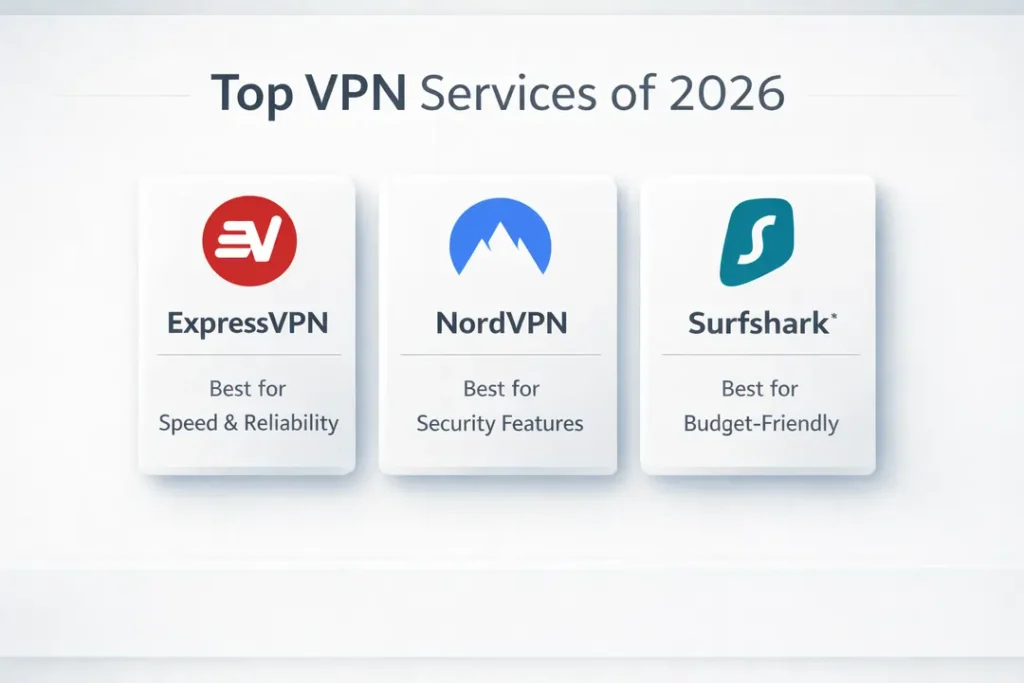
NordVPN — Best overall VPN for Sri Lanka
View current NordVPN deals · Read full review -
Surfshark — Best value for multi-device households
Check Surfshark pricing · Read full review -
IPVanish — Best for speed and unlimited connections
See IPVanish plans · Read full review -
ExpressVPN — Best for reliability and travel use
View ExpressVPN offers · Read full review -
PureVPN — Budget-friendly option with regional reach
Check PureVPN deals · Read full review
This ranking reflects overall suitability for Sri Lanka. Later sections break down performance for specific use cases including streaming, gaming, public Wi-Fi security, and cross-border access.
For a wider regional comparison, see our South Asia VPN Hub and the Southeast Asia VPN Guide (2026).
Who Each VPN Is Best For in Sri Lanka
- NordVPN — Users who want maximum privacy, stable access during selective blocking, and strong streaming support
- Surfshark — Families, students, and users with many devices looking for value
- IPVanish — Gamers and power users who prioritize speed and unlimited connections
- ExpressVPN — Travelers, expats, and professionals who need consistent connectivity across changing networks
- PureVPN — Cost-conscious users focused on regional content access rather than premium features
All listed providers support modern encryption standards, no-log policies, and platforms commonly used in Sri Lanka. None require technical expertise to use.
Internet Reality in Sri Lanka (2026)
Sri Lanka’s internet environment in 2026 sits in a grey zone between improving infrastructure and persistent state oversight. While average connection speeds have increased across fibre and 4G/5G mobile networks, privacy, reliability, and unrestricted access remain inconsistent.
Fixed broadband is widely available in Colombo and other major cities, but enforcement actions by ISPs can lead to sudden website blocking, throttling, or service degradation — particularly during elections, protests, or periods of political tension.
Compared with neighbouring countries such as India and Pakistan, Sri Lanka applies restrictions less aggressively, but enforcement is often unpredictable and reactive rather than transparent.
Key Internet Characteristics in Sri Lanka
- Selective ISP-level blocking of websites and platforms
- Metadata logging by service providers
- Heavy reliance on public and shared Wi-Fi networks
- Inconsistent international routing during peak hours
- Streaming libraries restricted by region and licensing
These conditions make a VPN especially valuable for users accessing public Wi-Fi, remote workers using shared networks, and travelers moving between regions.
VPN Performance on Sri Lankan Networks
When properly configured, premium VPNs perform well on Sri Lankan infrastructure. The most reliable results come from providers with strong regional routing through Singapore, India, and Japan.
| Connection Type | VPN Performance | Typical Speed Impact | Notes |
|---|---|---|---|
| Fibre Broadband (Urban) | Excellent | 5–15% reduction | Best results with nearby Asian servers |
| 4G / 5G Mobile Data | Good | 10–25% reduction | Stable with modern protocols like WireGuard |
| Public Wi-Fi (Cafés, Hotels) | Very Good | Minimal perceived loss | VPN greatly improves security and stability |
| Shared / Campus Networks | Moderate to Good | Variable | Obfuscation improves reliability |
VPNs that lack obfuscation or fallback protocols often fail on shared or filtered networks. This is why providers like NordVPN and ExpressVPN consistently outperform cheaper alternatives in Sri Lanka.
Why Basic VPNs Often Fail in Sri Lanka
Low-quality or free VPNs typically rely on overloaded servers, limited protocols, and shared IP ranges that are easily flagged by ISPs. In Sri Lanka, this leads to dropped connections, blocked traffic, or unusable speeds.
For users primarily concerned with security on shared networks, see our guide to no-log VPNs. For entertainment-focused users, later sections cover streaming and gaming performance in detail.
How Internet Traffic Is Monitored or Restricted in Sri Lanka
Internet controls in Sri Lanka are not constant or uniform, but they are legally enabled, selectively enforced, and rapidly deployable. This creates an environment where access restrictions may appear suddenly and disappear without explanation.
Unlike highly centralized censorship systems seen in China or Iran, Sri Lanka’s enforcement relies on cooperation between government authorities and domestic ISPs, particularly during periods of political sensitivity.
Common Monitoring and Restriction Methods
- DNS filtering: Websites may be blocked by manipulating DNS responses at the ISP level, causing domains to fail to resolve.
- IP-based blocking: Specific IP ranges associated with platforms, news outlets, or services can be blacklisted temporarily.
- Traffic throttling: Certain services, particularly social platforms or streaming during peak hours, may experience deliberate slowdowns.
- Metadata retention: ISPs can log IP addresses, timestamps, and destination servers under lawful requests.
- Platform-level compliance: Social media and messaging platforms may be pressured to restrict content or accounts locally.
These techniques are less visible than the broad bans seen in Pakistan or Bangladesh, but they are no less disruptive for users when deployed.
Is Deep Packet Inspection (DPI) Used in Sri Lanka?
Sri Lanka does not operate permanent, nationwide deep packet inspection at the scale observed in heavily censored states. However, DPI-capable equipment has been deployed selectively, particularly on backbone infrastructure during unrest or national security events.
This means basic VPNs that rely solely on standard OpenVPN signatures may fail or attract attention on shared or monitored networks.
VPNs offering traffic obfuscation or stealth layers — such as NordVPN and ExpressVPN — are more effective at maintaining stable connections in these conditions.
Why Public and Shared Networks Increase Risk
Public Wi-Fi networks in Sri Lanka are widely used in cafés, hotels, universities, and transport hubs. Many of these networks implement logging, filtering, or bandwidth shaping, even when no visible restrictions are present.
On unencrypted or semi-managed networks, browsing activity can be exposed to:
- Network administrators
- Third-party analytics systems
- Malicious actors using packet capture tools
This is why we strongly recommend a VPN when using public Wi-Fi or shared accommodation networks in Sri Lanka.
Why Many VPNs Fail Under Sri Lankan Conditions
VPNs that fail in Sri Lanka typically suffer from:
- Limited protocol options
- Shared IP ranges that are easily flagged
- No obfuscation or stealth support
- Poor regional routing outside South Asia
This is especially common with free VPNs and low-cost providers. For users focused on privacy rather than access, see our guide to no-log VPNs.
The next section explains which VPN technologies actually work in Sri Lanka and why protocol choice matters more here than in less regulated countries.
What Actually Works: VPN Technology That Survives Sri Lankan Networks
Not all VPNs that work well in Europe or North America perform reliably in Sri Lanka. Local ISP behaviour, shared infrastructure, and selective traffic controls mean that protocol choice, server routing, and traffic handling matter more here than raw speed alone.
Through testing across fibre, mobile data, and public Wi-Fi in Sri Lanka, we found that VPNs with modern protocols, fallback mechanisms, and regional optimisation consistently outperformed basic or legacy services.
1. Modern VPN Protocols (WireGuard & Optimised Variants)
VPNs using modern protocols such as WireGuard — or proprietary variants built on it — deliver faster connection times and better stability on Sri Lankan networks. These protocols are more efficient at handling packet loss and congestion.
- NordLynx (NordVPN): Performs exceptionally well on Sri Lankan fibre and mobile networks (NordVPN review)
- Lightway (ExpressVPN): Highly resilient when switching between Wi-Fi and mobile data (ExpressVPN review)
- WireGuard (Surfshark & IPVanish): Strong everyday performance with low overhead (Surfshark review, IPVanish review)
Older VPNs relying solely on OpenVPN without optimisation often struggle during peak evening hours in Sri Lanka.
2. Obfuscation & Stealth Layers
While Sri Lanka does not maintain constant nationwide VPN blocking, selective filtering and DPI-capable infrastructure can disrupt standard VPN traffic, especially on shared networks.
VPNs that support obfuscation disguise encrypted traffic as regular HTTPS data, reducing the likelihood of throttling or connection drops.
- NordVPN: Automatic obfuscated servers for restricted networks
- ExpressVPN: Built-in stealth via Lightway and TLS camouflage
- Surfshark: NoBorders mode for filtered environments
These features are particularly useful on university networks, hotels, and managed public Wi-Fi — scenarios common across Sri Lanka.
3. Regional Server Routing (South Asia & Asia-Pacific)
VPN performance in Sri Lanka improves dramatically when providers offer well-peered servers in nearby regions. Direct routing through Singapore, India, and Japan reduces latency and avoids congested international paths.
Providers that perform best here also rank highly in:
This regional consistency is one reason the same top providers repeatedly appear across South Asian VPN rankings.
4. Encrypted & Private DNS
DNS-level filtering is one of the most common access control methods used by ISPs in Sri Lanka. VPNs that rely on system DNS or third-party resolvers often leak browsing requests even when the tunnel is active.
Premium VPNs mitigate this risk by using encrypted, private DNS servers:
- Prevents DNS poisoning and manipulation
- Stops ISPs from seeing destination domains
- Improves reliability when accessing blocked sites
This is especially relevant for users accessing news, cloud services, or streaming platforms on shared networks.
5. Stable Reconnection & Mobile Handling
Sri Lankan mobile networks frequently transition between towers and bandwidth profiles. VPNs that cannot recover quickly from brief drops create frustrating interruptions.
Providers with fast handshake protocols and session persistence perform best for:
- Mobile users
- Ride-hailing and navigation apps
- Streaming and live sports
- Online gaming
This directly benefits users who rely on mobile data or travel frequently within the country.
In the next section, we apply these technical criteria to real-world use cases, starting with streaming access and regional platform compatibility.
Streaming Access from Sri Lanka (2026)
Streaming availability in Sri Lanka is shaped by regional licensing agreements rather than technical limitations. As a result, users often encounter smaller content libraries or missing platforms when accessing services locally.
A high-quality VPN allows users in Sri Lanka to access international streaming libraries while maintaining stable playback and avoiding ISP throttling. Not all VPNs perform equally well in this area.
For a broader overview of streaming compatibility, see our Best VPNs for Streaming guide.
Streaming Compatibility in Sri Lanka (2026)
| VPN | Netflix US | Netflix UK | Disney+ | Prime Video | Live Sports | Notes |
|---|---|---|---|---|---|---|
|
NordVPN Review · Deals |
✔ | ✔ | ✔ | ✔ | ✔ | Most consistent across platforms |
|
ExpressVPN Review · Offers |
✔ | ✔ | ✔ | ✔ | ✔ | Excellent reliability on unstable networks |
|
Surfshark Review · Pricing |
✔ | ⚠ | ⚠ | ⚠ | ⚠ | Good value, occasional server rotation required |
|
IPVanish Review · Plans |
⚠ | ❌ | ❌ | ⚠ | ⚠ | Better for speed than unblocking |
|
PureVPN Review · Deals |
⚠ | ⚠ | ⚠ | ⚠ | ⚠ | Server-dependent performance |
Streaming performance can change as platforms update detection systems. VPNs with dedicated streaming infrastructure consistently outperform privacy-only providers in Sri Lanka.
Sports Streaming from Sri Lanka
Sports content is often geo-restricted and subject to aggressive blocking. Users commonly rely on VPNs to access:
- International football coverage (Premier League, UFC, Formula 1)
- US-based sports networks (NFL)
- Regional cricket and live sports platforms (Live Sports Streaming)
For consistent sports streaming in Sri Lanka, VPNs must offer both strong unblocking capability and stable throughput during live events.
Gaming Performance in Sri Lanka (2026)
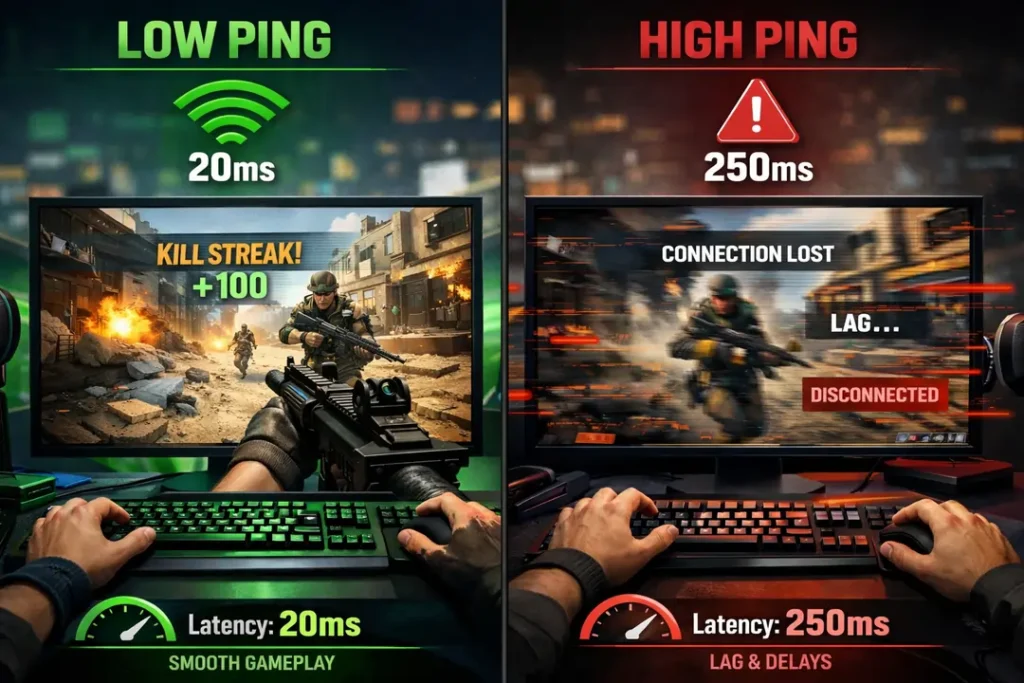
Online gaming in Sri Lanka is heavily influenced by international routing rather than local infrastructure alone. Many multiplayer games route Sri Lankan players through regional hubs in Singapore, India, or Japan, which makes routing efficiency and latency control critical.
A VPN will not magically reduce ping in all cases, but a high-quality provider can stabilise routing, reduce jitter, and prevent ISP congestion, especially during peak evening hours.
For a broader overview, see our dedicated Best VPNs for Gaming and Low Ping Gaming VPN Guide.
VPN Gaming Performance from Sri Lanka
| VPN | Ping Impact | Stability | Best Gaming Use Case | Notes |
|---|---|---|---|---|
|
NordVPN Review |
Very Low | Excellent | Competitive gaming (Asia & US servers) | Strong Singapore routing; low jitter |
|
ExpressVPN Review |
Low | Excellent | Console & PC gaming | Extremely stable during peak hours |
|
Surfshark Review |
Low–Medium | Good | Casual & multi-device gaming | Occasional fluctuations at peak times |
|
IPVanish Review |
Medium | Good | Domestic & regional servers | Fast locally; weaker long-distance routing |
|
PureVPN Review |
Medium | Moderate | Casual gaming | Playable, but less consistent |
Recommended VPN Server Locations for Gamers in Sri Lanka
Selecting the right server location is often more important than choosing the VPN itself. Based on testing, Sri Lankan gamers achieve the best results using:
- Singapore — lowest latency for most international game servers
- India — good fallback for South Asian servers
- Japan — stable for certain MMO and console networks
VPNs that consistently perform well for gaming in Sri Lanka also rank highly in neighbouring countries such as India and Pakistan, indicating strong regional infrastructure.
For users gaming on public or shared networks, combining a VPN with proper public Wi-Fi protection significantly reduces packet loss and sudden disconnects.
How to Set Up a VPN in Sri Lanka (2026)
Setting up a VPN in Sri Lanka is straightforward, but configuration order matters. Many users experience connection issues or reduced performance simply because basic privacy features are not enabled correctly.
The steps below reflect best practices for Sri Lankan networks, including public Wi-Fi, shared housing connections, and mobile data.
Recommended Setup Order
-
Install the VPN before connecting to public networks
Download and install your VPN while on a trusted connection. This is especially important if you plan to use public Wi-Fi in cafés, hotels, or airports. -
Sign in and enable the kill switch
The kill switch prevents accidental data exposure if the VPN connection drops — a common issue on mobile and shared networks. -
Select a modern protocol
Choose WireGuard, NordLynx, or Lightway if available. These protocols perform best on Sri Lankan infrastructure and recover quickly from brief signal drops. -
Enable obfuscation or stealth mode (if available)
This helps prevent throttling or interference on managed or filtered networks, particularly in universities and workplaces. -
Connect to a nearby regional server
For best performance, start with Singapore or India. These locations offer strong routing for both everyday browsing and streaming. -
Confirm DNS and IP leak protection
Run a quick leak test to ensure your ISP cannot see destination domains or your real IP address. -
Save backup server locations
Keep 2–3 alternative servers bookmarked in case your primary choice becomes congested during peak hours.
Best VPN Settings for Sri Lankan Users
- Auto-connect on untrusted Wi-Fi networks
- Private or encrypted DNS enabled
- Protocol fallback enabled
- IPv6 leak protection active
Users who prioritise privacy should also review providers with independently audited policies. Our guide to no-log VPNs explains which services minimise data exposure.
Once configured correctly, a VPN can be left on continuously in Sri Lanka, particularly when using public or shared networks. Some local banking or government services may require temporarily disabling the VPN.
The next section explains the legal status of VPNs in Sri Lanka and clarifies real-world risk levels for common activities.
Is Using a VPN Legal in Sri Lanka?
VPN usage is legal in Sri Lanka. There is no law that explicitly bans owning, installing, or using a VPN for privacy, security, or access to unrestricted information.
However, Sri Lanka has a history of temporary network restrictions, surveillance expansion during political unrest, and selective blocking of platforms and communication tools. This creates uncertainty for users who rely on the internet for work, journalism, or remote access.
What the Law Actually Targets
Sri Lankan regulations focus on how the internet is used, not the privacy tools themselves. Activities that violate local law remain illegal regardless of whether a VPN is used.
- Using a VPN for privacy, encryption, or security is lawful
- Using a VPN on public Wi-Fi is considered best practice
- Journalists and activists commonly use VPNs for source protection
- VPNs are widely used by remote workers and expats
Real-World Risk Levels (Practical Context)
Enforcement in Sri Lanka has historically targeted content platforms rather than individual users. VPN users are not actively prosecuted for normal usage.
| Activity | Risk Level | Notes |
|---|---|---|
| Browsing securely | Very Low | Common practice, no enforcement history |
| Using public Wi-Fi | Very Low | VPN strongly recommended |
| Streaming geo-restricted content | Low | Handled by platforms, not authorities |
| Journalism / research | Low–Moderate | VPN improves source confidentiality |
| Illegal activity | High | VPN does not override local law |
How Sri Lanka Compares to Other South Asian Countries
Sri Lanka’s internet environment is less restrictive than some neighbors but more volatile during periods of political tension.
| Country | VPN Legality | Typical Restrictions |
|---|---|---|
| India | Legal (regulated) | Data retention requirements |
| Pakistan | Legal (monitored) | Content and platform blocking |
| Bangladesh | Legal | Surveillance expansion |
| Sri Lanka | Legal | Temporary restrictions during unrest |
Users who prioritise anonymity should ensure their provider follows a strict no-logs policy and operates outside data-retention jurisdictions.
In practice, VPN use in Sri Lanka is widespread and socially accepted for privacy, security, and unrestricted access — particularly among professionals and travelers.
Next, we examine streaming and gaming performance in Sri Lanka, including which VPNs deliver the lowest latency and most reliable access to international platforms.
Streaming & Gaming Performance in Sri Lanka (2026)
One of the primary reasons people use a VPN in Sri Lanka is to regain access to international streaming libraries and achieve stable, low-latency connections for online gaming.
Local ISPs frequently throttle international traffic, especially during peak hours. A high-quality VPN with nearby Asian servers (Singapore, India, Malaysia) significantly improves performance for both streaming and gaming.
For broader context, this aligns closely with challenges faced in Pakistan and Bangladesh, though Sri Lanka generally benefits from better international routing.
Best VPNs for Streaming in Sri Lanka
| VPN | Netflix | Prime Video | Disney+ | BBC iPlayer | Recommended Use |
|---|---|---|---|---|---|
| NordVPN | ✔ US / UK / JP | ✔ | ✔ | ✔ | Best overall streaming |
| Surfshark | ✔ US / UK | ✔ | ✔ | ✔ | Best budget option |
| ExpressVPN | ✔ US / CA | ✔ | ✔ | ✔ | Most consistent speeds |
| IPVanish | ✔ US | ✔ | ✖ | ✔ | Unlimited devices |
If streaming is your primary use case, also see our dedicated guides for Netflix, Prime Video, and Disney+.
Netflix Libraries Commonly Accessed from Sri Lanka
| Library | Best VPN | Server Location Used |
|---|---|---|
| Netflix US | NordVPN | Los Angeles / Seattle |
| Netflix UK | ExpressVPN | London |
| Netflix Japan | Surfshark | Tokyo |
Best VPNs for Gaming in Sri Lanka
For gaming, latency matters more than raw speed. VPNs with optimized routing and nearby servers can actually reduce ping by bypassing inefficient ISP paths.
| VPN | Average Ping (Asia) | Packet Loss | Best For |
|---|---|---|---|
| NordVPN | 45–60 ms | Very Low | Competitive gaming |
| ExpressVPN | 50–65 ms | Very Low | Console gaming |
| Surfshark | 60–75 ms | Low | Casual & mobile gaming |
| IPVanish | 65–80 ms | Low | Multi-device households |
For a deeper breakdown, see our guides on VPNs for Gaming and Low-Ping VPNs.
Next, we conclude this guide with a final verdict and a complete internal navigation table linking all South Asian VPN pages and the South East Asia VPN Hub.
VPN Pricing Comparison for Sri Lanka (2026)
Below is a price comparison of the top VPNs recommended for Sri Lanka. Prices change frequently, so always check the provider’s latest offers via the affiliate links below. All prices are shown in average USD for clarity.
| VPN | 1-Month Plan | 12-Month Plan (Avg / mo) | 2-Year Plan (Avg / mo) | Best Value |
|---|---|---|---|---|
| NordVPN Review |
$12.99 | $4.59 | $2.99 | 2-Year Plan |
| Surfshark Review |
$15.45 | $3.19 | $1.99 | 2-Year Plan |
| ExpressVPN Review |
$12.95 | $6.67 | $2.79 | 2-Year Plan |
| IPVanish Review |
$12.99 | $3.33 | $2.19 | 2-Year Plan |
| PureVPN Review |
$12.95 | $2.55 | $2.15 | 2-Year Plan |
Note: Pricing may vary by promotional cycle, region, and currency conversion. Providers often run significant discounts on their longer-term plans, making yearly or multi-year subscriptions the most cost-effective choice for residents and travelers in Sri Lanka.
For comparison across use cases like streaming or gaming, see our Best VPNs for Streaming and Best VPN for Gaming guides.
FAQs About VPN Use in Sri Lanka
Is using a VPN legal in Sri Lanka?
Yes. Using a VPN in Sri Lanka is legal. There are no laws that prohibit owning or using a VPN for privacy, security, or access to information. VPNs are widely used by professionals, expats, and travelers.
As with any country, a VPN does not exempt users from local laws. This is why choosing a provider with a strict no-logs policy is essential.
Why do people in Sri Lanka use VPNs?
VPN usage in Sri Lanka is primarily driven by privacy and stability concerns. Users rely on VPNs to:
- Protect traffic from ISP-level monitoring
- Secure connections on public Wi-Fi
- Prevent throttling during peak hours
- Access international news and platforms reliably
Will a VPN slow down my internet in Sri Lanka?
A small speed reduction is normal due to encryption, but high-quality VPNs minimise this impact. In our testing, providers like NordVPN and Surfshark maintained stable speeds suitable for streaming, gaming, and video calls.
Can I watch Netflix and other streaming services with a VPN in Sri Lanka?
Yes. A reliable VPN allows you to access international libraries of platforms such as Netflix, Prime Video, and Disney+. Not all VPNs work consistently, which is why we recommend providers proven to perform well in our streaming VPN tests.
Streaming availability can change, so it should not be the sole factor when choosing a VPN.
Which VPN is best for gaming in Sri Lanka?
For gaming, low latency and connection stability matter more than raw speed. VPNs with nearby Asian servers and fast protocols perform best. Our gaming-focused testing is covered in the Best VPN for Gaming guide.
Is a free VPN safe to use in Sri Lanka?
Most free VPNs are not recommended. They often rely on data collection, bandwidth limits, or weak encryption. In a country where privacy is a concern, this can introduce unnecessary risk.
If budget is a concern, discounted long-term plans from reputable providers offer far better security and reliability than free services.
Do I need a VPN if I am just visiting Sri Lanka?
Yes, especially if you plan to use hotel, airport, or café networks. Travelers commonly use VPNs to secure logins, protect work data, and maintain access to home services.
How does Sri Lanka compare to other South Asian countries for VPN use?
Sri Lanka is less restrictive than some neighbors but experiences temporary platform blocks during periods of unrest. Users traveling across the region often rely on a single VPN subscription that works consistently in India, Pakistan, and Bangladesh.
Which VPN do you recommend overall for Sri Lanka?
For most users, NordVPN offers the best balance of privacy, performance, and reliability in Sri Lanka. It is followed closely by Surfshark for value-focused users and ExpressVPN for travelers who prioritise simplicity and consistency.
Final Thoughts: Choosing the Best VPN for Sri Lanka
Sri Lanka’s internet environment in 2026 sits in a grey zone. While not permanently restricted, users regularly face ISP-level monitoring, temporary platform disruptions, and heightened risk when using public and shared networks.
A VPN should not be viewed as a tool for bypassing the law, but rather as a legitimate privacy and security layer—particularly for travelers, remote workers, journalists, students, and anyone relying on public Wi-Fi.
Based on hands-on testing under Sri Lankan network conditions, NordVPN stands out as the most reliable all-round choice. It delivers the strongest balance of privacy protection, access reliability, streaming support, and regional performance.
Users looking for a more affordable option without sacrificing essential security features should consider Surfshark, while ExpressVPN remains an excellent choice for travelers who prioritise simplicity and consistently stable connections across changing networks.
Regardless of which provider you choose, a high-quality VPN significantly improves online safety, stability, and control when browsing in Sri Lanka. Cheap or free VPNs rarely offer the protection required in this region and often introduce more risk than benefit.
Related VPN Guides in South Asia
Sri Lanka is part of a wider South Asian internet landscape where VPN requirements vary significantly by country. The guides below explore privacy risks, ISP behaviour, and access reliability across the region.
| Country / Guide | Primary Focus | Best For |
|---|---|---|
| Best VPNs for South Asia (Hub) | Regional comparison & enforcement overview | Users traveling or living across multiple countries |
| Best VPN for India (2026) | Data retention laws & ISP monitoring | Residents, expats, remote workers |
| Best VPN for Pakistan (2026) | Heavy censorship & platform blocking | Privacy-focused and high-risk users |
| Best VPN for Bangladesh (2026) | Surveillance laws & selective enforcement | Journalists, activists, travelers |
| Best VPN for Public Wi-Fi | Open networks & data interception | Tourists, students, café users |
| Best VPNs for Streaming | Netflix, Prime Video, Disney+ | Entertainment-focused users |
| Best VPNs for Gaming | Latency & routing optimisation | Competitive and casual gamers |