

As of 2026, Mexico offers open and unrestricted internet access, but it remains a fundamentally different VPN environment from the United States or Canada. VPN use here is driven less by censorship or ISP surveillance and more by public Wi-Fi exposure, variable infrastructure, and frequent network switching.
For travellers, expats, digital nomads, and remote workers, a VPN in Mexico is often a practical necessity rather than a theoretical upgrade. Shared networks are widely used, mobile data frequently replaces fixed broadband, and account security can suffer when connections change repeatedly.
If you are new to VPNs or unsure how they work at a technical level, the VPN fundamentals guide provides a clear, non-technical explanation before continuing.
This guide is written for real-world conditions in Mexico in 2026. It explains when a VPN genuinely adds value, where expectations should be kept realistic, and how to choose a provider that performs reliably on Mexican networks.
Why Mexico Is a Distinct VPN Environment
Mexico sits between two very different connectivity models. Unlike the United States — where VPNs are primarily used to limit ISP-level data collection — and unlike Canada, where infrastructure is broadly consistent, Mexico combines open access with uneven reliability.
Internet quality varies noticeably between major cities, smaller towns, and resort areas. Public Wi-Fi is heavily relied upon in cafés, hotels, apartments, and co-working spaces, making network security a central concern.
In practice, VPNs in Mexico are most commonly used to:
- Secure public and shared Wi-Fi connections
- Protect online accounts while travelling or relocating
- Maintain stability when switching between Wi-Fi and mobile data
- Reduce exposure on unmanaged hotel or apartment networks
These use cases are especially relevant for readers who regularly rely on public networks. A deeper breakdown of travel-related scenarios is covered in the VPNs for travelling guide.
Mexico in the North America VPN Landscape
Mexico is part of the broader North American internet region, but its VPN requirements differ materially from its neighbours. Understanding this context helps avoid misconfigured setups and unrealistic expectations.
A regional overview is available in the North America VPN Hub , which explains how VPN use changes across borders.
Readers who regularly move between countries may also want to compare:
The next section explains who this guide is for and which types of users benefit most from using a VPN in Mexico.


Who This Guide Is For
VPN use in Mexico is not driven by a single type of user. It varies depending on how you connect, how often your network changes, and how much you rely on shared or public internet access.
This guide is written to address the needs of people who use the internet in Mexico under real-world conditions — not ideal ones.
Travellers and Short-Term Visitors
Mexico is one of the most visited countries in the world, and travellers frequently rely on hotel Wi-Fi, café networks, airports, and mobile data switching.
For travellers, VPNs are most often used to:
- Secure connections on public and hotel Wi-Fi
- Protect online accounts while moving between networks
- Maintain access to home-country services while abroad
These scenarios are covered in more depth in the VPNs for travelling guide, which complements the Mexico-specific advice in this page.
Expats and Long-Term Residents
Expats and long-term residents in Mexico often use a mix of home broadband, shared apartment Wi-Fi, and mobile connections. Over time, this creates repeated exposure on unmanaged networks.
For this group, VPNs are commonly used to:
- Secure everyday browsing on shared connections
- Access banking, work, and government services safely
- Reduce account security flags caused by network changes
Users in this category often benefit from more stable, privacy-focused VPN configurations, which are discussed later in the provider comparison sections.
Remote Workers and Digital Nomads
Mexico is a major hub for remote workers and digital nomads. This group typically relies on cloud platforms, internal dashboards, and real-time collaboration tools.
VPNs are frequently used to:
- Secure access to work systems on public Wi-Fi
- Maintain consistent login locations for SaaS platforms
- Reduce interruptions caused by network switching
If your work depends on consistent connectivity, understanding how VPNs interact with mobile and broadband networks is essential. Performance expectations are covered later, as well as in the VPN performance guide.
Local Users on Shared or Public Networks
Many people in Mexico regularly use shared apartment Wi-Fi, co-working spaces, cafés, or public hotspots.
For these users, VPNs are primarily a network security tool, not a way to bypass restrictions. Encrypting traffic on shared networks reduces exposure to local monitoring and misuse.
Who This Guide May Not Be For
This guide may be less relevant if you:
- Use only private home broadband
- Rarely connect to public or shared Wi-Fi
- Do not travel or switch networks frequently
- Expect a VPN to increase internet speed
For readers unsure whether a VPN is appropriate, the VPN explained guide provides a neutral overview of what VPNs do and do not offer.
The next section explains why you might need a VPN in Mexico, focusing on the most common real-world use cases and where VPNs provide the most value.
Why You Might Need a VPN in Mexico
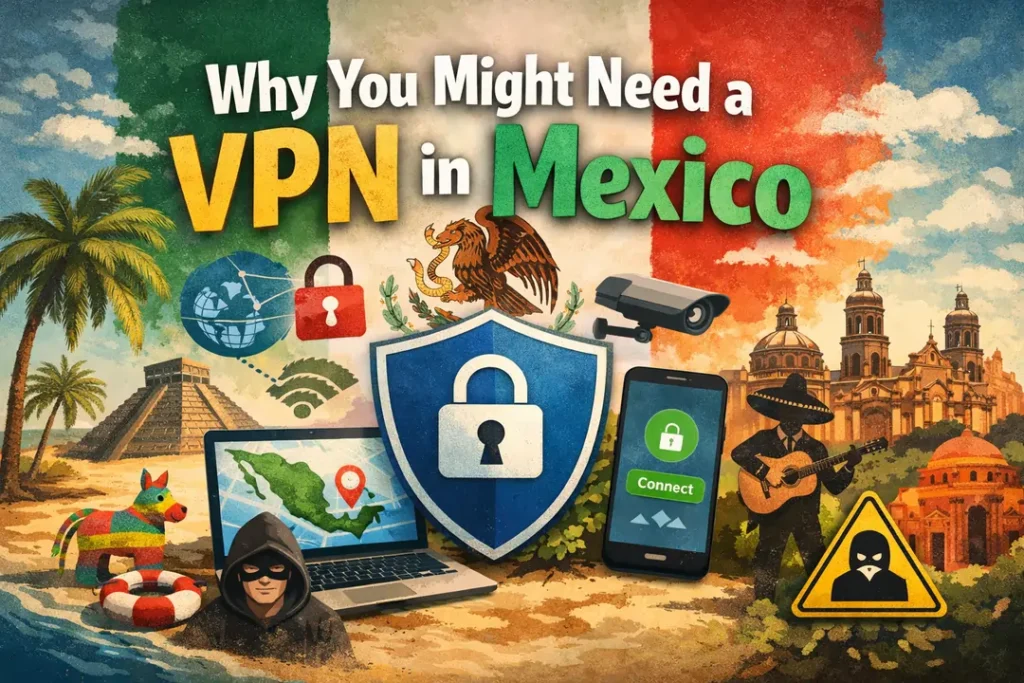
Mexico does not restrict access to the internet, and most websites and services are available without interference. For this reason, VPN use in Mexico is rarely about bypassing blocks or avoiding censorship.
Instead, VPNs are used to address network security, account stability, and exposure on shared connections — issues that arise from how people actually connect to the internet across the country.
Public Wi-Fi Is the Primary Driver
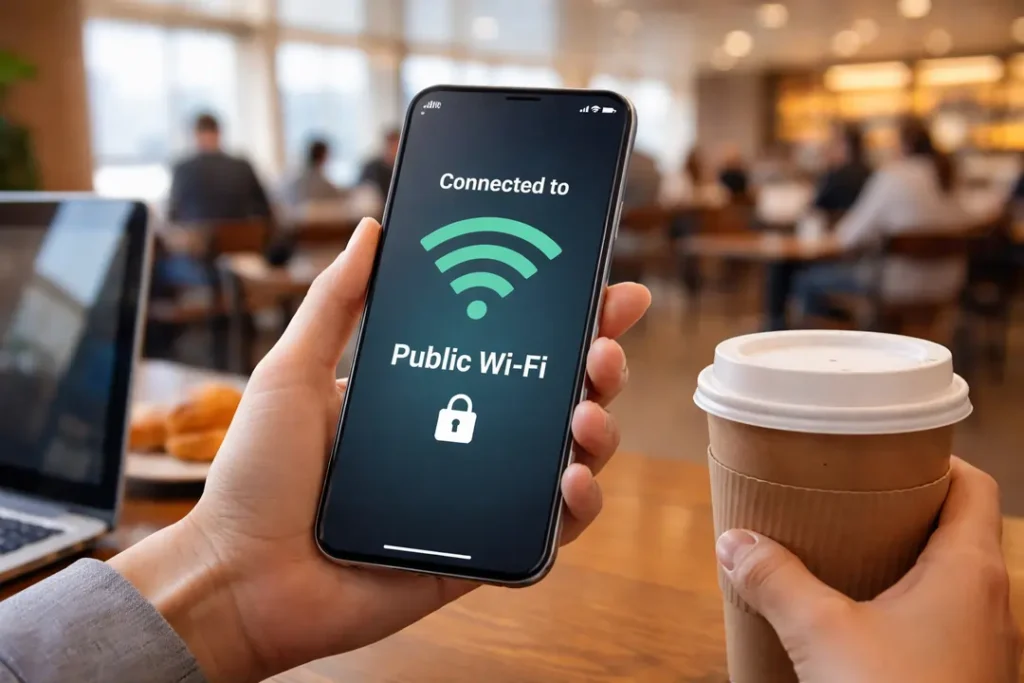
Public and shared Wi-Fi networks are widely relied upon in Mexico, particularly in cafés, hotels, apartments, airports, and co-working spaces. These networks are designed for convenience, not isolation between users.
On shared Wi-Fi, other connected devices may be able to:
- Observe unencrypted traffic patterns
- Exploit misconfigured devices
- Intercept poorly secured sessions
A VPN encrypts traffic between your device and the VPN server, preventing local network observers from seeing what services you are accessing. This is explained more fully in the VPN fundamentals guide.
Readers who frequently rely on cafés, hotels, or airport networks may also benefit from the dedicated VPNs for public Wi-Fi guide , which focuses specifically on shared-network risks and protections.
Frequent Network Switching
In Mexico, many users switch regularly between:
- Hotel or apartment Wi-Fi
- Café or co-working networks
- Mobile data connections
Each network change creates a new exposure point and can trigger security checks from email providers, banks, and work platforms.
Using a VPN helps maintain a more consistent connection profile, reducing unnecessary account verification and session interruptions.
Account Security While Travelling or Relocating
Many online services monitor login behaviour closely. Repeated logins from unfamiliar networks — especially across borders — can result in temporary restrictions or additional verification steps.
VPNs are commonly used by travellers and expats in Mexico to reduce account friction, particularly when accessing:
- Email and cloud storage
- Banking and financial services
- Remote work dashboards
Travel-specific VPN use cases are covered in more detail in the VPNs for travelling guide.
What VPNs Are Not Used for in Mexico
Setting clear expectations is important. In Mexico, VPNs are generally not required for:
- Accessing social media or news websites
- Bypassing government restrictions
- Improving baseline internet speeds
If you are unsure what problems a VPN can realistically solve, the VPN explained guide provides a clear breakdown of capabilities and limits.
With the primary use cases established, the next section examines internet conditions in Mexico, including urban vs regional connectivity and how this affects VPN performance.

Internet Conditions in Mexico
Internet access in Mexico is open and widely available, but performance and reliability vary more than in the United States or Canada. Understanding these conditions is essential for setting realistic VPN expectations.
VPN performance in Mexico is influenced less by restrictions and more by infrastructure consistency, network congestion, and connection type.
Urban vs Regional Connectivity
Major cities such as Mexico City, Guadalajara, and Monterrey benefit from relatively strong broadband infrastructure. Fibre and high-speed cable connections are common, and latency to nearby servers is generally acceptable.
Outside major urban centres, connectivity can be more variable. Regional broadband and wireless providers may experience higher latency, inconsistent speeds, and greater sensitivity to congestion.
| Location Type | Typical Connection Quality | VPN Performance Expectation |
|---|---|---|
| Major cities | Stable broadband and fibre | Minimal speed loss with a quality VPN |
| Smaller cities | Mixed broadband quality | Good stability, moderate speed variation |
| Regional / rural areas | Wireless or legacy infrastructure | Stability matters more than raw speed |
Broadband vs Mobile Networks
Fixed broadband connections provide the most predictable VPN performance in Mexico. These are best suited for remote work, streaming, and longer sessions.
Mobile data is widely used, especially by travellers and remote workers. Performance can fluctuate significantly when moving between locations or switching networks.
VPNs that handle packet loss and network handoffs well tend to perform better on mobile connections. This is discussed further in the VPN performance guide.
Congestion and Time-of-Day Effects
Evening congestion is common, particularly in densely populated areas and residential zones. During peak hours, both VPN and non-VPN traffic may experience slower speeds.
These slowdowns are typically caused by local network saturation, not VPN limitations. Understanding this distinction helps avoid misattributing performance issues.
What This Means for VPN Use in Mexico
In practical terms, Mexico’s internet conditions mean that:
- VPNs generally perform well in major cities
- Stability is more important than peak speed in regional areas
- Mobile users benefit from resilient VPN protocols
- Congestion-related slowdowns affect all traffic, not just VPNs
These factors directly influence which VPN features matter most in Mexico. The next section outlines what to look for when choosing a VPN for Mexico, based on these real-world conditions.
Factors to Consider When Choosing a VPN for Mexico
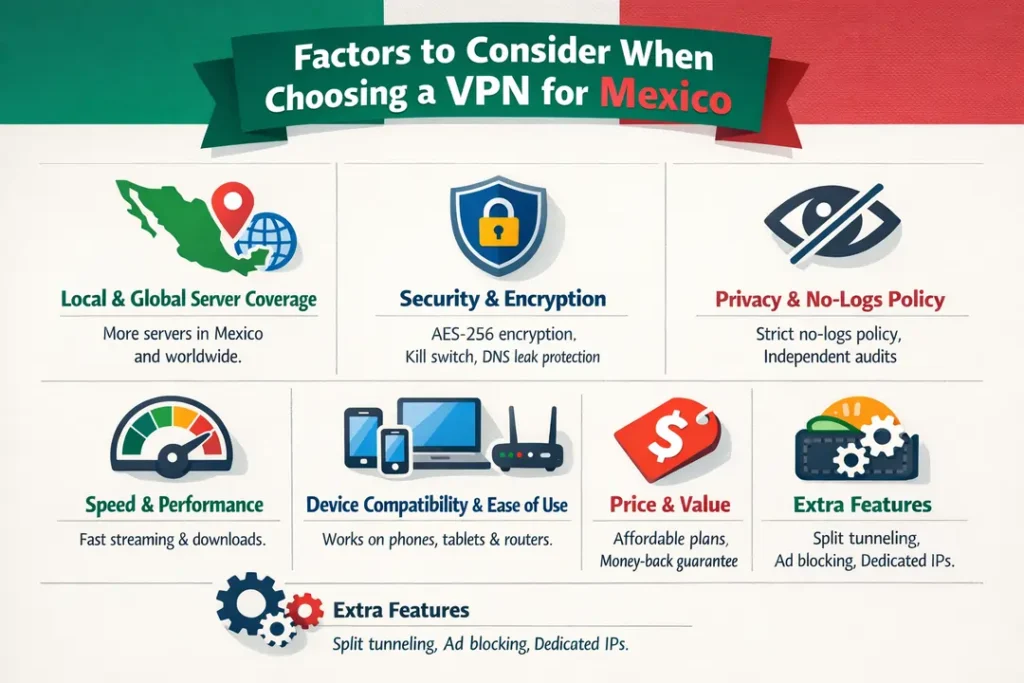
Choosing a VPN for Mexico requires a different set of priorities than choosing one for highly restricted or heavily regulated countries. The goal is not evasion, but connection security, stability, and consistency across changing networks.
Based on real-world usage patterns in Mexico, the following factors have the greatest impact on day-to-day VPN performance and reliability.
Public Wi-Fi Protection and Encryption Quality
Public and shared Wi-Fi is the single most common reason people use VPNs in Mexico. A VPN must provide strong, always-on encryption without requiring constant manual reconnection.
Features such as automatic Wi-Fi protection, reliable kill switches, and modern encryption protocols matter more here than advanced obfuscation tools. A broader discussion of Wi-Fi-specific risks is available in the VPNs for public Wi-Fi guide .
Stability on Mobile and Network Switching
Many users in Mexico move frequently between Wi-Fi networks and mobile data. VPNs that struggle with network handoffs can disconnect silently, leaving traffic unprotected.
Providers that handle packet loss, reconnect quickly, and maintain sessions across network changes offer a noticeably better experience.
Nearby Server Availability
Physical distance to VPN servers plays a role in latency and stability. For Mexico, strong coverage in:
- The United States
- Mexico (where available)
- Nearby North American regions
tends to produce better results than relying on distant locations. This becomes especially relevant for streaming, gaming, and real-time communication.
Clear Privacy Policies and Logging Practices
While Mexico does not impose heavy surveillance, user privacy still depends heavily on the VPN provider’s data practices.
Transparent no-logs policies, independent audits, and clear ownership structures matter more than marketing claims. Testing and audit methodology is explained in detail in the VPN audit and testing overview .
App Quality and Ease of Use
VPNs used in Mexico are often installed on multiple devices, including phones, laptops, and tablets. Apps should be stable, intuitive, and capable of running in the background without constant user intervention.
Overly complex interfaces or unreliable mobile apps tend to cause more problems than they solve.
What Matters Less in Mexico
Certain VPN features are less critical for users in Mexico:
- Obfuscation or stealth modes designed for censorship
- Exotic server locations far outside North America
- Tools aimed at bypassing government blocks
Understanding which features matter — and which do not — helps narrow choices quickly. The next section explains how we test VPNs specifically for Mexico and why some providers perform better than others under these conditions.
How We Test VPNs for Mexico
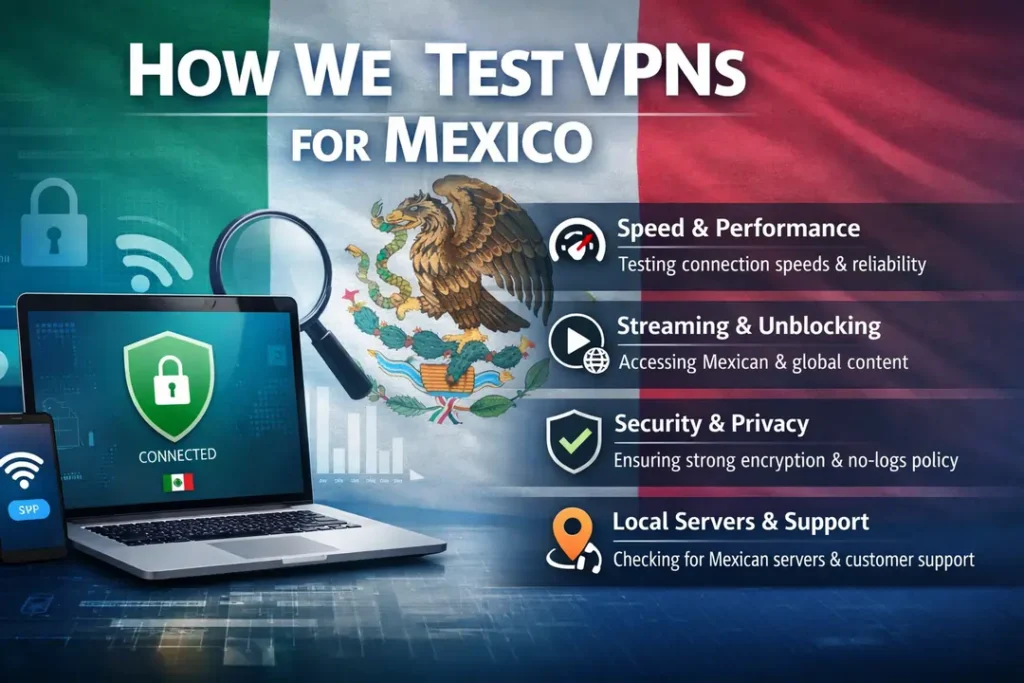
VPN performance and reliability in Mexico depend heavily on real-world conditions, not ideal lab environments. Our testing methodology is designed to reflect how VPNs are actually used across the country in 2026.
Rather than focusing on abstract benchmarks, we prioritise stability, security, and consistency across shared and mobile networks.
Public and Shared Wi-Fi Testing
Because public Wi-Fi is one of the primary reasons people use VPNs in Mexico, we test VPNs under conditions that closely resemble:
- Café and co-working Wi-Fi
- Hotel and apartment shared networks
- Captive portal environments
We evaluate whether VPNs:
- Connect reliably after joining a shared network
- Maintain encryption without user intervention
- Handle brief signal drops without silent disconnections
This testing approach aligns with the risks outlined in the VPNs for public Wi-Fi guide .
Mobile Network Switching and Stability
Mobile data plays a significant role in everyday connectivity in Mexico, particularly for travellers and remote workers. VPNs are tested while switching between:
- Wi-Fi and mobile data
- Different Wi-Fi networks
- Variable signal strength environments
We measure how quickly VPNs reconnect, whether sessions remain encrypted during transitions, and how often manual reconnection is required.
Server Proximity and Routing Performance
We test connections to servers in:
- Mexico (where available)
- Nearby United States locations
- Other North American regions
This helps identify how server distance and routing efficiency affect latency, streaming reliability, and real-time applications.
Security and Privacy Verification
Beyond performance, we verify that VPNs behave as advertised. This includes checking:
- Kill switch behaviour during network drops
- DNS and IP leak protection
- Protocol handling on unstable connections
We also review privacy policies, audit reports, and transparency disclosures. Our broader testing and audit standards are documented in the VPN testing and audit methodology .
What We Do Not Optimise For
Our testing does not prioritise features that have limited relevance in Mexico, such as:
- Censorship bypass or obfuscation tools
- Exotic server locations far outside North America
- Short-lived speed spikes in ideal conditions
This focus ensures that recommendations reflect sustained, real-world usability rather than headline metrics.
With the testing methodology established, the next section compares the best VPNs for Mexico based on these criteria.
The Risks of Using Free VPNs in Mexico
Free VPN apps are widely used in Mexico, particularly on mobile devices. Their appeal is understandable — they promise privacy and security without a subscription cost.
In practice, however, free VPNs introduce risks that are often greater than not using a VPN at all, especially on public and shared networks.
Logging and Data Monetisation
Operating a VPN network is expensive. Free providers typically offset these costs by logging user activity and monetising data through advertising networks or third-party partnerships.
In a country like Mexico, where VPN use is primarily about securing shared connections, this trade-off undermines the core purpose of a VPN.
A detailed comparison of these trade-offs is covered in the free vs paid VPN guide .
Increased Risk on Public Wi-Fi
Many free VPNs lack robust encryption, reliable kill switches, or proper protection during network drops. On public Wi-Fi — cafés, hotels, airports — this creates a false sense of security.
Some free VPN apps also inject advertising or modify traffic at the network level, increasing exposure rather than reducing it. These risks are explained in more depth in the VPNs for public Wi-Fi guide .
Severe Performance Limitations
Free VPN services typically operate with overcrowded servers, limited bandwidth, and poor routing. The result is slow speeds, dropped connections, and inconsistent performance.
In Mexico, where mobile networks and regional broadband already vary in quality, these limitations are often misattributed to local infrastructure rather than the VPN itself.
Mobile-Specific Privacy Concerns
Mobile-first free VPN apps frequently request excessive permissions, lack transparency around data handling, and operate outside best practices.
For travellers and remote workers relying on mobile data or hotspot connections, these risks are amplified.
When Free VPNs Might Be Acceptable
In limited, low-risk scenarios — such as occasional testing or temporary use — carefully vetted free services may be acceptable.
If you are considering this route, it is essential to understand which free VPNs are not outright scams. A curated list is available in the free VPN safety guide .
Why Paid VPNs Are the Practical Choice in Mexico
In a public-Wi-Fi-heavy environment like Mexico, reputable paid VPNs offer:
- Consistent encryption on shared networks
- Clear privacy policies and audit trails
- Stable performance on mobile and broadband
- No hidden monetisation of user data
With free VPN limitations understood, the next section explains the legal status of VPNs in Mexico and how they are commonly used in everyday situations.
VPN Legality and Everyday Use in Mexico
VPN use is legal in Mexico. There are no laws that prohibit individuals, businesses, or visitors from using a VPN for privacy or security purposes.
VPNs are commonly used in Mexico in everyday, non-controversial ways — particularly by travellers, remote workers, and people connecting through shared networks.
How VPNs Are Commonly Used in Mexico
Unlike countries where VPNs are associated with censorship avoidance, VPN use in Mexico is typically practical rather than political. Common use cases include:
- Securing public and hotel Wi-Fi connections
- Protecting accounts while travelling or relocating
- Accessing work systems on shared networks
- Maintaining consistent access when switching networks
These uses align closely with standard VPN behaviour worldwide and are explained further in the VPN fundamentals guide .
Business, Remote Work, and Travel Context
VPNs are widely used by businesses operating in or with Mexico, particularly for securing remote access to internal systems and cloud platforms.
Remote workers and digital nomads often rely on VPNs to maintain stable, secure connections when working from cafés, co-working spaces, or temporary accommodation.
Travel-specific VPN considerations, including border crossings and network changes, are covered in more detail in the VPNs for travelling guide .
What VPNs Are Not Used for in Mexico
Setting realistic expectations is important. In Mexico, VPNs are generally not used for:
- Bypassing government censorship
- Accessing blocked news or social platforms
- Engaging in illegal online activity
Using a VPN does not exempt users from local laws or service terms. It is a security and privacy tool, not a legal shield.
Cross-Border Use and North America Context
Many users move between Mexico, the United States, and Canada. VPNs are commonly used to reduce account disruption and maintain consistent access when networks and locations change.
For regional comparisons, see the North America VPN Hub , as well as the country-specific guides for the United States and Canada.
With legality and everyday use clarified, the next section compares the best VPNs for Mexico in 2026, based on the conditions and testing criteria outlined earlier in this guide.
Best VPNs for Mexico (2026)
The best VPNs for Mexico are not defined by raw speed or exotic features. They are defined by how reliably they operate on public Wi-Fi, mobile data, and mixed-quality broadband.
The providers below were selected based on how they perform under real-world conditions in Mexico, including cafés, hotels, apartments, mobile hotspots, and frequent network switching.
How These VPNs Were Selected
Each provider listed here meets all of the following criteria:
- Stable encryption on public and shared Wi-Fi
- Reliable reconnection during network changes
- Strong server coverage in North America
- Clear, independently verifiable privacy policies
- Consistent performance on mobile devices
VPNs that perform well only in ideal home-network conditions were excluded, even if they advertise high speeds.
Quick Comparison: Best VPNs for Mexico
| VPN | Why It Performs Well in Mexico | Main Strength | Best Suited For |
|---|---|---|---|
| ExpressVPN | Handles unstable Wi-Fi and mobile switching with minimal dropouts. Performs consistently across hotels, cafés, and apartments. | Connection stability | Travellers, expats, everyday users |
| NordVPN | Strong North American routing, reliable kill switch behaviour, and good balance between speed and privacy. | Privacy + performance balance | Remote workers, privacy-conscious users |
| Surfshark | Simple apps with strong multi-device support. Performs well on shared Wi-Fi when properly configured. | Flexibility and value | Families, multi-device households |
| IPVanish | Good mobile performance and unlimited connections, with fast reconnection after network changes. | Mobile device handling | Mobile-heavy users |
| Mullvad | Minimal account data, transparent pricing, and strong privacy controls. Less focused on convenience features. | Privacy-first design | Advanced privacy users |
For a full protocol, speed, and feature breakdown across providers, see the VPN comparison table.
Provider Analysis (Mexico-Specific)
ExpressVPN — Most Reliable Overall
ExpressVPN consistently performs well in Mexico because it prioritises connection stability over aggressive optimisation. This makes it particularly reliable on hotel and café Wi-Fi, where signal quality and routing fluctuate.
Its apps reconnect quickly after brief drops and handle Wi-Fi to mobile transitions smoothly, which is critical for travellers.
Read the full ExpressVPN review
NordVPN — Strong Privacy Without Sacrificing Stability
NordVPN performs well in Mexico due to its strong North American server coverage and reliable security features. It is particularly well suited to users who work remotely or access sensitive accounts regularly.
Its balance of speed, privacy, and infrastructure makes it a good option for users who move between Mexico, the United States, and Canada.
Surfshark — Best for Multi-Device Use
Surfshark’s unlimited device policy makes it attractive for households or users with multiple phones and laptops. In Mexico, it performs best when configured for stability rather than maximum speed.
Read the full Surfshark review
IPVanish — Mobile-Focused Option
IPVanish handles mobile network switching well and supports unlimited simultaneous connections. It is often chosen by users who rely heavily on smartphones and tablets rather than fixed broadband.
Mullvad — Privacy Above Convenience
Mullvad is best suited to users who prioritise privacy and transparency over ease of use. It performs reliably in Mexico, but lacks some convenience features favoured by travellers.
With provider selection covered, the next section explains how VPNs affect streaming access in Mexico, including what to expect when travelling or using foreign accounts.

Streaming with a VPN in Mexico
Streaming with a VPN in Mexico is generally straightforward, but results depend heavily on connection quality, location, and time of day. Unlike restricted regions, most streaming platforms are accessible without a VPN.
VPN use for streaming in Mexico is therefore less about bypassing blocks and more about maintaining access while travelling or using shared networks.
Accessing Home-Country Streaming Services
Travellers and expats in Mexico often use VPNs to access streaming libraries tied to their home country. This is common when:
- Travelling long-term or seasonally
- Using accounts created outside Mexico
- Encountering regional content differences
VPNs with strong server coverage in North America tend to perform best, particularly when connecting to nearby United States locations.
Platform-specific behaviour is covered in more detail in the VPNs for streaming guide and the Netflix VPN comparison .
Urban vs Regional Streaming Performance
In major cities, streaming with a VPN typically works well, even at higher resolutions, provided the underlying connection is stable.
In regional or resort areas, performance can vary. During peak evening hours, congestion may affect both VPN and non-VPN traffic. In these cases, lowering resolution often has more impact than changing VPN servers.
Live Sports and Time-Sensitive Streams
Live sports streaming places greater demands on latency and stability. Using distant servers can introduce buffering or delays, particularly on shared Wi-Fi.
For sports-specific scenarios, users may benefit from reviewing:
Common Streaming Issues and Misconceptions
Not all streaming problems are caused by VPNs. In Mexico, buffering and quality drops are often linked to:
- Local congestion during peak hours
- Shared Wi-Fi limitations
- Distance to the selected VPN server
If performance drops unexpectedly, switching to a closer server or temporarily disabling the VPN can help identify the cause. Broader performance factors are explained in the VPN performance guide.
With streaming expectations set, the next section examines gaming performance with a VPN in Mexico, including latency considerations and when VPN use helps or hurts gameplay.


Gaming with a VPN in Mexico
Gaming with a VPN in Mexico can be beneficial in specific situations, but it is not universally advantageous. The impact of a VPN depends on distance to servers, connection quality, and the type of game being played.
In most cases, a VPN is used to improve connection consistency and security, not to reduce ping below baseline levels.
Latency and Server Distance
Latency is the most important factor for gaming. In Mexico, many online games route traffic through servers located in the United States.
Connecting to a nearby VPN server — particularly in the southern United States — can sometimes result in more stable routing than relying on congested local paths. However, this depends heavily on the ISP and time of day.
VPNs cannot bypass physical distance. Choosing distant server locations will almost always increase ping.
Casual vs Competitive Gaming
For casual and cooperative games, VPN use is generally compatible, especially when playing on shared Wi-Fi or mobile connections.
For competitive multiplayer games — particularly first-person shooters — any additional latency can be noticeable. In these cases, a VPN may be best used selectively rather than permanently enabled.
Competitive players should review the best VPNs for gaming guide , which focuses on low-latency configurations and routing considerations.
Mobile and Shared Network Gaming
Gaming on mobile data or shared Wi-Fi introduces additional variability. VPNs can help stabilise connections when packet loss or throttling occurs, but results vary by provider.
VPNs that reconnect quickly after brief signal drops perform better in these environments. This is especially relevant for users gaming on laptops or handheld devices.
Security and DDoS Considerations
Some gamers use VPNs to reduce exposure to targeted attacks during online play. While not common for most users, hiding your real IP address can add a layer of protection in peer-to-peer or hosted game sessions.
When to Disable the VPN
There are scenarios where disabling the VPN is the better choice:
- High-stakes competitive matches
- When connecting to nearby local servers directly
- If added latency affects responsiveness
Understanding these trade-offs is more effective than leaving a VPN permanently enabled. Broader performance considerations are explained in the VPN performance guide.
With gaming considerations covered, the next section looks at torrenting and ISP behaviour in Mexico, including privacy expectations and realistic use cases.
Torrenting and ISP Behaviour in Mexico
Torrenting in Mexico exists in a different legal and enforcement context than in countries such as the United States. There is no equivalent to aggressive, automated copyright notice systems, but that does not mean torrent activity is invisible or risk-free.
VPN use for torrenting in Mexico is primarily about privacy and traffic visibility, not about bypassing blocks or increasing download speeds.
How ISPs Typically Handle P2P Traffic
Mexican internet service providers do not generally block torrent protocols outright. However, ISPs can still:
- See that P2P traffic is occurring
- Identify large or sustained data transfers
- Apply traffic management during peak hours
A VPN encrypts torrent traffic, preventing the ISP from seeing the contents or destination of transfers. This distinction is explained more fully in the VPNs for torrenting guide .
Privacy Expectations When Torrenting
Torrenting exposes your IP address to other peers in the swarm. In shared or apartment networks — which are common in Mexico — this can create unnecessary exposure.
VPNs mask your real IP address, reducing the likelihood that torrent activity is associated directly with your connection. For users concerned about logging practices, provider transparency is critical.
A breakdown of providers with strong privacy guarantees is available in the no-logs VPN guide .
Speed, Throttling, and Realistic Expectations
Using a VPN does not inherently make torrenting faster. In some cases, encryption overhead may slightly reduce maximum throughput.
However, if an ISP applies traffic shaping to P2P connections, a VPN may result in more consistent speeds by preventing traffic classification. Whether this occurs depends on the provider and local network conditions.
Protocol and Configuration Considerations
For torrenting in Mexico, modern VPN protocols that balance speed and stability tend to perform best.
Users interested in protocol behaviour and performance trade-offs can review the VPN protocol comparison guide , which explains how different protocols handle sustained traffic.
What a VPN Does Not Do
It is important to be clear about limitations. A VPN does not:
- Make illegal activity legal
- Guarantee anonymity
- Remove the need for responsible usage
VPNs reduce exposure, but they do not eliminate risk entirely. Understanding this balance is essential for informed use.
With torrenting considerations covered, the next section looks at privacy, data exposure, and tracking in Mexico, including what VPNs do — and do not — protect.
Privacy, Data Exposure, and Tracking in Mexico
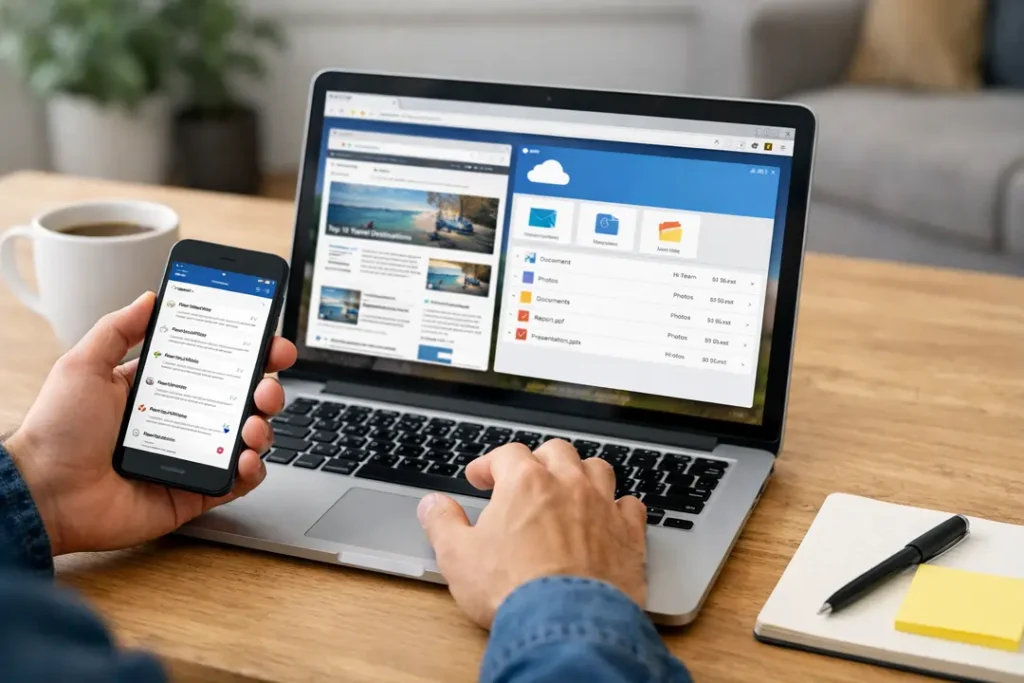
Mexico does not operate a large-scale, centralised internet surveillance system, but this does not mean everyday internet use is private by default. Most data exposure occurs through networks, platforms, and applications, not government monitoring.
Understanding where privacy risks actually originate helps clarify what a VPN can — and cannot — protect against in Mexico.
Network-Level Exposure
On shared or public networks, unencrypted traffic can be visible to network operators and, in some cases, other connected devices.
A VPN encrypts traffic between your device and the VPN server, reducing exposure at the network level. This is particularly relevant on apartment Wi-Fi, cafés, hotels, and co-working spaces.
For a deeper explanation of how VPN encryption works in practice, see the VPN explained guide .
Platform and Application Tracking
Many websites and apps track users through accounts, device fingerprints, cookies, and behavioural patterns. These forms of tracking are largely unaffected by VPN use.
A VPN can mask your IP address, but it does not prevent platforms from identifying you once you log in. This distinction is often misunderstood.
ISP Visibility and Metadata
Internet service providers can see connection metadata, such as when you are online and how much data is transferred. Without a VPN, they can also see which websites you access.
Using a VPN prevents ISPs from seeing destination details, though they can still observe that encrypted traffic is occurring.
A broader discussion of ISP behaviour and traffic visibility is available in the VPN performance and ISP behaviour guide .
How Mexico Differs from the United States
In the United States, VPN use is often motivated by data retention, profiling, and ISP-level data monetisation.
In Mexico, privacy concerns are more commonly tied to network exposure and platform tracking rather than systemic ISP surveillance.
Readers interested in this contrast may want to review the Best VPN for the United States guide for a comparative perspective.
What a VPN Protects — and What It Does Not
In practical terms, a VPN in Mexico:
- Encrypts traffic on shared networks
- Hides your IP address from websites and peers
- Reduces ISP visibility into browsing activity
A VPN does not:
- Prevent account-based tracking
- Make you anonymous online
- Replace good security practices
Understanding these boundaries helps ensure VPNs are used effectively, without unrealistic expectations.
With privacy considerations clarified, the next section looks at public Wi-Fi and hotel network risks in Mexico, and how VPNs are typically used in those environments.
Public Wi-Fi and Hotel Networks in Mexico
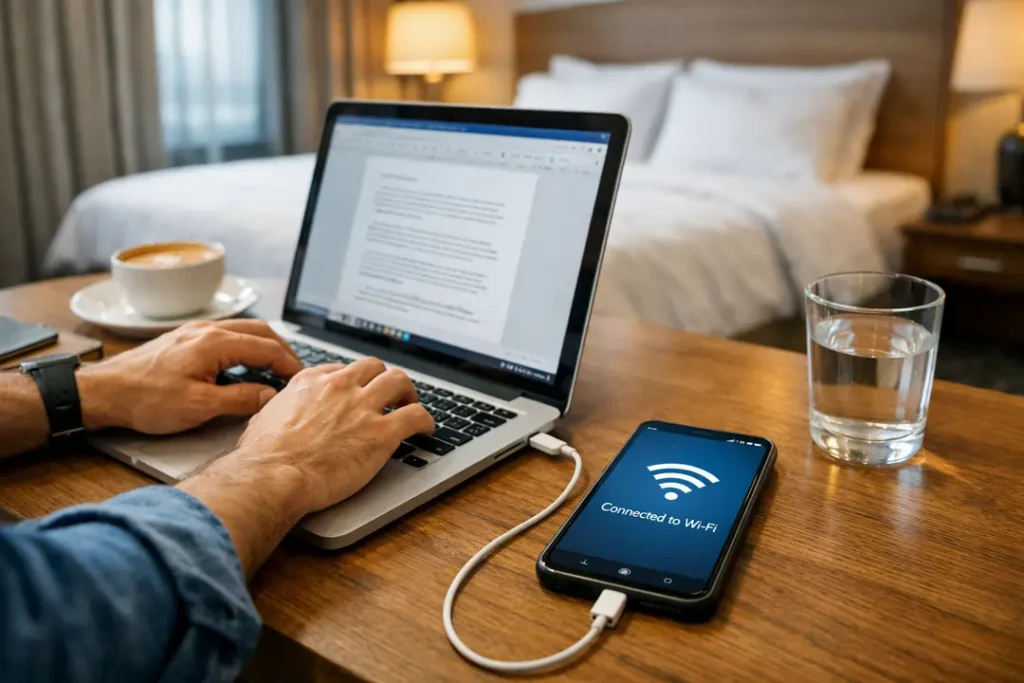
Public Wi-Fi is deeply embedded in everyday internet use in Mexico. Cafés, hotels, apartment buildings, airports, and co-working spaces all prioritise convenience over isolation between users.
For this reason, public and shared networks represent one of the most common points of data exposure for travellers, expats, and remote workers.
Cafés, Co-Working Spaces, and Apartments
Many cafés and co-working spaces in Mexico use a single shared network for all connected devices. In apartment buildings, residents often share infrastructure or rely on preconfigured routers with limited security controls.
On these networks, VPN use is primarily about encrypting traffic end-to-end, not about bypassing restrictions. This reduces exposure to:
- Local network monitoring
- Misconfigured devices on the same network
- Accidental session leakage
Hotel Wi-Fi and Captive Portals
Hotel Wi-Fi in Mexico often relies on captive portals, where users must accept terms or enter a room number before connecting.
VPNs typically need to be enabled after passing through the portal. Once connected, a VPN helps protect traffic on networks shared by dozens or hundreds of guests.
Practical configuration guidance for these environments is covered in the VPN troubleshooting guide .
Airports and Transit Networks
Airports and transit hubs provide convenient connectivity, but they also attract high volumes of transient users. Network load and security posture vary widely.
VPN use in these environments helps protect sensitive activity, particularly when accessing:
- Email and cloud storage
- Banking or financial services
- Work dashboards or admin panels
Common Mistakes on Public Networks
Users often underestimate risk on familiar or frequently used networks. Common mistakes include:
- Assuming apartment Wi-Fi is private
- Leaving VPNs disabled on trusted cafés
- Connecting to networks with similar names
Understanding these patterns is more effective than relying on warnings. A broader breakdown of shared-network behaviour is available in the public Wi-Fi VPN guide .
With public network risks addressed, the next section explains how to obtain a Mexico IP address, when it is useful, and what benefits it actually provides.
How to Get a Mexico IP Address
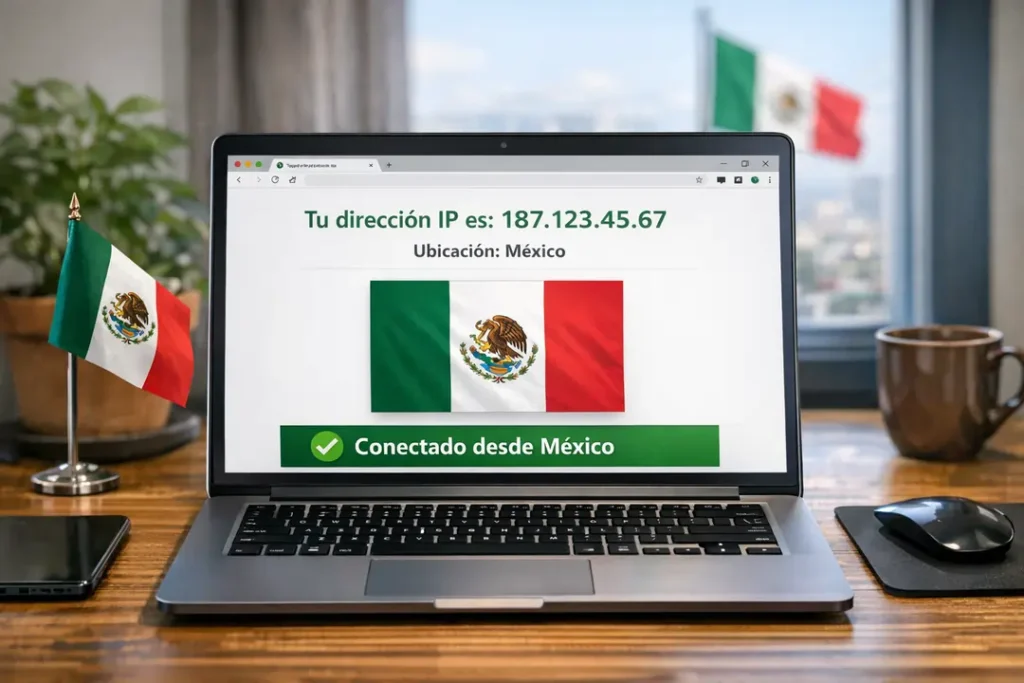
A Mexico IP address allows websites and services to see your connection as originating from Mexico. This is useful in specific situations, but it is not necessary for most everyday VPN use.
When a Mexico IP Address Is Useful
Users typically seek a Mexico IP address when they:
- Need access to Mexico-based services while abroad
- Want to avoid account alerts triggered by foreign logins
- Are managing local accounts from outside the country
- Prefer consistent regional access when travelling
In these cases, connecting to a VPN server located in Mexico provides a local IP address without requiring any additional configuration.
When a Mexico IP Address Is Not Necessary
Many users assume a local IP is required for general privacy or security. In practice, this is not the case.
For activities such as:
- Securing public Wi-Fi connections
- Protecting accounts on shared networks
- Reducing ISP visibility
the physical location of the VPN server matters less than its stability and proximity. Nearby servers in the United States often provide better performance due to routing and infrastructure.
Shared vs Dedicated IP Addresses
Most VPNs assign shared IP addresses, which are used by multiple users simultaneously. This improves privacy by blending traffic together and is sufficient for most use cases.
Dedicated IP addresses may be useful in limited scenarios, such as accessing whitelisted systems or avoiding repeated verification challenges. However, they reduce anonymity and are not required for typical users.
A broader explanation of IP address behaviour and how VPNs assign locations is available in the VPN explained guide .
Performance Expectations
Connecting to a Mexico-based server does not automatically improve speed. Performance depends on:
- Distance to the server
- Local network quality
- Server load at the time of connection
If performance is inconsistent, switching to a nearby North American server may offer better results. Speed-related trade-offs are covered in more detail in the fastest VPNs guide .
With IP address use clarified, the final section provides a complete analysis, FAQs, and North America context to help you decide whether a VPN is right for your needs in Mexico.
Final Analysis: Using a VPN in Mexico
Mexico sits in a unique position within North America. Its internet is open, largely unrestricted, and increasingly mobile-first, yet heavily reliant on shared and public networks.
For this reason, VPN use in Mexico is rarely about bypassing blocks or avoiding censorship. Instead, it is about reducing exposure, stabilising access, and protecting accounts in environments where network trust is low.
When chosen correctly, a VPN integrates quietly into everyday internet use in Mexico. When chosen poorly — especially free or unstable services — it can introduce more problems than it solves.
Who a VPN in Mexico Is Best Suited For
- Travellers and long-term visitors using hotels and cafés
- Remote workers accessing cloud tools on shared Wi-Fi
- Expats managing home-country accounts from Mexico
- Mobile-first users switching networks frequently
Who May Not Need a VPN
- Users browsing only on private home fibre connections
- Those expecting a VPN to increase base internet speeds
- Users with no exposure to shared or public networks
Frequently Asked Questions
Is using a VPN legal in Mexico?
Yes. VPN use is legal in Mexico and widely used by businesses, travellers, and individuals for privacy and security purposes.
Will a VPN slow down my internet in Mexico?
On stable connections, speed loss is usually minimal. Any noticeable slowdown is more often caused by congestion, distance to the selected server, or shared Wi-Fi limitations. A deeper explanation is available in the VPN performance guide.
Do I need a Mexico IP address?
Only in specific cases, such as accessing Mexico-based services while abroad or maintaining account consistency. For general privacy and security, a nearby North American server is often sufficient.
Are free VPNs safe to use in Mexico?
Most free VPNs introduce privacy, performance, or data-handling risks, particularly on public Wi-Fi. Understanding the difference between free and paid VPNs is essential before choosing a service.
Should I leave my VPN on all the time?
Not necessarily. Many users enable a VPN on public or shared networks and disable it on trusted home connections. Selective use often provides the best balance between security and performance.
Mexico in the North America VPN Landscape
Mexico’s VPN needs differ significantly from those of its neighbours.
- The United States places greater emphasis on ISP data practices and platform profiling.
- Canada users often focus on streaming access and cross-border account consistency.
- Mexico prioritises shared-network security and mobile stability.
For a broader regional overview, see the North America VPN hub , which explains how VPN requirements change across the region.
This guide is designed to provide a complete, realistic picture of VPN use in Mexico in 2026. If your circumstances change — such as extended travel, remote work, or cross-border use — the linked country and regional guides offer deeper, scenario-specific insight.