

However, good infrastructure does not automatically mean strong privacy. Internet service providers can log connection data, public Wi-Fi networks are common in hotels and cafés, and many streaming platforms apply strict geo-restrictions. These factors make using a VPN in Costa Rica not just useful, but increasingly standard.
A high-quality VPN helps protect your data on public networks, prevent ISP-level monitoring, and unlock international streaming libraries while maintaining stable speeds for work, gaming, and everyday browsing.


Internet Conditions in Costa Rica
Costa Rica has one of the strongest internet infrastructures in Central America, particularly in urban centers and tourist-heavy regions. Fiber broadband is widely available in cities like San José, while mobile LTE and early 5G coverage provide reliable connectivity for travelers and remote workers.
- Major ISPs: ICE, Kolbi, Claro, Liberty
- Urban speeds: Consistently fast on fiber and cable
- Mobile data: Reliable in cities and coastal tourist areas
- Rural regions: Slower speeds and higher latency
While outright throttling is uncommon, congestion can occur during peak evening hours, especially on shared hotel Wi-Fi and mobile networks. This can impact streaming quality, video calls, and online gaming — issues often mistaken for VPN slowdowns.
In practice, performance issues are more commonly caused by network congestion and routing inefficiencies rather than the VPN itself. Choosing a provider with optimized nearby servers and modern protocols is critical for maintaining speed.
Related: If you’re concerned about speed loss, see our detailed breakdown of why VPNs can slow down your internet and which providers consistently rank among the fastest VPNs in 2026.
Is Using a VPN Legal in Costa Rica?
Yes — using a VPN in Costa Rica is completely legal. There are no laws restricting personal or commercial VPN use, and VPNs are commonly used by businesses, remote workers, and international organizations operating in the country.
Costa Rica does not impose internet censorship or VPN bans, and there is no history of enforcement actions against individuals for using encryption or privacy tools. From a legal standpoint, VPN usage is considered low-risk and widely accepted.
- VPN legality: Fully legal
- Restrictions: None for personal use
- Enforcement history: No known cases against VPN users
That said, legality does not equal privacy by default. Internet service providers may retain connection metadata, and public Wi-Fi networks often log user activity. This is why VPNs are routinely recommended even in countries with strong democratic and privacy traditions.
Related: For a broader legal and regulatory overview, see our explanation of what a VPN is and how it works, as well as our analysis of countries where VPN use is most essential in 2026.
Best VPNs for Costa Rica
The best VPNs for Costa Rica combine fast nearby routing, strong privacy policies, and reliable access to international streaming platforms. Based on independent testing and real-world use, the providers below consistently perform well on Costa Rican networks.
| VPN | Best For | Speed | Streaming | Privacy |
|---|---|---|---|---|
| NordVPN | Overall performance | Excellent | Excellent | Strict no-logs |
| ExpressVPN | Simplicity & stability | Very fast | Excellent | Strong privacy |
| Surfshark | Budget & multi-device | Good | Very good | No-logs |
NordVPN — Best Overall VPN for Costa Rica
NordVPN offers the best balance of speed, privacy, and reliability for users in Costa Rica, particularly when connecting through nearby US and regional servers.
- Strengths: Excellent speeds, advanced security features, strong streaming access
- Weaknesses: Desktop apps can feel feature-heavy for beginners
Travel & Public Wi-Fi: Performs reliably on hotel, airport, and café networks with a robust kill switch.
Streaming: Consistently unlocks Netflix US, Disney+, Prime Video, and HBO Max.
Gaming & Speed: Low latency and stable routing suitable for competitive online gaming.
Full review: NordVPN Review (2026)
ExpressVPN — Best for Ease of Use
ExpressVPN is ideal for users who want maximum reliability with minimal setup. Its apps are simple, fast, and consistent across all devices.
| Ease of use | Excellent (beginner-friendly) |
| Connection stability | Very high |
| Price | Higher than average |
Streaming: Strong access to US and European libraries.
Gaming & Speed: Slightly higher ping than NordVPN but extremely stable.
Full review: ExpressVPN Review (2026)
Surfshark — Best Budget VPN for Costa Rica
Surfshark is a strong option for budget-conscious users who need coverage across multiple devices without sacrificing essential features.
- Unlimited simultaneous connections
- Affordable long-term pricing
- Clean, lightweight apps

Streaming Access in Costa Rica
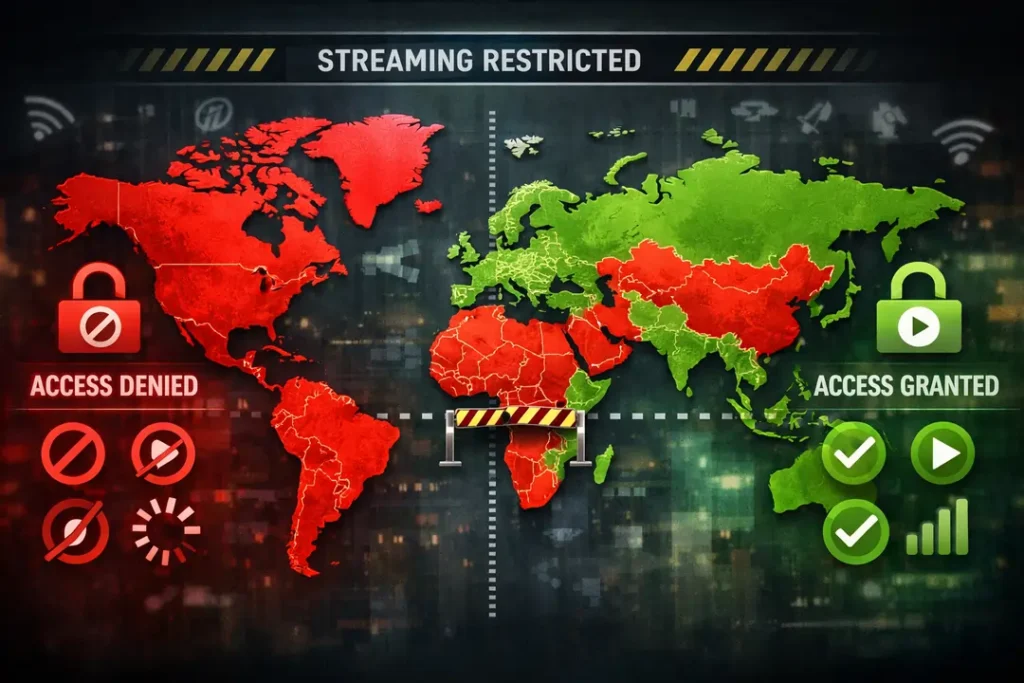
Streaming availability in Costa Rica is more limited than in the United States or Europe. Many platforms serve regional libraries by default, and some content may be unavailable due to licensing restrictions.
With a reliable VPN, users in Costa Rica can securely access international streaming libraries by connecting through servers in other countries.
- Netflix: Access to US, UK, and Canadian libraries
- Disney+: Full US catalog available with compatible servers
- Prime Video: Region switching supported
- Hulu & BBC iPlayer: Requires US or UK-based servers
Streaming performance depends heavily on server proximity and congestion. Nearby US servers typically offer the best balance of speed and reliability, especially during peak evening hours.
Related streaming guides:
- Best VPNs for Streaming (All Platforms)
- Best VPNs for Netflix (2026)
- Best VPNs for Disney+ (2026)
- Best VPNs for BBC iPlayer (2026)
If a streaming service remains blocked while connected to a VPN, the issue is usually related to server selection or cached location data — not a legal or network restriction. We cover practical fixes later in the troubleshooting section.
Gaming, Latency & Performance in Costa Rica
Online gaming in Costa Rica is generally stable, particularly on fiber connections in urban areas. However, latency and packet routing can vary depending on the game server location, local ISP routing, and network congestion during peak hours.
When configured correctly, a VPN can actually improve connection stability by optimizing routing to nearby game servers — especially for players connecting to North American servers.
- Best server locations: US East Coast and regional North America
- Urban fiber: Low to moderate latency, suitable for competitive play
- Mobile connections: Stable for casual gaming, higher ping expected
For competitive multiplayer games, protocol choice matters. Modern VPN protocols such as WireGuard-based implementations typically deliver the lowest latency while maintaining encryption.
Related gaming performance guides:
Users experiencing high ping should avoid distant servers and disable unnecessary background applications before assuming the VPN is the cause. Many performance issues are related to local network congestion rather than encryption overhead.
VPN Troubleshooting in Costa Rica
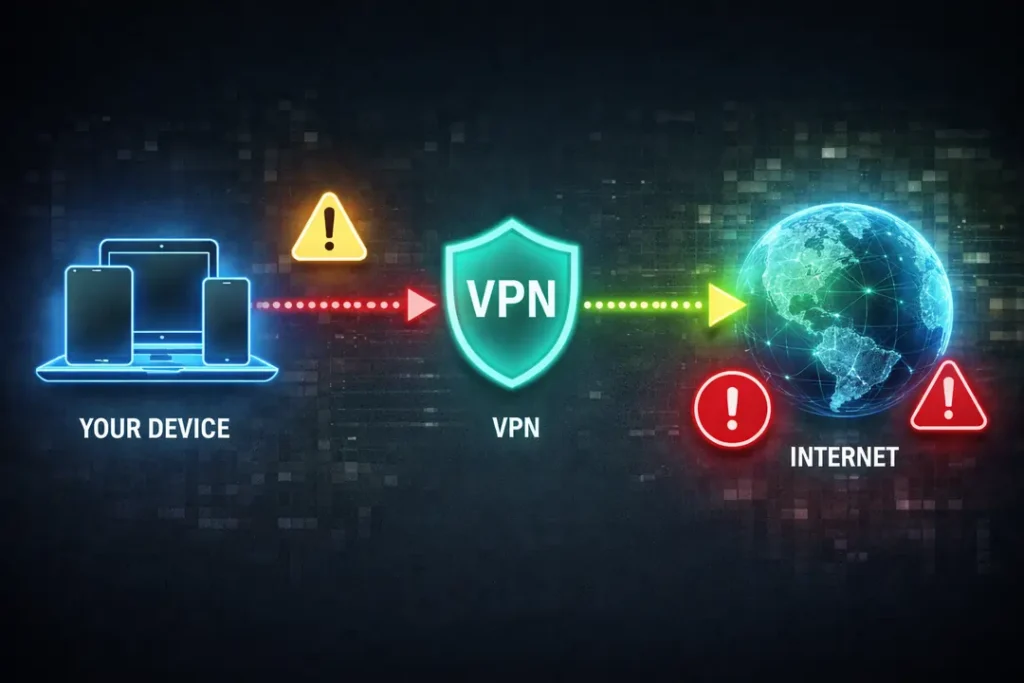
Most VPN issues in Costa Rica are caused by network congestion, Wi-Fi restrictions, or server selection — not by the VPN itself. The fixes below address the most common problems users encounter.
VPN Not Connecting
- Switch to a nearby US or North America server
- Change the VPN protocol (WireGuard-based options are usually fastest)
- Disable restrictive firewalls on hotel or café Wi-Fi networks
Streaming Services Still Blocked
- Clear browser cookies and cached location data
- Try a different server in the same country
- Restart the VPN app before opening the streaming service
Slow Speeds or High Ping
- Avoid peak evening hours on shared networks
- Use private or wired connections when possible
- Close background downloads and cloud sync apps
VPN Disconnects on Public Wi-Fi
- Enable auto-reconnect and the kill switch
- Complete captive portal logins before connecting to the VPN
- Avoid switching networks while the VPN is active
If problems persist, they are usually related to local network policies rather than VPN reliability. For advanced diagnostics and step-by-step fixes, see our VPN Troubleshooting Pro Guide (2026).
Travel & Public Wi-Fi Risks in Costa Rica
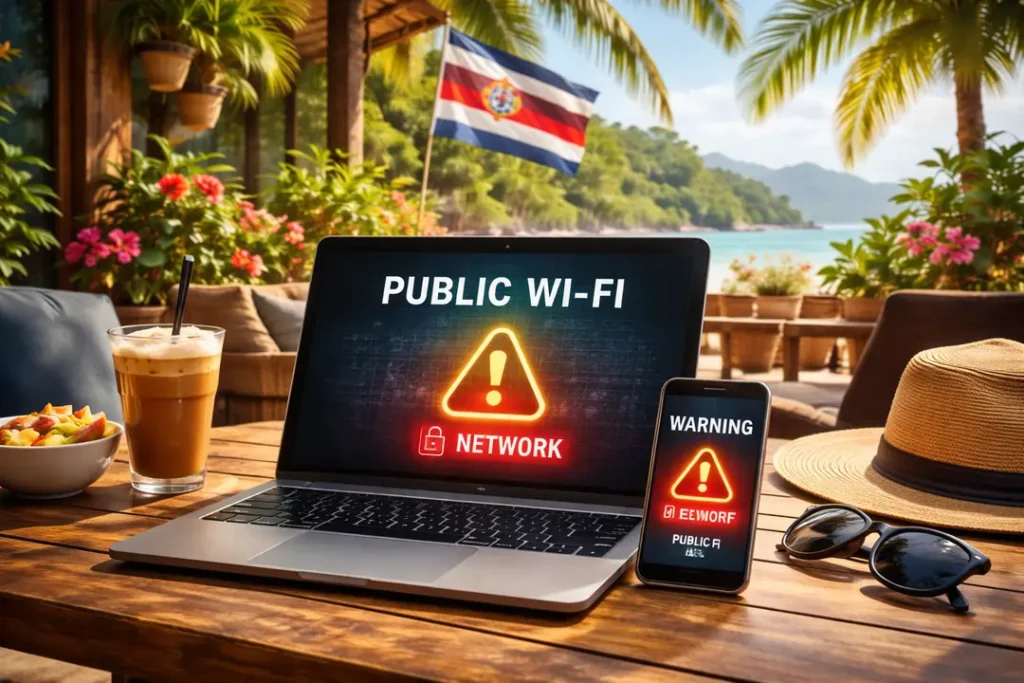
Costa Rica is a highly travel-friendly country with widespread public Wi-Fi access in hotels, cafés, airports, co-working spaces, and resorts. While convenient, these networks are often unsecured or shared by dozens of users at the same time.
The most common risks on public Wi-Fi are not targeted attacks, but passive monitoring and data interception. This includes exposed login sessions, unencrypted traffic, and malicious access points designed to mimic legitimate networks.
- Open or weakly encrypted Wi-Fi hotspots
- Shared hotel and hostel networks
- Fake access points in tourist-heavy areas
Using a VPN on public Wi-Fi encrypts your connection and prevents third parties on the same network from viewing or intercepting your data. This is especially important when accessing email, cloud services, banking platforms, or work-related tools.
Travelers who rely heavily on mobile connections should also pay attention to battery efficiency and background app usage. Some VPN features can be optimized to reduce power drain during long travel days.
Related: See our guide to VPN battery-saving tips for mobile users if you plan to stay connected while on the move.

Privacy, Surveillance & Data Retention in Costa Rica
Costa Rica is widely regarded as a privacy-respecting and democratic country, with no history of mass internet censorship or routine surveillance of everyday users. For most residents and travelers, the online environment feels open and unrestricted.
However, privacy by default is not guaranteed. Like in many countries, internet service providers can retain connection metadata, and public Wi-Fi operators often log activity for security and operational reasons. This data may include timestamps, IP addresses, and basic connection details.
While this does not mean users are actively monitored, it does mean online activity is not fully private without encryption. A VPN closes this gap by encrypting traffic between your device and the wider internet, preventing ISPs, Wi-Fi operators, and third parties from passively observing your activity.
At Trusted VPN Reviews, all provider recommendations are based on independent testing, privacy audits, and transparent evaluation criteria — not marketing claims.
How we evaluate privacy and security:
- Lab-Tested VPN Audits & Authority Review (2026)
- Gold-Standard VPN Testing Methodology
- VPN Lab Methodology Transparency Report (2026)
This approach ensures that VPNs recommended for use in Costa Rica meet strict standards for logging policies, encryption practices, and long-term reliability — regardless of regional conditions.

Getting a Costa Rica IP Address
A Costa Rica IP address allows you to appear online as if you are located inside the country. This can be useful for accessing local websites, online services, or region-restricted platforms that require a domestic connection.
Common reasons users look for a Costa Rica IP address include:
- Accessing local banking or government services while abroad
- Using country-specific websites or apps
- Testing how content or services appear to local users
The safest and most reliable way to obtain a Costa Rica IP address is through a reputable VPN provider. VPNs assign you a local IP while encrypting your connection, which protects your data from interception or logging.
Free proxies and unofficial IP services are strongly discouraged, as they are often unstable, heavily logged, or reused by large numbers of users.
Note: Some financial institutions may request additional verification when accessed through a VPN. This is normal behavior and not an indication of a problem.
FAQs – VPN Use in Costa Rica
Are VPNs legal in Costa Rica?
Yes. VPNs are fully legal in Costa Rica, and there are no restrictions on personal or business use. VPNs are commonly used by remote workers, international companies, and travelers.
Do residents in Costa Rica actually use VPNs?
Yes. VPN usage is common among professionals, expats, and privacy-conscious users, particularly for remote work, secure browsing, and accessing international services.
Will a VPN protect me on hotel and café Wi-Fi?
Yes. A VPN encrypts your internet traffic, preventing other users on the same network from intercepting data such as logins, emails, or session cookies.
Can a VPN improve speeds in Costa Rica?
In some cases, yes. While a VPN does not increase your base connection speed, it can improve routing stability and reduce throttling on congested networks.
Is using a VPN safe for online banking?
Generally yes, but some banks may request additional verification when accessed through a VPN. This is a security measure and not a sign of a problem.
Which VPN protocol works best in Costa Rica?
Modern protocols such as WireGuard-based implementations typically provide the best balance of speed, stability, and security on Costa Rican networks.
Final Thoughts
Costa Rica offers some of the best internet connectivity in Central America, but strong infrastructure does not automatically mean strong privacy or unrestricted access. Public Wi-Fi usage, ISP metadata logging, and regional content limitations still affect everyday users.
A reliable VPN helps close these gaps by securing connections on shared networks, maintaining consistent performance for work and gaming, and unlocking international services without sacrificing speed or stability.
This guide is part of our broader regional analysis of VPN usage across Central America, where internet quality, privacy expectations, and access restrictions can vary significantly from country to country.
If you’re traveling or living nearby, you may also want to compare conditions in neighboring countries:
For a deeper breakdown of provider testing, security audits, and real-world performance data, see our Best VPNs of 2026 and independent VPN test results.