

Updated: 5 February 2026
In 2026, online privacy is no longer optional. AI-driven tracking, mass data collection, and “harvest now, decrypt later” surveillance mean that ordinary browsing exposes far more personal data than most users realise.
As a result, choosing the best VPN for privacy in 2026 requires more than a basic no-logs claim. Modern privacy protection now depends on post-quantum cryptographic readiness, diskless server infrastructure, independent audits, and resistance to AI-based traffic analysis.
Unlike older VPN rankings, this guide focuses on real-world privacy resilience. VPNs are evaluated based on cryptographic design, infrastructure control, jurisdictional risk, and long-term anonymity — not marketing slogans or surface-level features.
Most importantly, this page is designed for users who genuinely care about privacy. That includes journalists, activists, whistleblowers, remote workers, and everyday users who want to minimise their digital exposure in 2026.
Throughout this guide, privacy protection is broken down into 11 clear steps. Each step explains what matters, why it matters, and which VPNs meet the highest standards today.
If you are looking for a VPN that simply “works,” many options exist. However, if you want future-proof privacy that can withstand state-level surveillance and modern AI analysis, you are in the right place.

Why Privacy VPNs Are Fundamentally Different in 2026
In 2026, privacy-focused VPNs are no longer comparable to standard VPN services. While many providers still prioritise speed and streaming access, true privacy protection now requires defending against long-term data harvesting, AI-driven traffic analysis, and future cryptographic threats.
Historically, VPNs were designed to encrypt traffic in transit. Today, that is only the baseline. Modern surveillance systems routinely store encrypted data for years, waiting for advances in computing power to decrypt it later.
This means the best VPN for privacy in 2026 must protect not only against current interception, but also against future decryption capabilities. Post-quantum readiness and infrastructure transparency are no longer optional — they are foundational requirements.
Unlike casual VPN use cases, privacy-focused VPNs are evaluated on how little data they can technically access. This includes server design, authentication systems, metadata handling, and whether user activity can be reconstructed at all under legal or physical pressure.
The privacy gap between top-tier VPNs and average providers has never been wider. Many services still rely on legacy encryption, rented servers, and unverifiable no-logs claims that offer little protection against modern surveillance.
By contrast, serious privacy VPNs in 2026 are built around diskless infrastructure, independent audits, and cryptographic systems designed to survive a post-quantum world.
Ultimately, privacy VPNs are no longer about hiding your IP address. They are about minimising data exposure, eliminating trust assumptions, and ensuring your online activity cannot be retroactively analysed years from now.


The 2026 Privacy Gold Standard
Not all VPNs that claim to be “private” meet the same technical standards in 2026. Many still rely on marketing language rather than verifiable protections. To qualify as a true privacy VPN, a service must meet strict, measurable criteria.
First, encryption must be designed for the future. Post-quantum cryptography (PQC) protects users against “harvest now, decrypt later” surveillance, where encrypted traffic is collected today and broken years later.
Second, infrastructure ownership matters. VPNs that control their own hardware through colocation reduce third-party access and legal exposure, limiting the risk of silent data interception.
Diskless (RAM-only) server architecture is also non-negotiable. When servers cannot write data to disk, there is nothing to seize, copy, or analyse after the fact.
Equally important is proof. Independent audits, transparency reports, and reproducible builds allow experts to verify that no logging mechanisms exist — rather than trusting policy statements alone.
Finally, advanced privacy VPNs deploy traffic obfuscation and anti-analysis techniques that disguise VPN traffic as regular HTTPS and disrupt AI-based traffic fingerprinting.
Core Requirements for a Top-Tier Privacy VPN in 2026
- Post-Quantum Cryptography (PQC): Protection against future decryption.
- RAM-Only Servers: No persistent storage and no recoverable logs.
- Infrastructure Control: Colocated or fully controlled hardware.
- Independent Audits: Verifiable no-logs enforcement.
- Traffic Obfuscation: Resistance to censorship and AI analysis.
VPNs that fail to meet these standards may still work for streaming or casual use. However, they cannot provide meaningful privacy protection in 2026.
In short, modern privacy VPNs are defined by architecture and cryptography — not slogans.
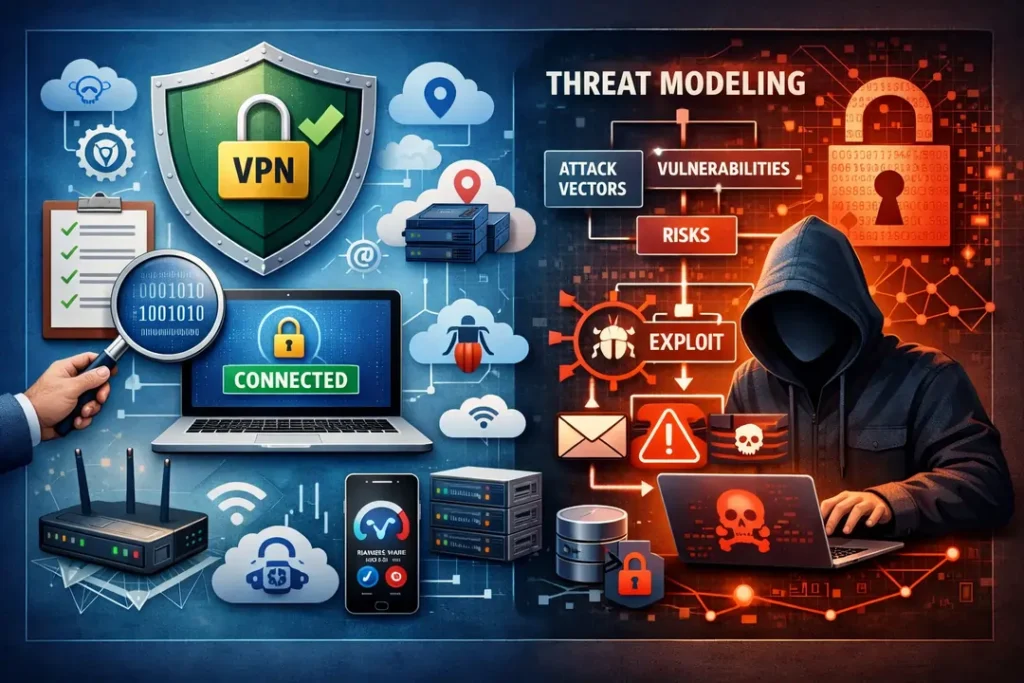
How We Tested & Ranked Privacy VPNs in 2026
Testing privacy VPNs requires a fundamentally different approach than testing VPNs for speed or streaming. In 2026, the primary question is not how fast a VPN is, but how little data it can technically access.
Each VPN was evaluated using a threat model aligned with journalists, activists, remote workers, and privacy-conscious users. This includes legal pressure, server-seizure scenarios, and long-term surveillance risks.
Rather than relying on provider claims, we prioritised verifiable technical evidence. VPNs that could not demonstrate their privacy architecture were excluded or ranked lower.
Core Privacy Testing Criteria
- Logging Architecture: How accounts, sessions, and metadata are handled.
- Encryption & Key Exchange: Priority given to post-quantum readiness.
- Server Infrastructure: Verification of RAM-only servers and hardware control.
- Audit Transparency: Independent and recurring audits only.
- Leak Protection: DNS, IPv6, and WebRTC leak testing.
We also tested VPN behaviour under unstable network conditions. Privacy leaks often occur during brief disconnects, so kill-switch reliability and automatic reconnection were heavily weighted.
Importantly, VPNs that required advanced manual configuration were scored lower. A privacy tool that is difficult to use increases the risk of human error.
Final rankings were based on consistency across all privacy-critical categories. A VPN had to perform well in every area to qualify as a top privacy provider in 2026.
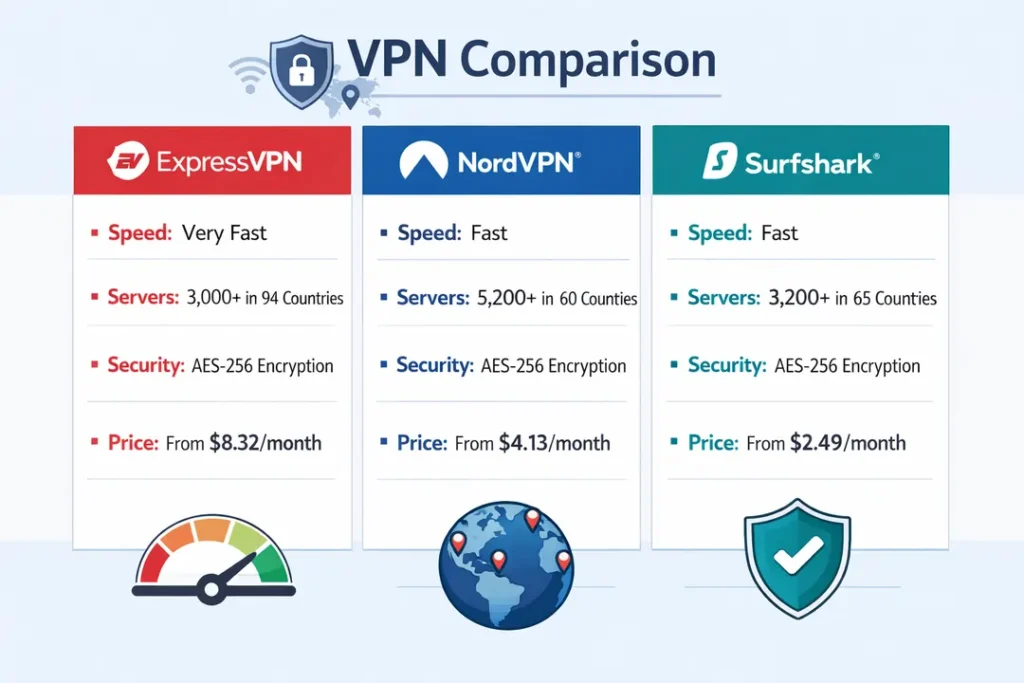
Best VPNs for Privacy 2026
After applying strict privacy-focused testing criteria, only four VPN services meet the technical requirements necessary for meaningful privacy protection in 2026. These rankings are based on cryptographic readiness, infrastructure control, audit verification, and resistance to long-term surveillance — not marketing claims or feature counts.
Each VPN below earned its position for a specific reason. Rather than repeating generic reviews, this section explains why each provider ranks where it does and what type of privacy user it is actually suited for.
#1 NordVPN — Best Overall Privacy VPN (2026)
NordVPN ranks first because it combines multiple privacy-critical protections into a single, enforceable architecture. Its use of diskless (RAM-only) servers, audited no-logs policy, and post-quantum–ready key exchange significantly reduce both technical and legal exposure.
Unlike providers that rely on policy assurances, NordVPN enforces privacy by design. Even under server seizure or legal pressure, user activity cannot be reconstructed after the fact.
This balance of future-proof cryptography and everyday usability makes NordVPN the strongest all-around privacy VPN in 2026.
Best for: Users who want maximum privacy protection without sacrificing reliability or ease of use.
#2 ExpressVPN — Best for Simple, Reliable Privacy
ExpressVPN earns its position through operational discipline rather than experimental features. Its TrustedServer technology ensures all servers run entirely in volatile memory, eliminating the possibility of persistent data retention.
This design prioritises predictability and consistency across public Wi-Fi, travel networks, and restrictive environments. While it does not currently offer post-quantum cryptography, its minimal attack surface and audited policies provide strong real-world privacy.
Best for: Users who want dependable privacy protection with minimal configuration or technical complexity.
View ExpressVPN Privacy Options
#3 Surfshark — Best Privacy VPN for Multiple Devices
Surfshark ranks third due to its focus on protecting many devices under a single account. Its audited no-logs policy and rotating IP feature help reduce long-session correlation risks, particularly in household or multi-device environments.
From a privacy architecture standpoint, Surfshark relies more heavily on software controls than full infrastructure ownership. While this places it below the top two providers for strict anonymity, it delivers solid modern privacy at a more accessible price point.
Best for: Users who need privacy protection across unlimited devices.
#4 PureVPN — Verified Privacy at a Lower Cost
PureVPN earns its position by providing independently audited no-logs privacy at a lower price point. Rather than competing on advanced cryptographic innovation, it focuses on offering verifiable baseline privacy protection.
While its infrastructure and anonymity features are less mature than premium providers, its audited reset qualifies it as a legitimate option for users who want basic privacy without premium pricing.
Best for: Cost-conscious users who want verified no-logs protection.
Privacy Architecture Comparison (2026)
The comparison below focuses on the core technical controls that determine whether a VPN can meaningfully protect user privacy in 2026. These are architectural and cryptographic factors that cannot be fixed with software updates or marketing claims.
| Privacy Capability | NordVPN | ExpressVPN | Surfshark | PureVPN |
|---|---|---|---|---|
| Jurisdiction | Panama | British Virgin Islands | Netherlands | British Virgin Islands |
| No-Logs Enforcement | Independently audited | Independently audited | Independently audited | Independently audited |
| Server Architecture | RAM-only, colocated | RAM-only TrustedServer | RAM-only (software enforced) | RAM-based, mixed infrastructure |
| Post-Quantum Readiness | Yes (PQC-enabled) | No (classical encryption) | Partial / roadmap | No |
| Traffic Obfuscation | Yes (advanced) | Yes (automatic) | Yes (select modes) | Limited |
| Kill Switch Enforcement | System-level | System-level | App-level | App-level |
| Anonymous Payment Options | Cryptocurrency | Cryptocurrency | Cryptocurrency | Cryptocurrency |
This comparison prioritises technical enforcement over policy statements. Providers that rely primarily on promises rather than architectural controls do not perform well under long-term surveillance or seizure scenarios.




Which Privacy VPN Is Right for You?
Privacy is not one-size-fits-all. The right VPN depends on your threat model, usage
patterns, and tolerance for complexity. The guidance below maps common privacy
profiles to the VPN that best fits each scenario in 2026.
If You Want the Strongest All-Round Privacy Protection
If your priority is long-term privacy resilience — including protection against
future decryption, infrastructure seizure, and metadata reconstruction — you need a
VPN that enforces privacy at the architectural level.
Recommended: NordVPN
NordVPN offers the most complete privacy design available to mainstream users,
combining post-quantum–ready cryptography, RAM-only servers, audited no-logs
enforcement, and controlled infrastructure.
If You Want Simple, Reliable Privacy Without Complexity
Some users prioritise predictability and ease of use over experimental features. If
you frequently travel, use public Wi-Fi, or want privacy protection that works
consistently without configuration, operational stability matters most.
Recommended: ExpressVPN
ExpressVPN focuses on RAM-only infrastructure and disciplined operational security.
Its applications behave consistently across unstable and restrictive networks.
View ExpressVPN Privacy Options
If You Need Privacy Across Many Devices
Households and multi-device users face a different challenge: maintaining privacy
consistently across phones, laptops, tablets, and TVs under a single account.
Recommended: Surfshark
Surfshark allows unlimited device connections and includes rotating IP features
that reduce long-session tracking, making it well suited for families or users with
many connected devices.
If You Want Verified Privacy on a Budget
If cost is a primary concern but you still want an independently audited no-logs
policy, your options are more limited. Budget VPNs without audits should be avoided
for privacy-critical use.
Recommended: PureVPN
PureVPN provides verified no-logs privacy at a lower price point. While it lacks
advanced anonymity features, it offers a legitimate entry point into audited VPN
privacy.

Final Verdict: The Best VPN for Privacy in 2026
In 2026, online privacy is no longer about hiding an IP address. It is about limiting what data can be collected today and ensuring that what is collected cannot be decrypted, reconstructed, or analysed years from now.
A privacy VPN must therefore be judged on architecture, cryptography, and verifiability — not promises. Diskless infrastructure, independent audits, and future-ready encryption are now baseline requirements, not premium extras.
Among the VPNs tested, NordVPN offers the strongest overall privacy solution for most users. Its combination of post-quantum–ready cryptography, RAM-only servers, audited no-logs enforcement, and controlled infrastructure provides the most balanced protection available in 2026.
That does not mean it is the only valid choice. ExpressVPN remains a strong option for users who prioritise simplicity and operational reliability. Surfshark is well suited to multi-device households that want modern privacy features at a lower cost. PureVPN provides a verified entry point for users who need audited privacy on a tighter budget.
The right VPN depends on your threat model. What matters most is choosing a provider that enforces privacy by design — not one that asks you to trust policy statements alone.